
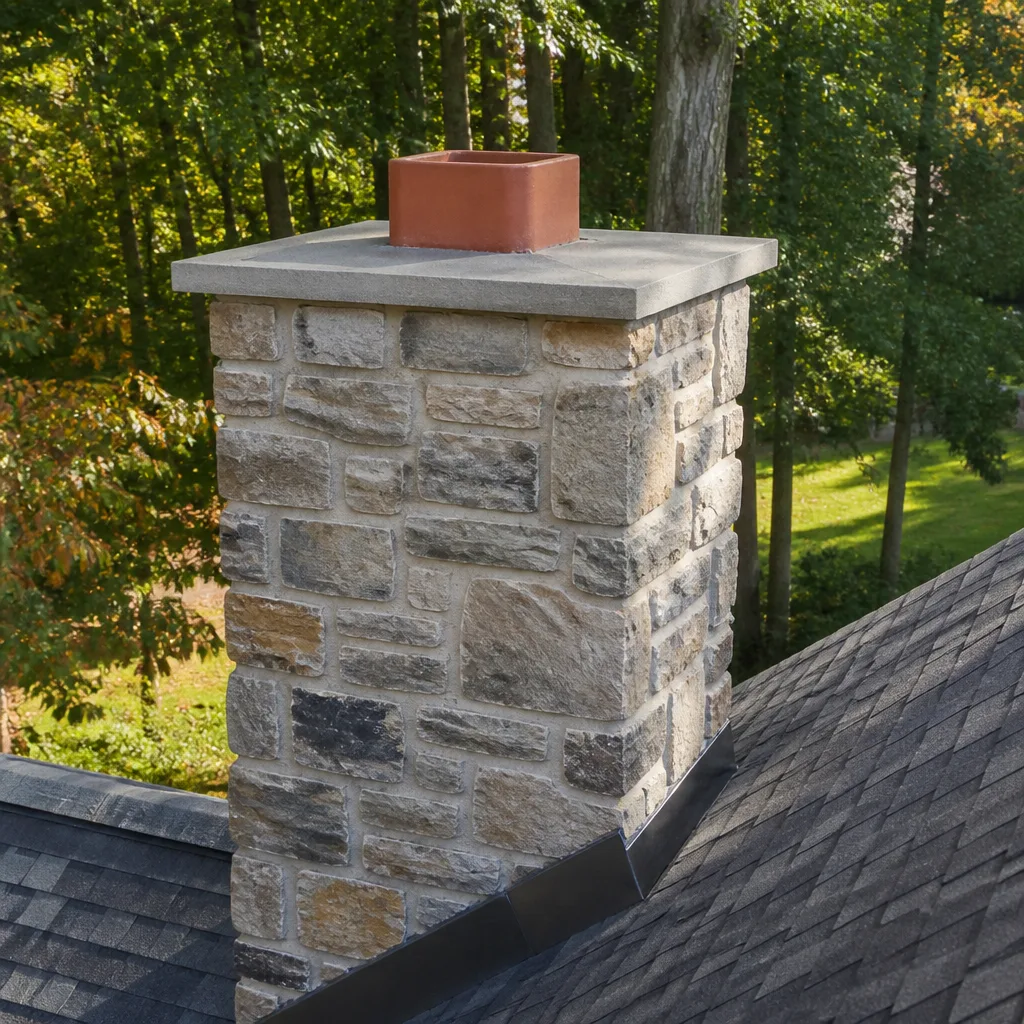
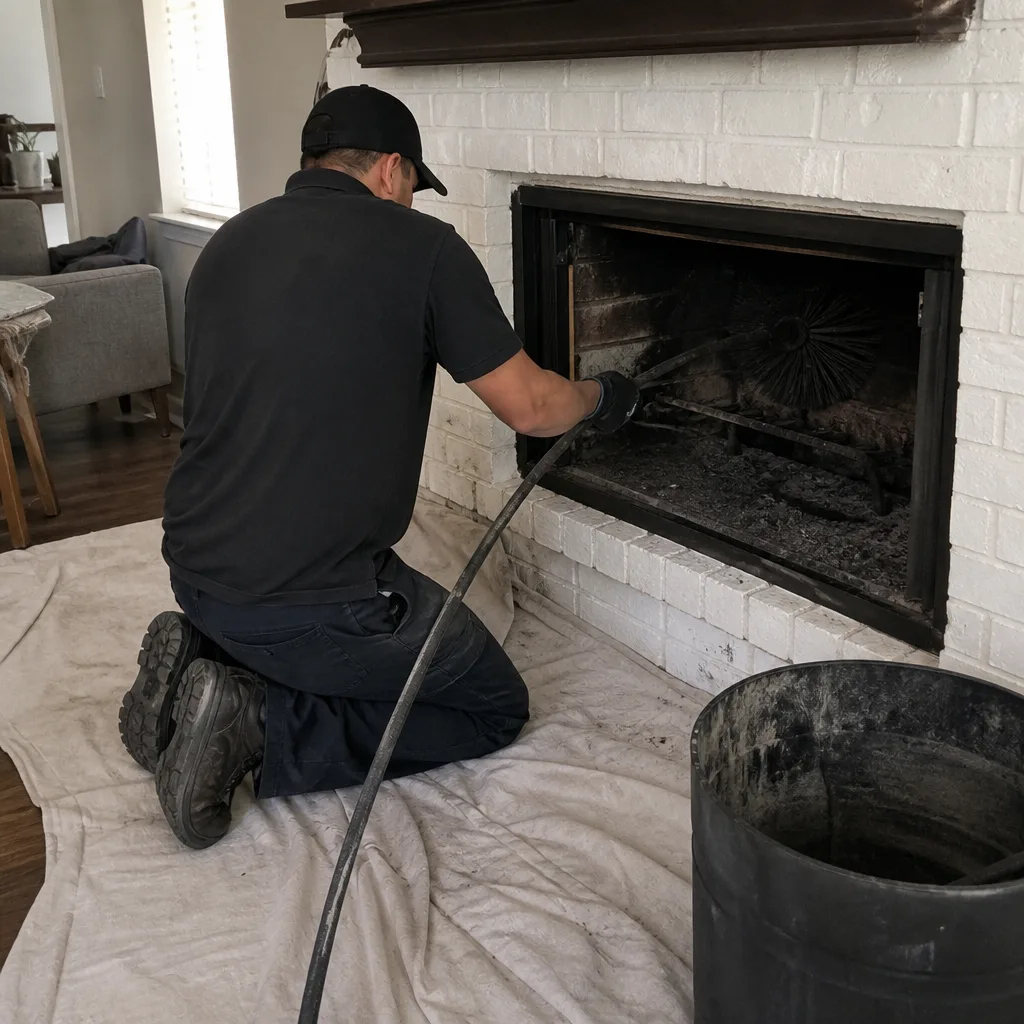
Level 1 sweep and inspection to the NFPA 211 annual standard - flue, crown, cap, and flashing checked and photographed
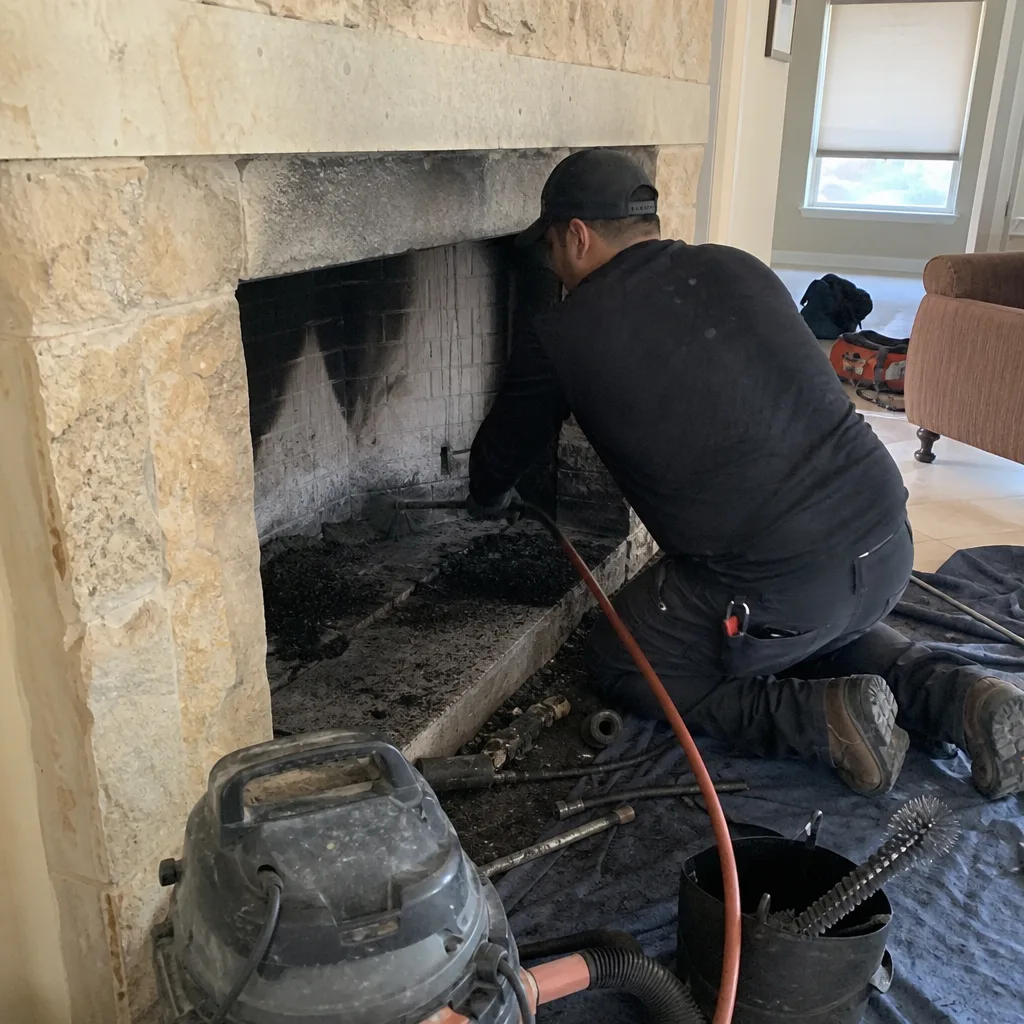
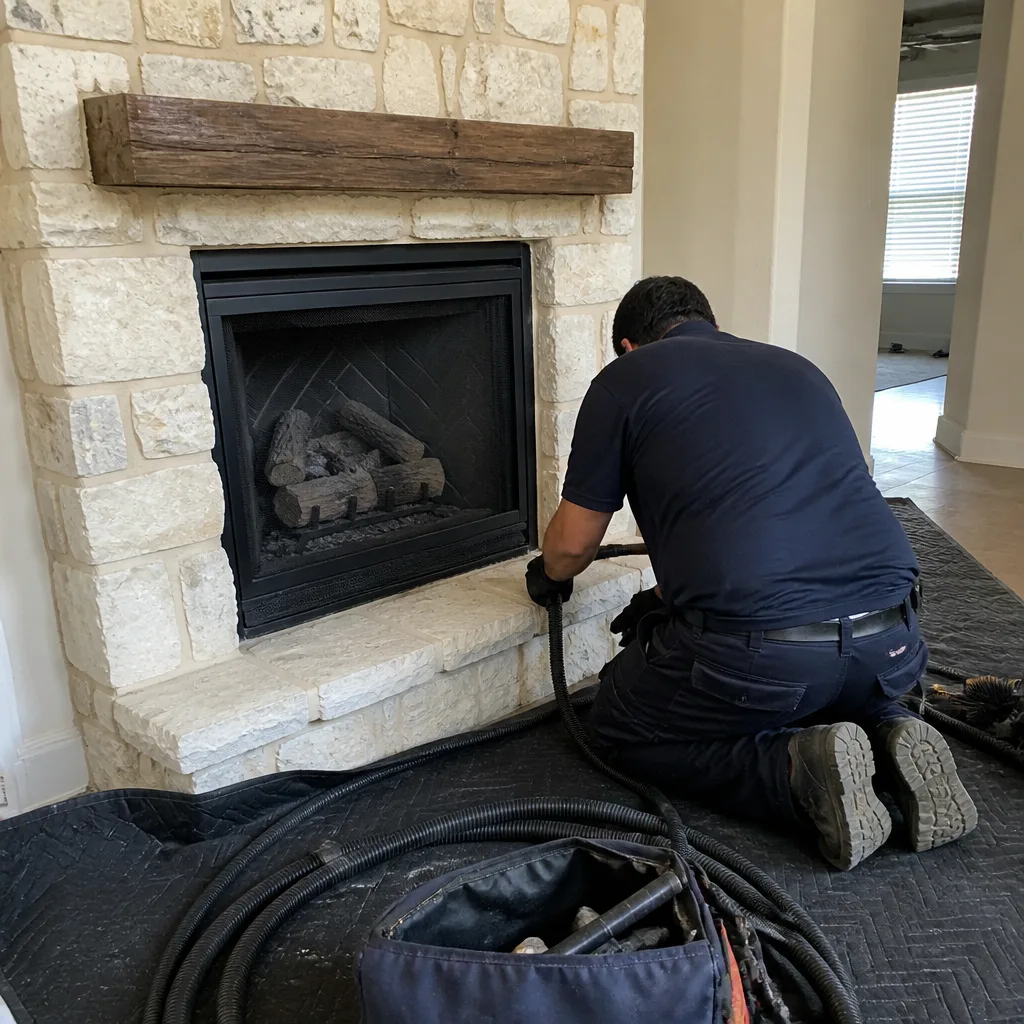
Chimney sweep logs do not sweep chimneys. They loosen some creosote - which then falls where a brush and vacuum still have to collect it.
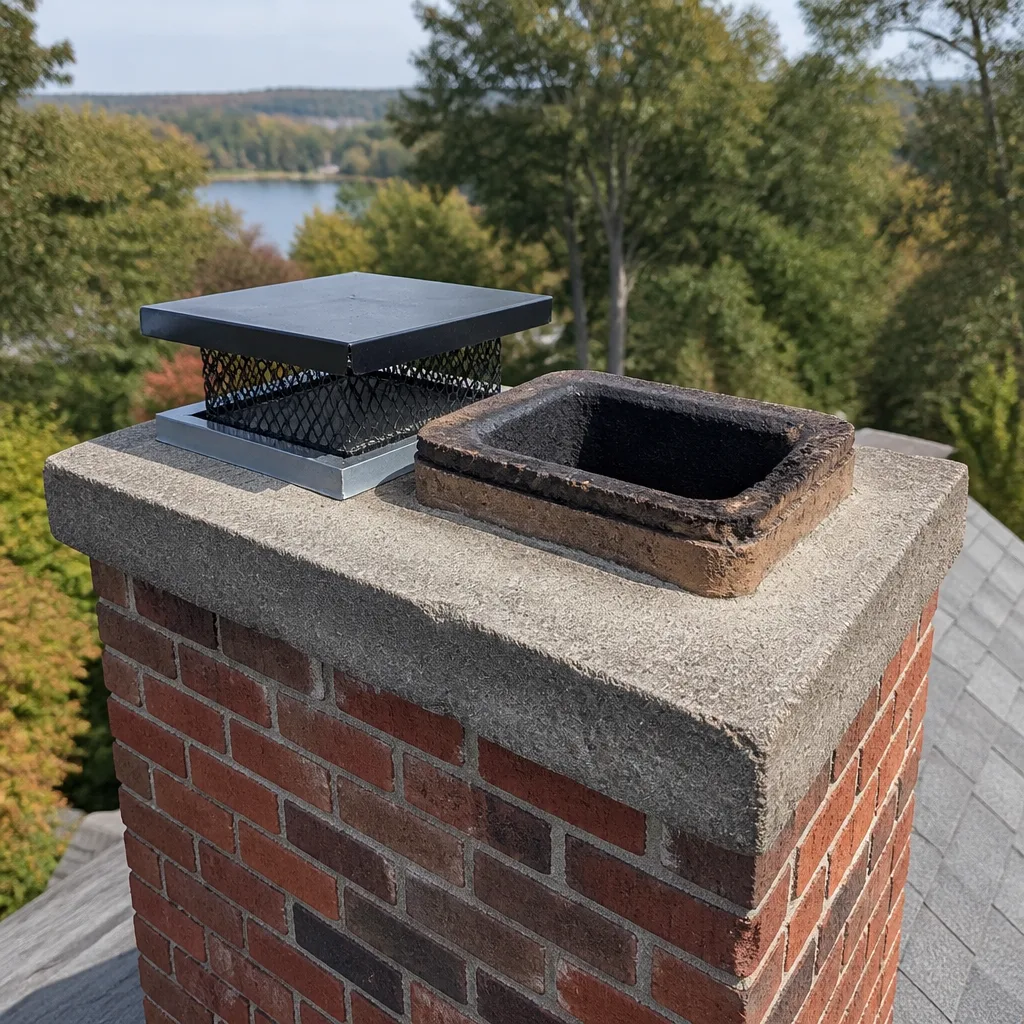
 Before
 After
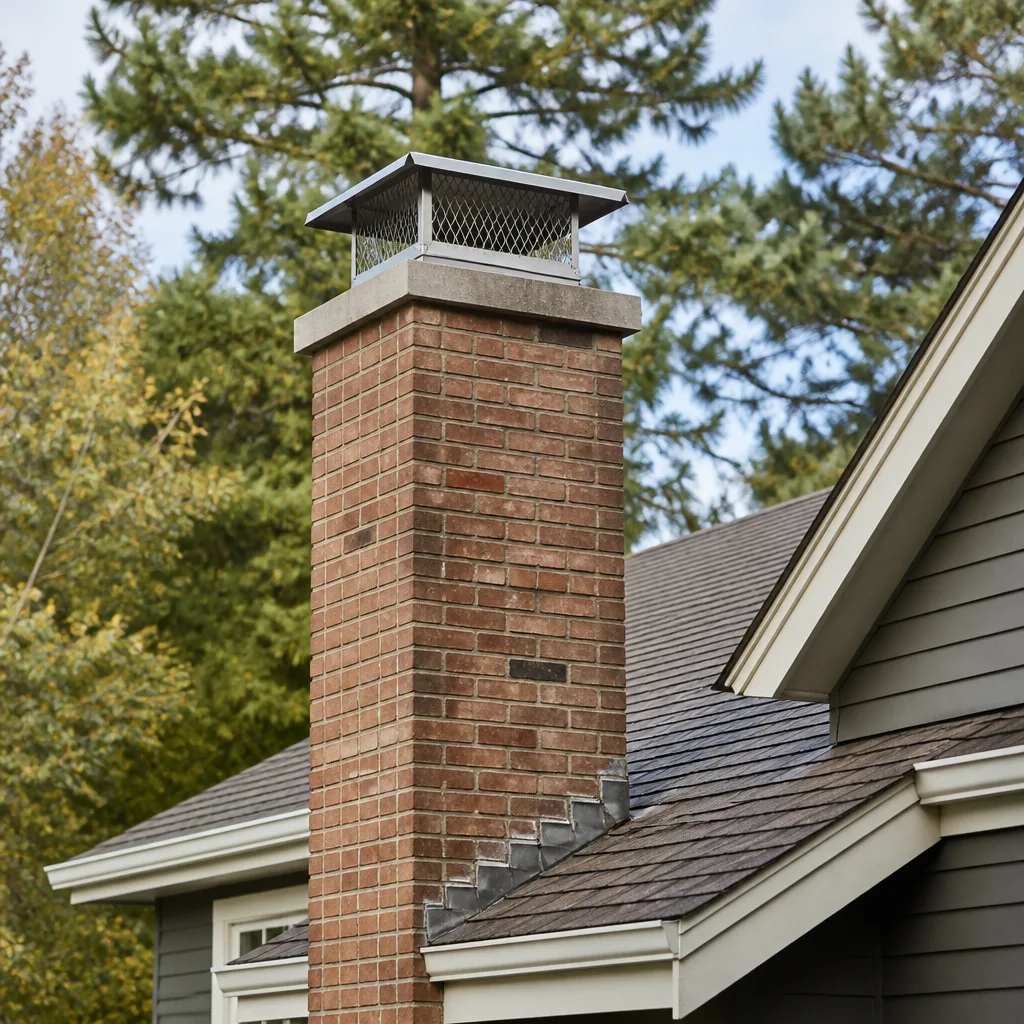
After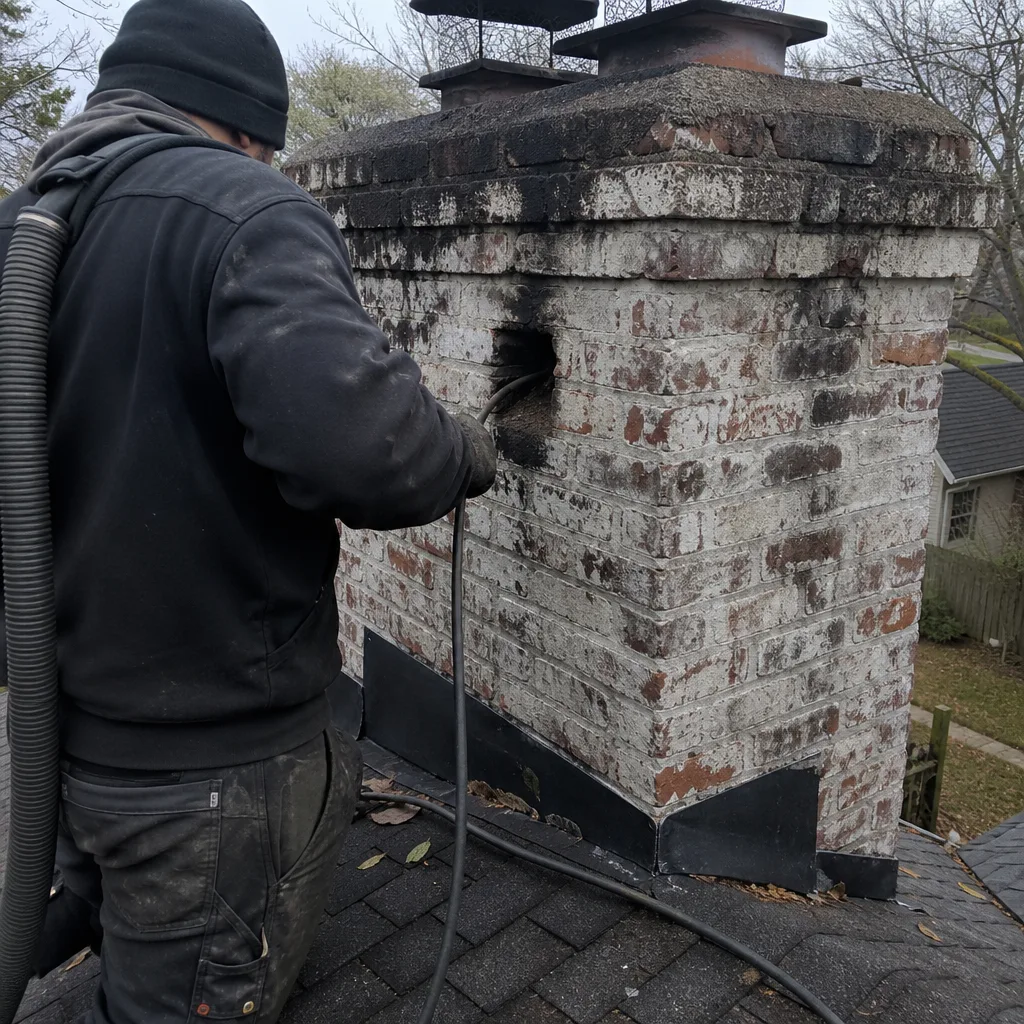 Before
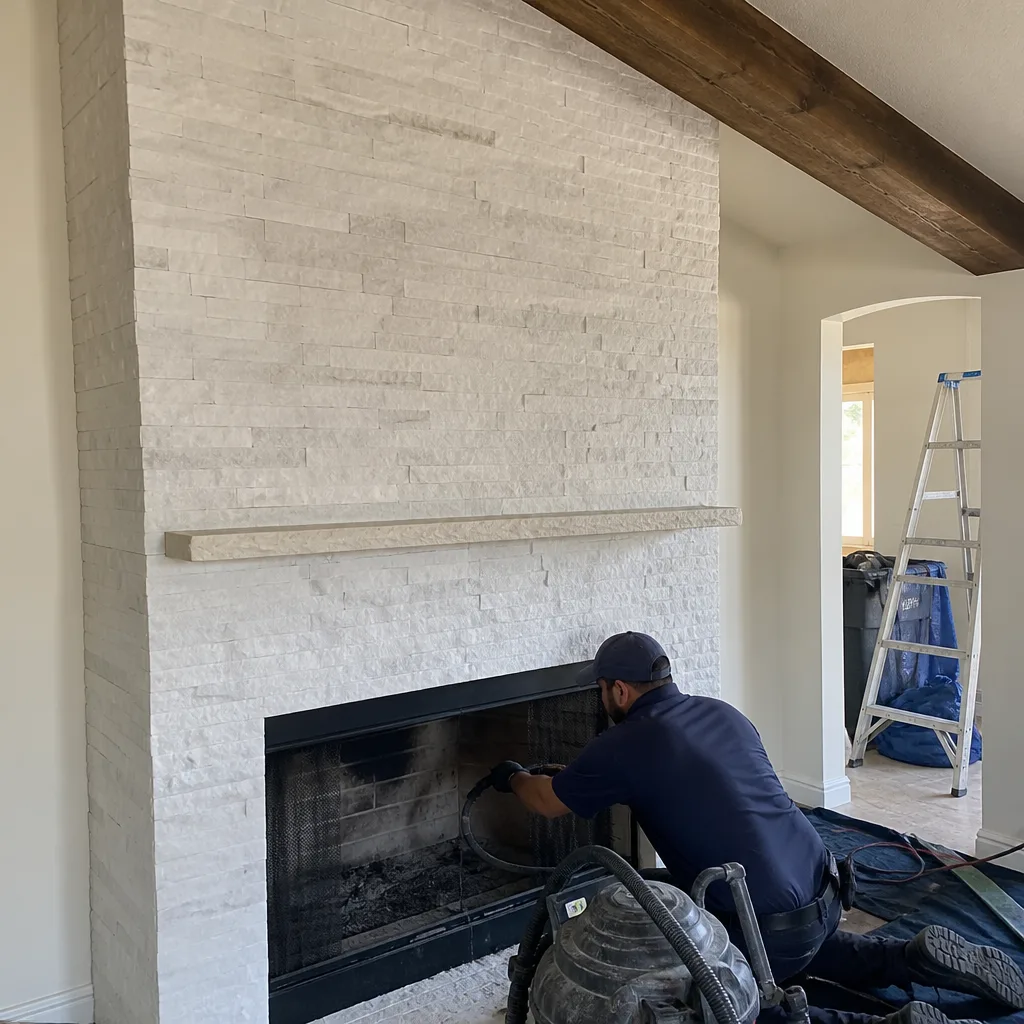 After
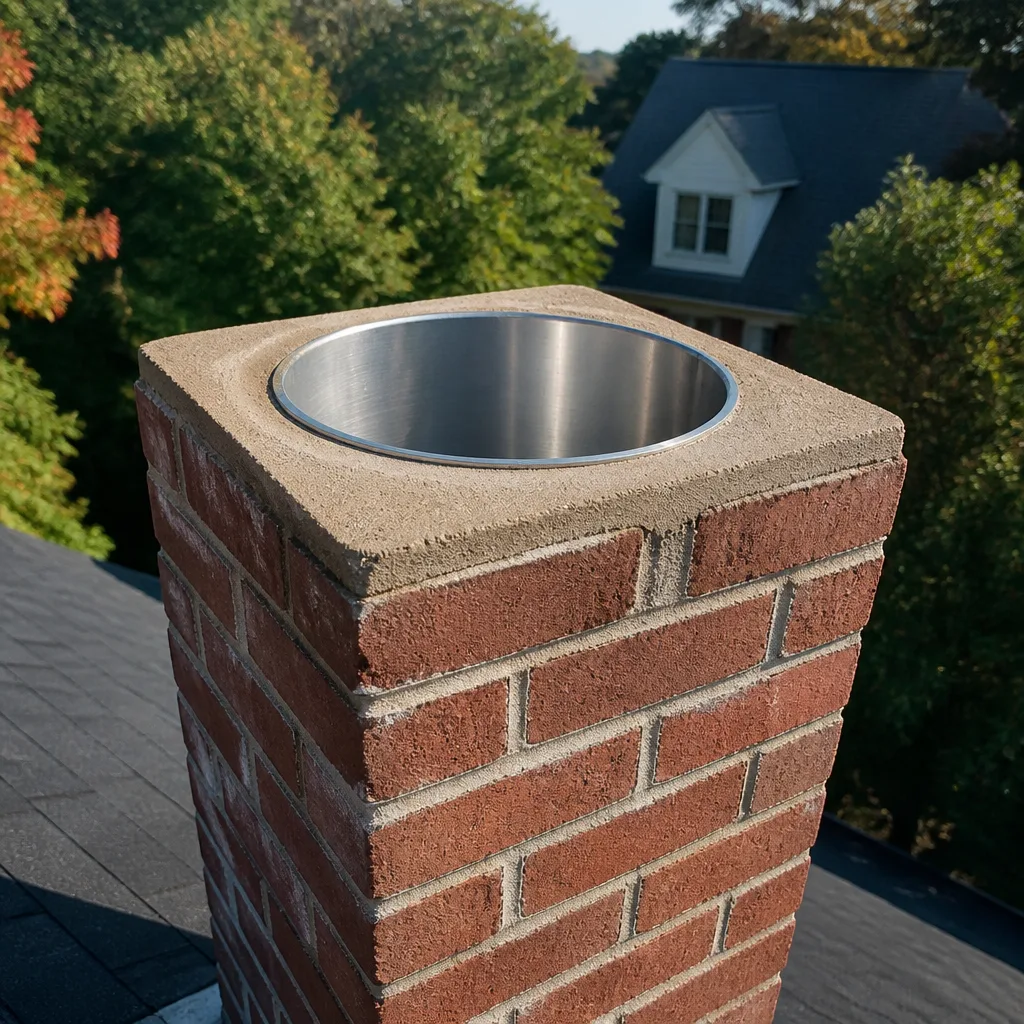
After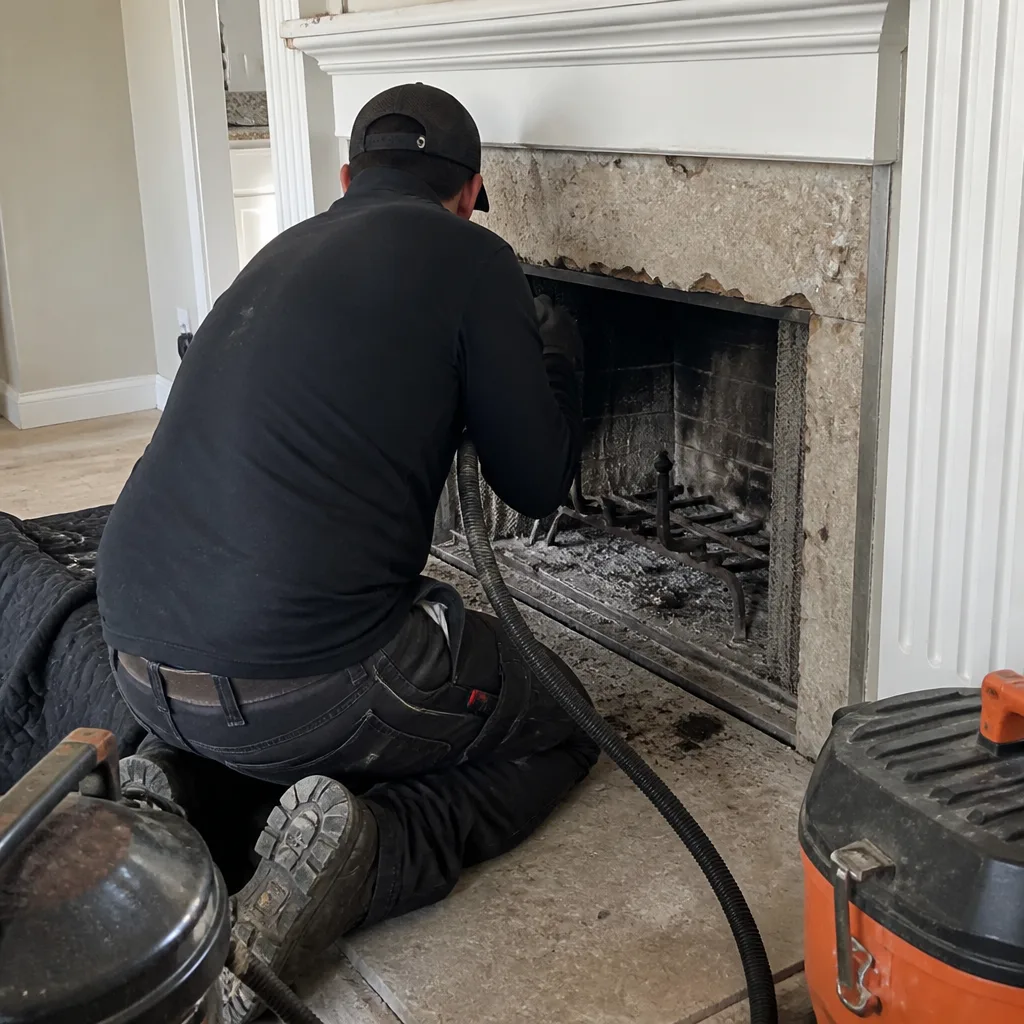 Before
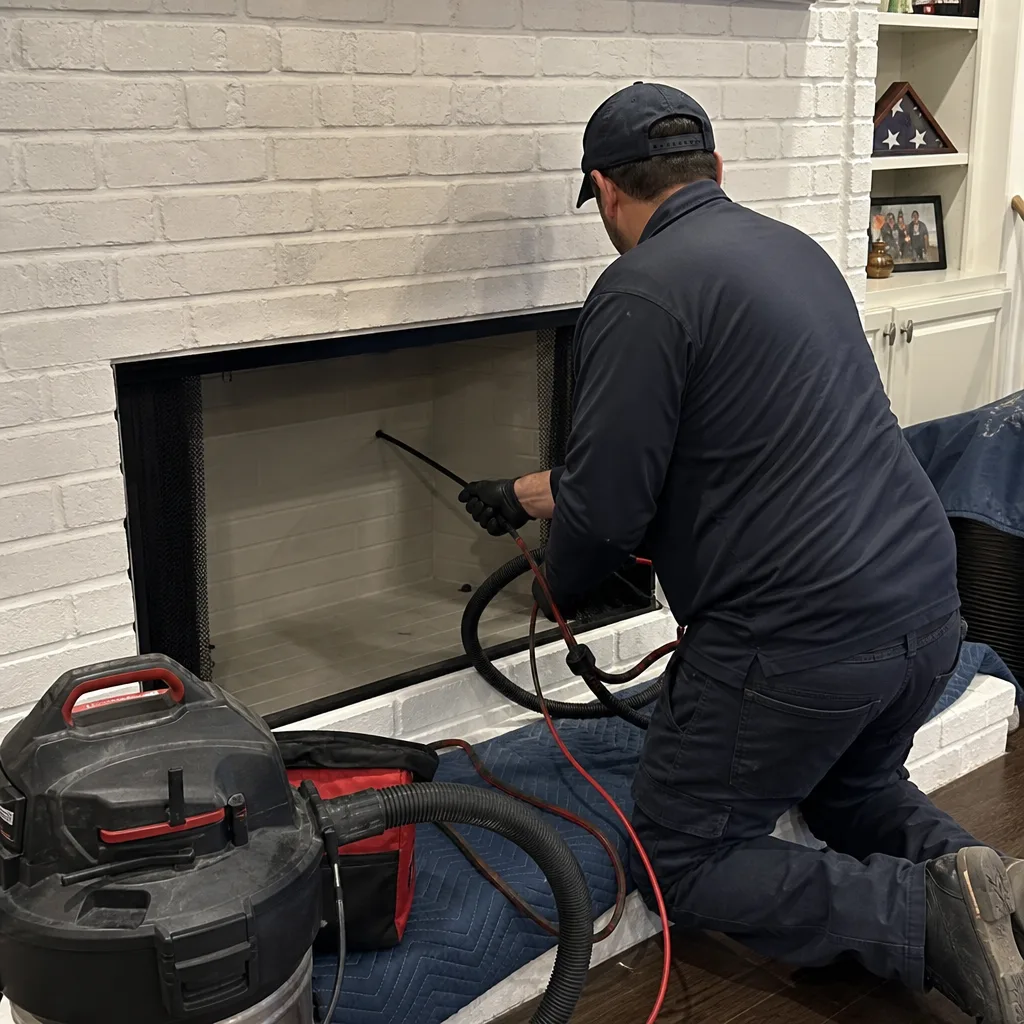 After
AfterHow Much Does Chimney Liner & Rebuild Cost in Dallas, TX?
Chimney liner installation in Dallas typically costs $1,800 to $5,500, depending on flue height, liner type, and whether the smoke chamber needs resurfacing first. A partial or full chimney rebuild – meaning the masonry stack above the roofline – runs $2,500 to $9,500 in the Dallas metro market, with full tear-down-and-rebuild projects on taller stacks landing closer to $12,000. Most homeowners in Dallas who come to us after a Level 2 inspection end up spending between $2,200 and $4,800 to get a compromised liner replaced and the system documented back to NFPA 211 standard through our Chimney Liner & Rebuild services.
If you have a written estimate from another company, our Chimney Liner & Rebuild in Dallas service page explains what we include – and we’ll match scope line-by-line at no charge as a Free Second Opinion.
Chimney Liner & Rebuild Cost Breakdown (2026)
These are real Dallas-market ranges based on jobs completed under the Haven Standard. Every price below was quoted in writing before work started – that’s not a policy we added recently, it’s how Level Two has operated since 2009.
| Service | Typical Dallas Price Range | Notes |
|---|---|---|
| Flexible stainless liner installation (gas appliance) | $1,800 – $3,200 | 6″ or 7″ DuraFlex liner; single-story flue |
| Flexible stainless liner installation (wood-burning) | $2,200 – $4,200 | Larger diameter; often requires smoke chamber prep |
| HeatShield flue resurfacing (smoke chamber / lower flue) | $900 – $2,400 | Cast-in-place repair for hairline cracks; no liner tear-out |
| Cast-in-place liner (full system) | $3,500 – $6,500 | Poured ceramic liner; common on older Preston Hollow and Lakewood properties |
| Chimney crown rebuild | $450 – $1,200 | Separate from liner; often done at the same mobilization |
| Smoke chamber parging | $350 – $900 | Smoothing corbeled brick to reduce turbulence and creosote buildup |
| Partial chimney rebuild (above roofline only) | $2,500 – $5,500 | Spalling brick, failed mortar joints; common after North Texas freeze cycles |
| Full chimney rebuild (stack + firebox) | $6,500 – $12,000+ | Complete tear-down; required when structural failure extends below the roofline |
| Firebox rebuild only | $1,800 – $4,500 | Refractory brick replacement; frequently needed in homes built before 1985 |
| Level 2 camera inspection (required pre-liner) | $149 – $299 | Included in full liner/rebuild scope; credited toward work if booked together |
What Pushes the Price Up
Height is the biggest single variable in Dallas. A standard two-story colonial in Lake Highlands or Plano might have a flue running 18 to 22 feet. A taller chimney on a custom home in Southlake or Highland Park can exceed 30 feet – that adds material cost, staging time, and in some cases a permit fee from the City of Dallas or the relevant municipality. Flue diameter matters too: gas inserts often use a 6-inch liner, but a traditional wood-burning fireplace sized for a large hearth room typically needs an 8-inch diameter, and the price difference in DuraFlex or Olympia Chimney liner material alone is meaningful.
Access is another factor people don’t anticipate. Steep rooflines, limited attic access, or a chimney positioned on a second-story wall addition all increase labor. In East Dallas neighborhoods where homes were added onto in the 1970s and 80s, we regularly find liner runs that require partial staging rather than a standard roof ladder – and that gets priced accordingly, in writing, before anyone starts.
What Can Lower the Price
Combining jobs at one mobilization is the clearest way to reduce per-item cost. If your crown needs rebuilding and your liner needs replacing, scheduling both at once saves a trip charge and reduces total labor time. Choosing a HeatShield resurfacing over a full liner pull-and-replace is also appropriate for some conditions – specifically, flues with hairline cracks and no structural separation. A camera scan tells you which situation you’re in, which is exactly why the Level 2 inspection comes first.
What Affects Chimney Liner & Rebuild Pricing in Dallas
- Flue height and diameter: Taller chimneys require more liner material and more labor hours on the roof. Dallas homes in established neighborhoods like Lakewood and M-Streets often have original 1940s chimneys that are taller relative to their footprint than newer construction, which affects both material runs and staging setup.
- Liner type selected: Flexible stainless (DuraFlex or equivalent) is the most common and generally the most affordable option for retrofit installs. Cast-in-place poured liners cost more but are structurally superior for heavily deteriorated flues. HeatShield resurfacing is sometimes the right call when the existing liner tile is largely intact but showing early joint erosion.
- Condition of the smoke chamber and firebox: If the smoke chamber has severe corbeling or cracks, it needs parging before a liner goes in. Skipping this step is a short-cut that fails inspection – and in North Texas, where clay soils shift and freeze cycles stress masonry, that condition is common in homes more than 20 years old.
- North Texas freeze damage: The February 2021 freeze event accelerated spalling and mortar joint failure across thousands of Dallas-area chimneys. Homes in Garland, Mesquite, and older parts of Irving showed damage at a rate we hadn’t seen in a single season before. If your chimney wasn’t inspected after that event, a camera scan will show you what the exterior alone won’t.
- Permit requirements: The City of Dallas requires a permit for full chimney rebuilds and, in some cases, liner replacement tied to a gas appliance conversion. Our techs pull the permit; we include the fee in the written price. No surprise line-items after the fact.
- Access and roof pitch: A steep roofline or a chimney positioned on the back side of the house over a two-story drop requires additional safety staging. That’s a real cost, and it gets itemized in the written scope, not absorbed silently into a vague “labor” line.
- Number of flues: Some Dallas homes – particularly larger properties in Preston Hollow or University Park – have two-flue chimneys serving both a fireplace and a furnace or boiler. Each flue is a separate liner run, priced separately.
 Before
 After
AfterLiner Types Explained: Which One Does Your Dallas Chimney Need?
A flue liner does one job: it contains the combustion gases and directs them safely out of the home while protecting the surrounding masonry from heat and corrosive byproducts. When that liner cracks, separates, or deteriorates, the risk is carbon monoxide infiltration into the living space and, in worst cases, a chimney fire that spreads to the structure. This is not a condition to monitor and revisit next season.
Flexible Stainless Steel Liner
This is the most common retrofit choice in Dallas, and for good reason. A flexible liner – typically DuraFlex or a comparable Copperfield product – installs in a single day on most standard residential chimneys. It runs the full length of the flue from the firebox throat to the cap, and it’s available in the diameters required by both gas and wood-burning systems. The stainless grade matters: 304 stainless is adequate for gas; wood-burning applications should use 316Ti alloy for resistance to the higher acid load from wood smoke. We spec the right grade in writing, on every job.
Cast-in-Place Liner
For chimneys with severely deteriorated tile or no original liner at all – a condition we see in some pre-1950s Dallas homes in Oak Cliff and near the Bishop Arts District – a poured ceramic liner is often the structurally correct answer. A form is inserted into the flue, the ceramic compound is poured and vibrated in, and when it cures, you have a seamless monolithic liner that reinforces the surrounding masonry rather than simply occupying the space inside it. It costs more. It’s also the right call when the flue has lost structural integrity, not just cosmetic surface condition.
HeatShield Resurfacing
HeatShield is a spray-applied ceramic compound designed to resurface the interior of an existing tile liner that has hairline cracks, joint erosion, or minor surface deterioration. It’s not a replacement for a liner pull-and-install when structural separation exists. But for flues where the tile is fundamentally sound and the damage is early-stage, it can restore code compliance at meaningfully lower cost than a full liner replacement. The camera scan tells us which situation applies – and that distinction is worth having documented in writing before any decision is made.
Chimney Rebuild vs. Liner Replacement: Which Do You Actually Need?
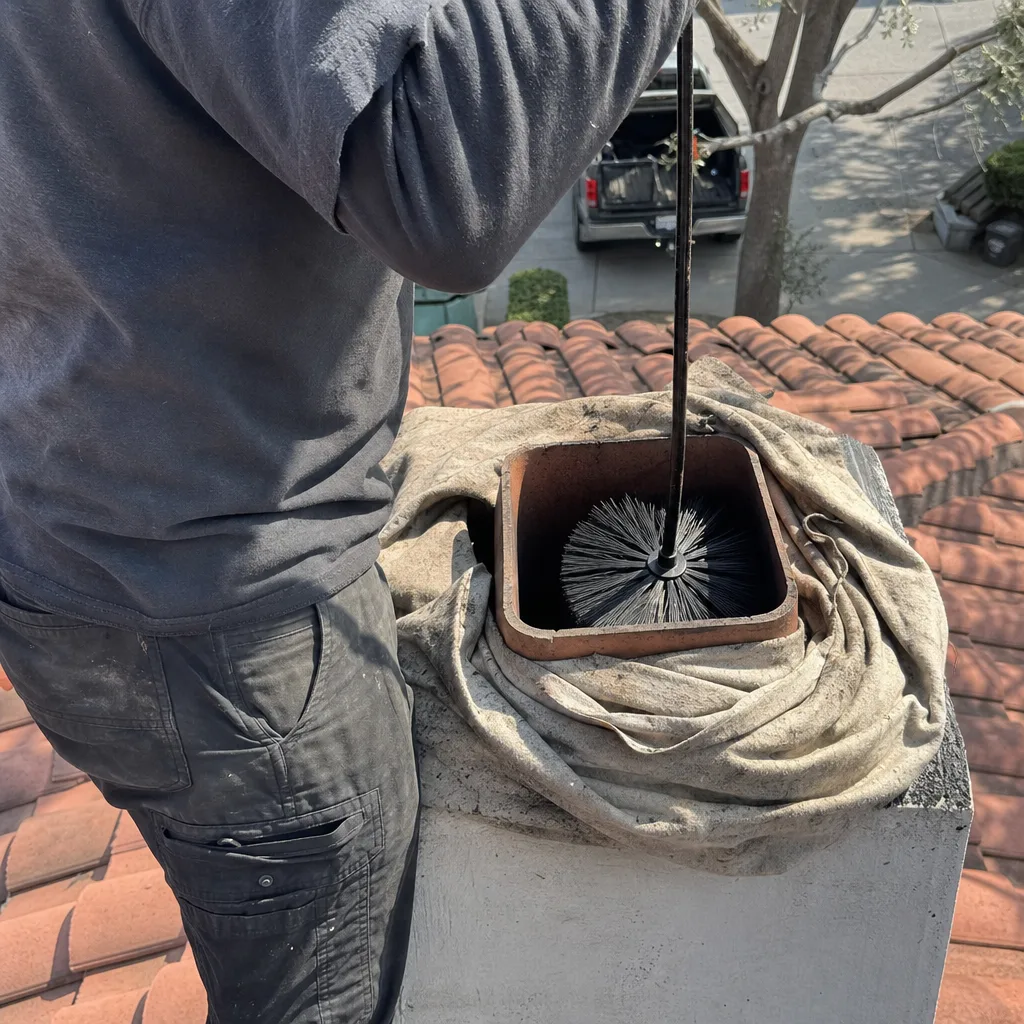
These are two separate scopes, and the confusion between them costs homeowners money – sometimes in both directions. A chimney rebuild refers to the masonry structure: the brick, mortar, and crown that form the exterior stack. Liner replacement refers to the interior passage through which combustion gases travel.
You can have a structurally sound exterior stack with a completely failed interior liner. You can also have intact liner tile inside a chimney whose exterior masonry is spalling off in sheets. And you can have both problems at once, which is what we find in a meaningful percentage of Dallas homes that last had a real inspection before 2015.
The only way to know what you’re actually dealing with is a camera-down-the-flue Level 2 inspection. At Level Two, that inspection produces a photo record, a written findings summary, and a written price before any work begins – Haven Standard Clause 4. That record stays on file so that the next tech, the next owner, or your insurance adjuster has documentation from a datable inspection, not just your memory of what someone said on the phone.
Signs You Probably Need a Liner Replacement
- Camera footage shows separated tile joints or missing liner sections
- White staining (efflorescence) on the firebox interior above the smoke shelf
- Persistent smoke odor in the home when the fireplace is not in use
- A recent gas appliance conversion with no documented liner upgrade
- Home built before 1985 with no record of prior liner inspection
Signs You Probably Need a Partial or Full Rebuild
- Brick pieces or mortar chunks on the roof deck or gutters
- Visible gaps in mortar joints above the roofline – more than hairline width
- Chimney leaning or visibly out of plumb (this is a structural emergency; stop using the fireplace)
- Repeated water infiltration at the ceiling near the chimney after North Texas rain events
- Crown that has cracked through – not surface craze, but full-depth separation
How to Save on Chimney Liner & Rebuild in Dallas
Get the inspection first. Not because it’s a revenue item for us, but because homeowners who skip the Level 2 camera scan and go straight to a quote based on an exterior look frequently end up paying for the wrong scope. A tech who quotes liner replacement from the ground is guessing. A written price from a camera-based inspection is a price you can hold someone to.
Combine scopes at a single mobilization. If your liner is being replaced and the crown is cracked, doing both on the same visit saves a trip charge. Same applies to smoke chamber parging and cap replacement. We itemize everything separately in the written scope so you can see exactly what each element costs – but the labor efficiency of a single trip is real, and it gets reflected in the total.
Use our Free Second Opinion. If you have a written estimate from another Dallas-area company, bring it to us. We’ll review it scope-by-scope, explain what’s included and what isn’t, and give you our written price for the same work. No charge for that comparison. We source materials through the Haven buying network – DuraFlex, HeatShield, Gelco, Olympia Chimney, Famco, Copperfield – specifically to keep our material costs honest, and that shows up in the final number.
Don’t wait until fall. Dallas homeowners who schedule liner and rebuild work in late September and October are competing for the same short window. Scheduling in late summer – July through August – typically means faster scheduling and more flexibility on appointment timing. The work is the same; the wait is shorter.
To get a written price with zero obligation, call (972) 284-1392. A live person answers, seven days a week.
What the Inspection Tells You Before You Spend a Dollar on Work
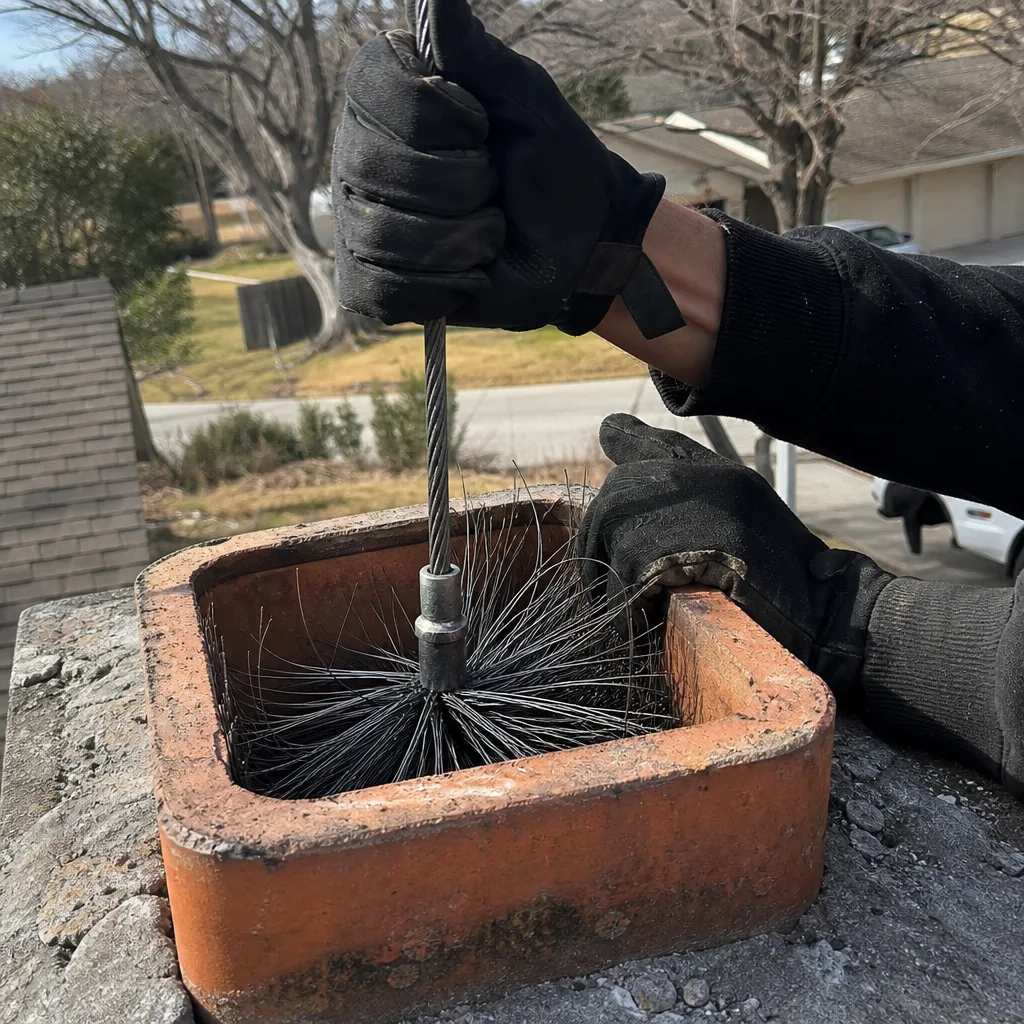
Since 2009, every Level Two visit has included a camera-scan inspection under NFPA 211 Level 2 protocol. That’s not a flashlight-down-the-flue visual. It’s a camera mounted on a rod or cable, descended the full length of the flue, producing footage that shows tile condition, joint integrity, any liner separation, and the condition of the smoke chamber and smoke shelf. The footage is documented, the photos are delivered to you in writing, and the written findings become the basis for a written price – Haven Standard Clause 4, on every job, no exceptions.
Across 38,000-plus chimneys inspected and cleaned since 2009, that documentation has done two things consistently: it gives homeowners a defensible record for insurance claims and real estate disclosures, and it eliminates the scope creep that happens when a tech discovers “additional problems” after work has already started. You know what you’re paying for before anyone picks up a tool.
For Dallas homeowners specifically – and particularly for homes in neighborhoods like Lake Highlands, Buckner Terrace, and Cockrell Hill where post-war construction is common – the camera scan regularly finds liner conditions that an exterior inspection would completely miss. Cracked or missing tile sections. Joint separation at the mid-flue. Evidence of a previous chimney fire that was never documented. These aren’t rare findings. They’re findings that change what work is appropriate and what it costs, and you deserve to have them in writing before you agree to anything.
Dallas-Specific Conditions That Affect Liner and Masonry Life
Dallas sits on expansive clay soil – the kind that swells after rain and contracts in summer heat. Over years and decades, that ground movement transmits stress upward through a home’s foundation and, on pier-and-beam construction, directly into the chimney footing. We see chimney lean and firebox cracking at higher rates in Dallas than in markets built on more stable geology, and it’s not because the original masons did poor work. It’s because the ground moves here.
The February 2021 freeze was the sharpest single-event accelerant of chimney damage in the Dallas area in at least a generation. Water that had worked into minor cracks over years froze, expanded, and forced separations that would otherwise have taken another decade to develop. Many of those chimneys got a ground-level look-over by a roofer checking for shingle damage and were cleared without a flue camera. Some of them are now in use with liner conditions that don’t meet NFPA 211 – not because the homeowner was careless, but because the inspection wasn’t done at the right level.
Summer heat matters too. Dallas averages more than 100-degree days per year in a typical stretch, and the thermal cycling between a 105-degree July afternoon and a 28-degree January night stresses clay flue tile. Thermal cycling causes micro-cracking that doesn’t become visible on the interior until the cracks have progressed far enough to matter. A camera scan catches this at the hairline stage, before it becomes a structural repair.
FAQs: Chimney Liner & Rebuild Cost in Dallas, TX
How much does chimney liner installation cost in Dallas?
Chimney liner installation in Dallas costs $1,800 to $4,200 for a flexible stainless liner on a standard residential fireplace, or $3,500 to $6,500 for a cast-in-place liner on a larger or more deteriorated flue. The exact number depends on flue height, liner diameter, and whether smoke chamber prep work is needed before the liner goes in. Call (972) 284-1392 for a written price based on an actual camera inspection – estimates are free.
How much does a chimney rebuild cost in Dallas?
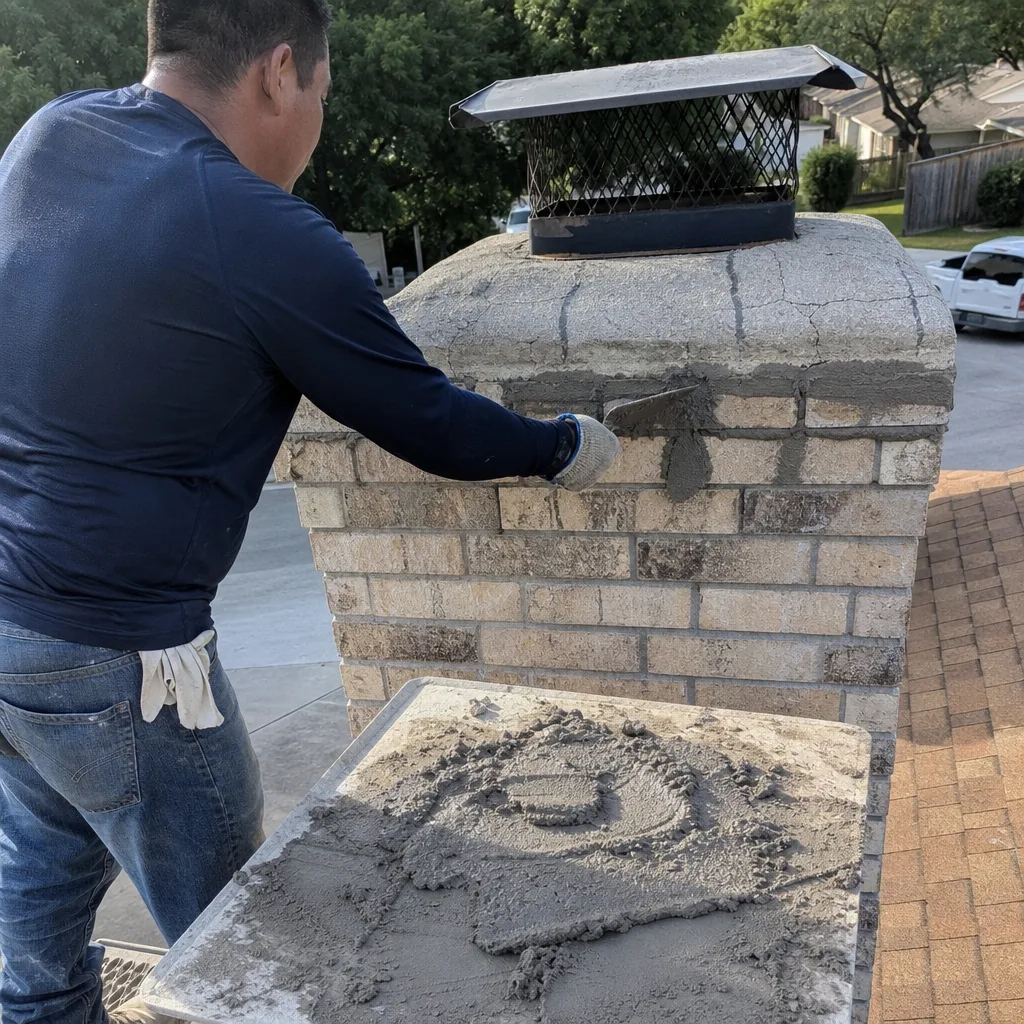
A partial chimney rebuild – the brick and mortar above the roofline – costs $2,500 to $5,500 in Dallas depending on the height and extent of deterioration. A full rebuild that includes the firebox and lower portions of the structure ranges from $6,500 to $12,000 or more. Permit fees from the City of Dallas are included in our written price; there are no line-items added after the work begins. Call (972) 284-1392 for a specific written estimate.
Is it cheaper to reline a chimney or rebuild it?
Relining is almost always less expensive than rebuilding – typically by a factor of two to three. A flexible liner replacement in Dallas runs $1,800 to $4,200; a full rebuild starts around $6,500. The right answer depends on what’s actually failing. If the interior liner is the problem and the masonry structure is sound, a liner replacement is the correct and more affordable scope. If the brick and mortar are structurally compromised, no liner fix solves that. A Level 2 camera inspection tells you exactly which situation you’re in, so you’re not paying for the wrong repair.
Does Dallas require a permit for chimney liner or rebuild work?
Yes. The City of Dallas requires a permit for structural chimney rebuilds and for liner work connected to a gas appliance conversion or new gas insert installation. Our technicians pull the permit as part of the job; the permit fee is included in your written price upfront – Haven Standard Clause 1. If you’re in a municipality adjacent to Dallas such as Garland, Irving, or Richardson, permitting requirements and fees vary, and we handle that research for you before the written price is issued.
How long does a chimney liner last in Dallas?
A quality stainless steel liner – 316Ti alloy for wood-burning, 304 for gas – carries a manufacturer’s warranty of 15 to 25 years and should last the life of the chimney with annual inspections. Clay tile liners, which are original equipment in most Dallas homes built before 1990, typically last 50 years under normal use, but the thermal cycling and soil movement specific to North Texas tends to accelerate micro-cracking beyond what tile experiences in more stable climates. A cast-in-place poured liner has no seams and, under NFPA 211 inspection records, can document its condition at every annual visit. Whatever liner type is in your home, the camera scan every one to three years is what catches deterioration before it becomes a structural or safety issue.
Can I use my fireplace while waiting to have the liner replaced?
If a Level 2 inspection has found liner separation, missing tile sections, or structural cracks in the flue, the safe answer is no – stop using the fireplace until the liner is repaired or replaced. A compromised liner allows combustion gases including carbon monoxide to migrate into the living space and allows heat to reach combustible framing in ways the original construction didn’t account for. This is a case where a camera scan removes the guesswork: if the inspection shows a condition that fails NFPA 211, the written findings will say so plainly. Don’t let a company tell you verbally that it’s “probably fine.” Get it in writing.
Key Takeaways
- Chimney liner installation in Dallas runs $1,800 to $6,500 depending on liner type and flue condition.
- A partial chimney rebuild costs $2,500 to $5,500; a full rebuild ranges from $6,500 to $12,000+.
- North Texas soil movement and freeze cycles accelerate liner and masonry deterioration faster than national averages suggest.
- A Level 2 camera inspection is the only way to know which repair is actually needed – an exterior look is not sufficient for liner diagnosis.
- Every Level Two job comes with a written price before work starts, a documented photo record on completion, and a 365-Day Done Right Promise.
- The Free Second Opinion applies to any written estimate – bring a competitor’s quote and we’ll review it scope-by-scope at no charge.
- Combining scopes (liner + crown + parging) at one mobilization reduces total cost.
- Dallas permit requirements apply to rebuilds and gas liner conversions; we handle the permit and include the fee in the written price.
Get a Written Price for Your Dallas Chimney – No Obligation
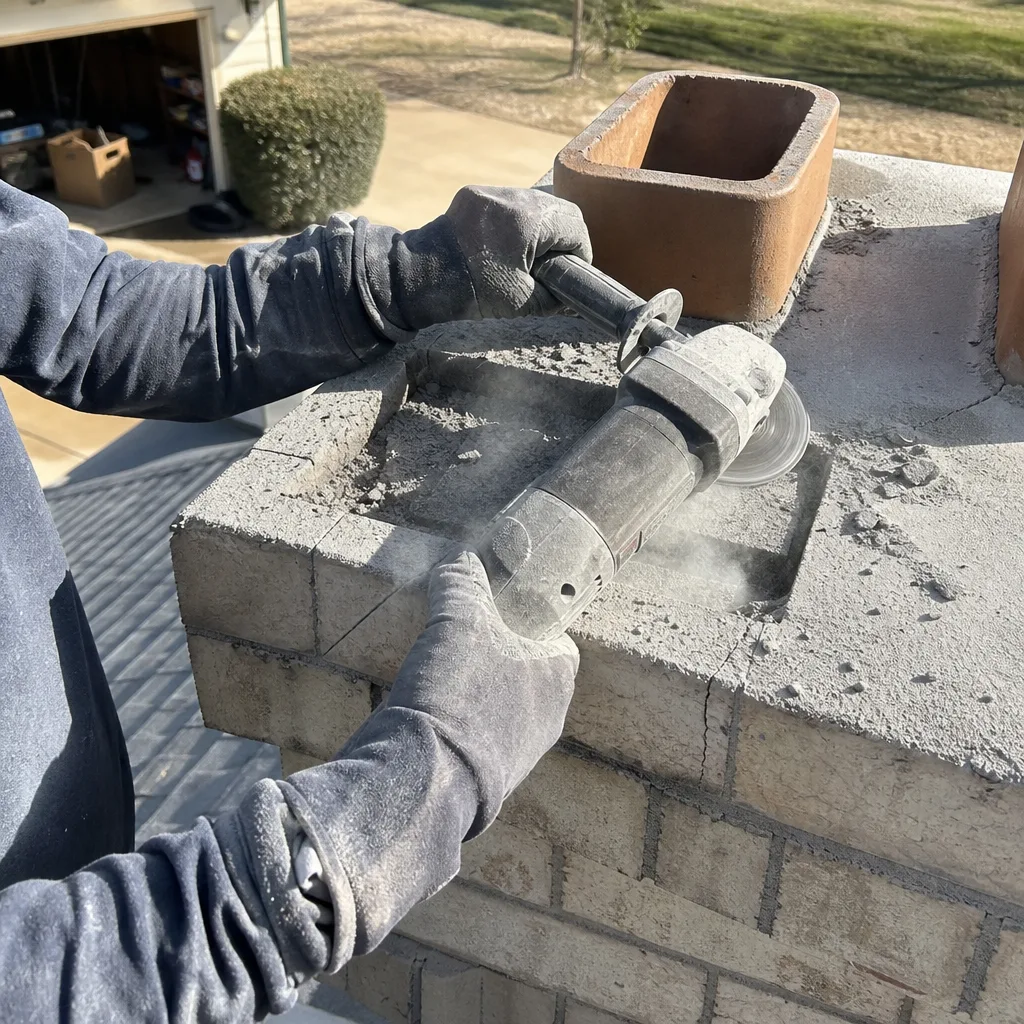
Level Two Chimney Dallas has completed more than 38,000 chimney inspections and cleanings since 2009, every one with a written price before work started and a documented record when it was done. If your liner is cracked, your masonry is spalling, or you simply haven’t had a camera-down-the-flue inspection in the last few years, call (972) 284-1392 to schedule. A live person answers. You’ll get a written price before anyone starts work – that’s not a policy we can waive, it’s how this company operates. Corrine Halstead and the Level Two team are ready to give you a home inspection record that actually means something.
Written by Corrine Halstead, Owner at Level Two Chimney Dallas, serving Dallas, TX since 2009.
Pricing reflects the Dallas market as of 2026. Level Two Chimney Dallas offers free estimates – call (972) 284-1392.
What Our Customers Say
"Cap and crown replaced after water was getting in. Price was quoted in writing, and they showed me the mortar failure first."
- Neil O."They told me the flue was fine and I did not need a liner. Charged me for the inspection and nothing else. That is why I have called them twice since."
- Hal M."We were buying the house and needed a real inspection. The report had photographs, the standard it was done to, and a clear repair figure. The seller paid for the repair."
- Lorna D.