
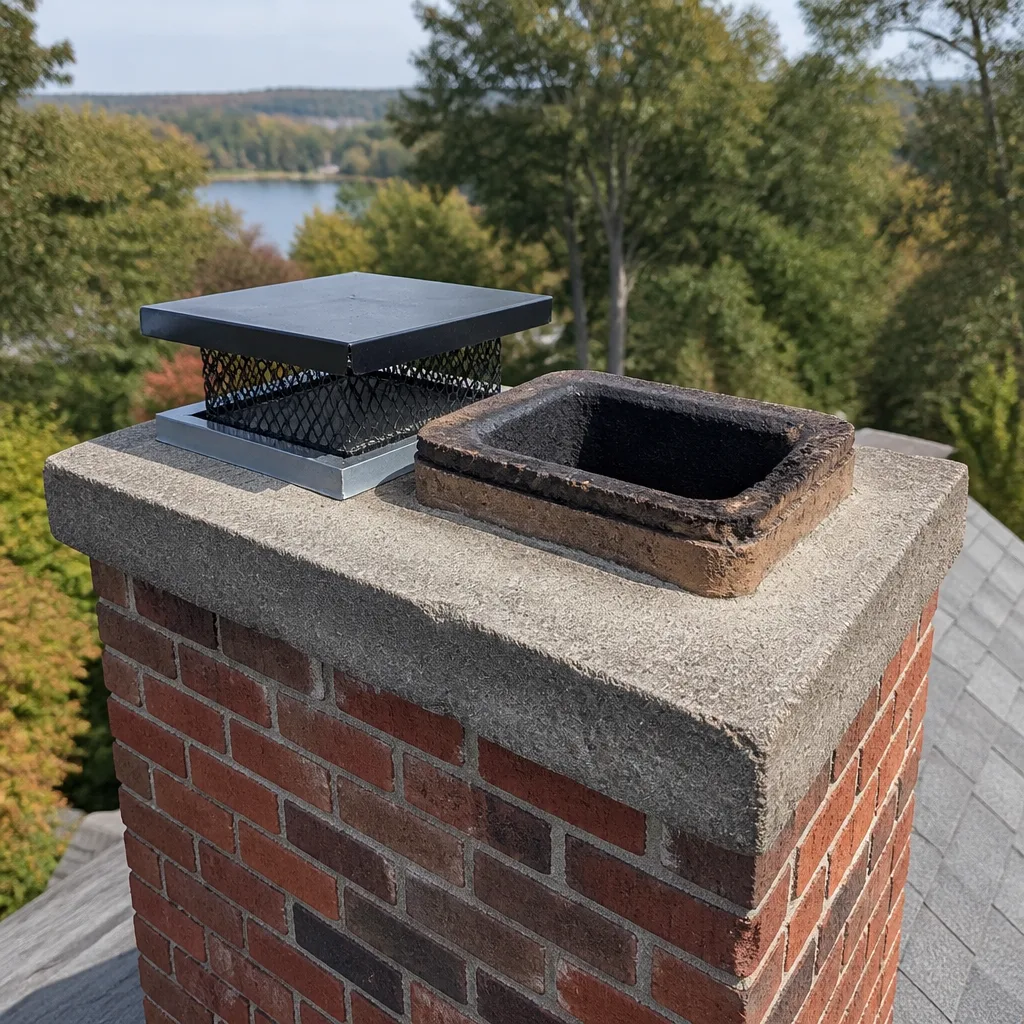
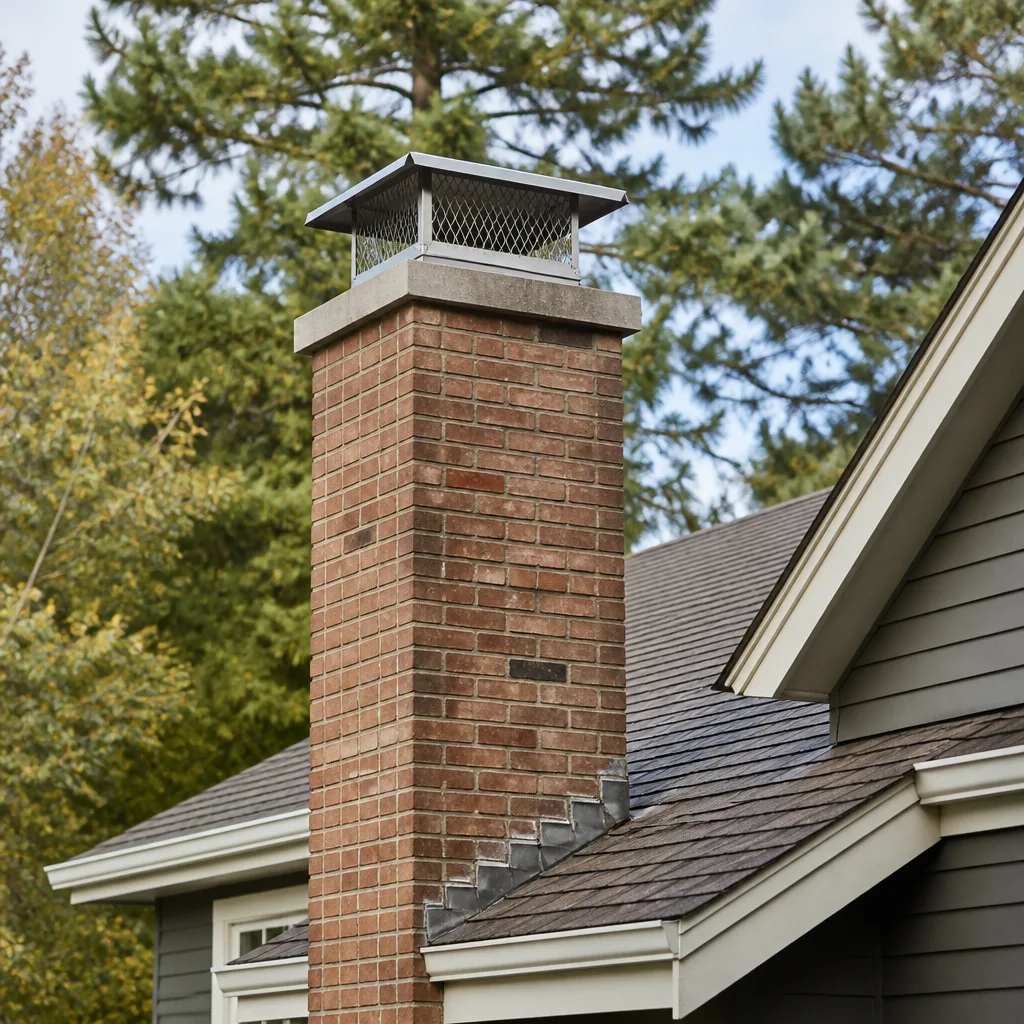
Level 1 sweep and inspection to the NFPA 211 annual standard - flue, crown, cap, and flashing checked and photographed
Chimney sweep logs do not sweep chimneys. They loosen some creosote - which then falls where a brush and vacuum still have to collect it.
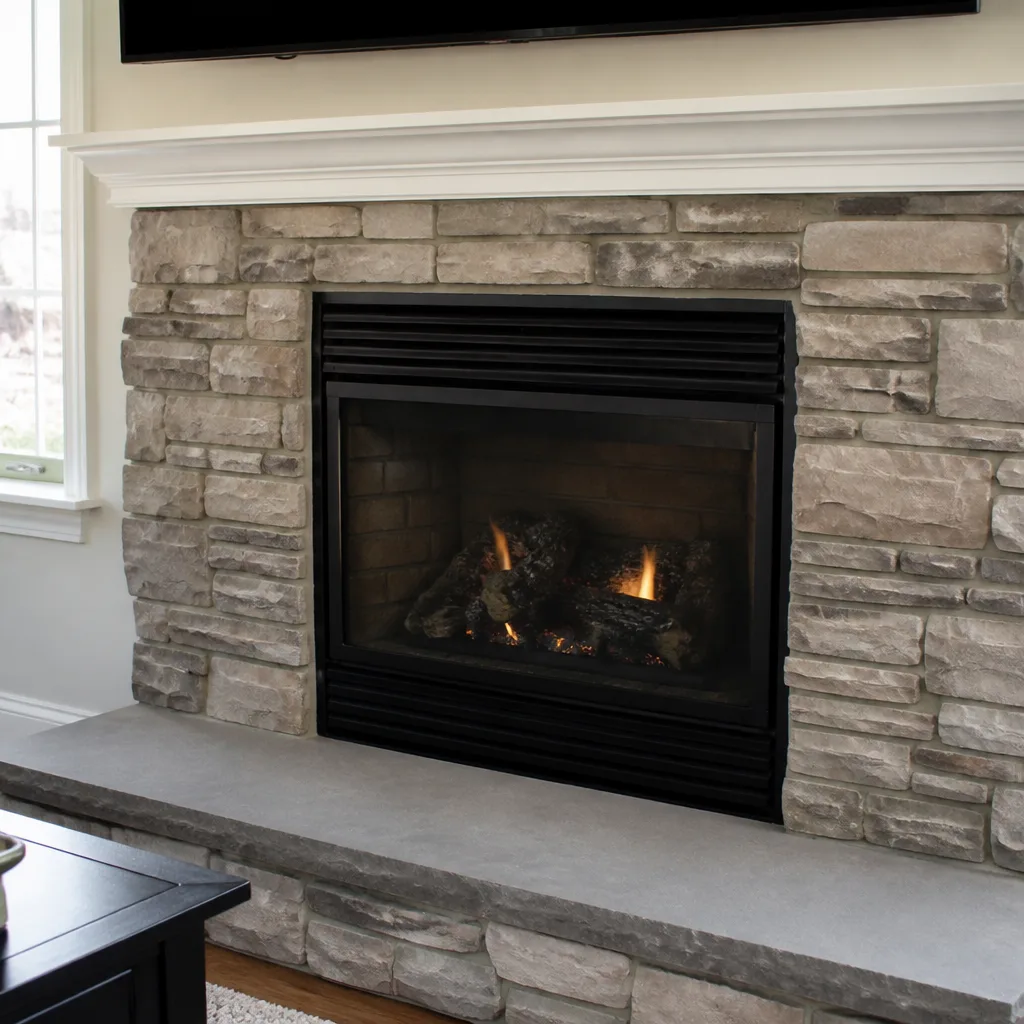
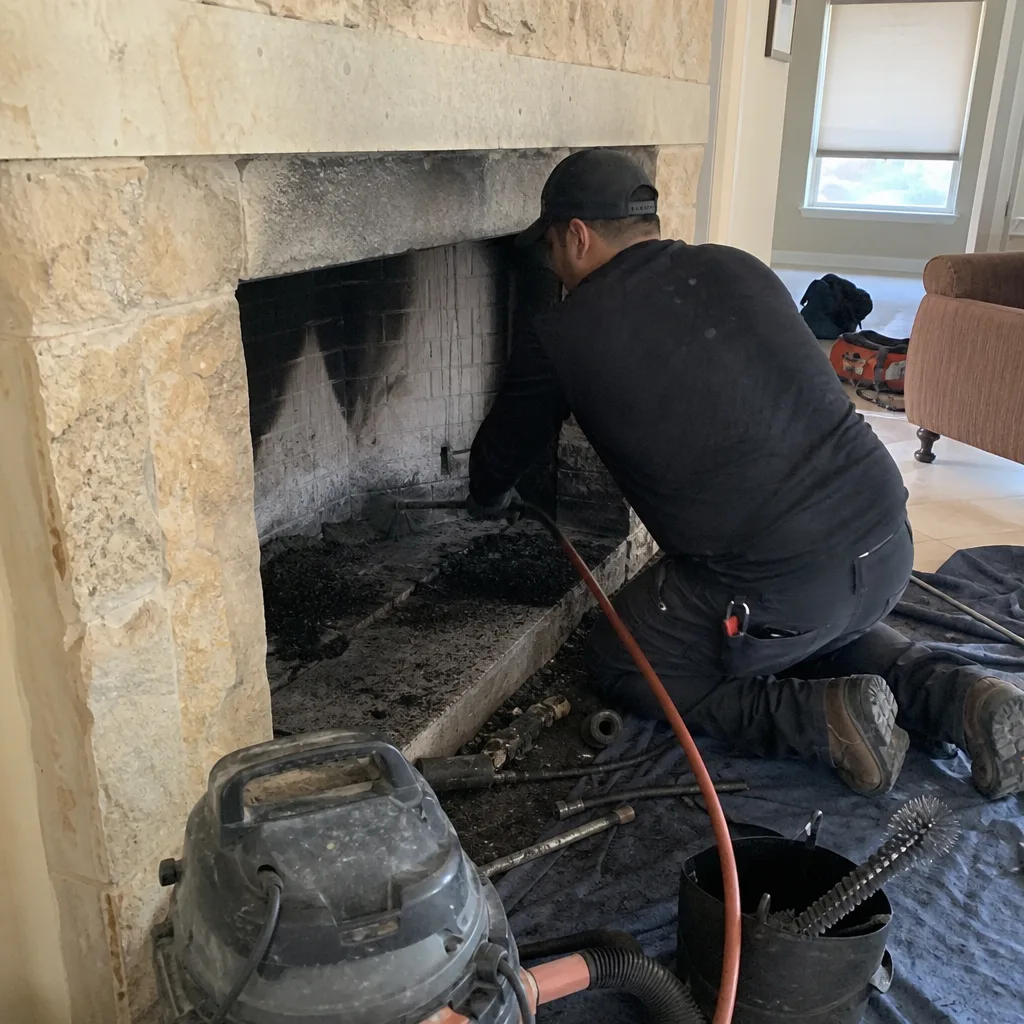 Before
 After
After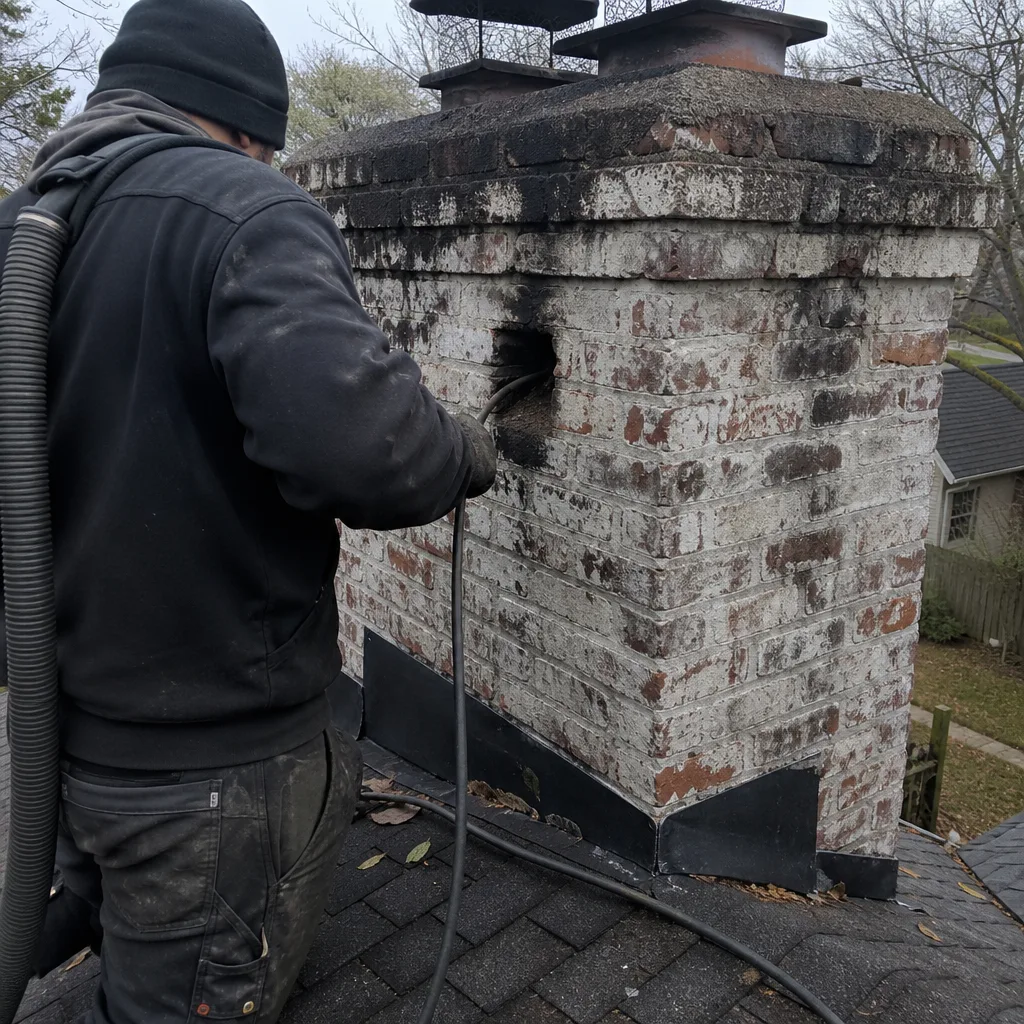 Before
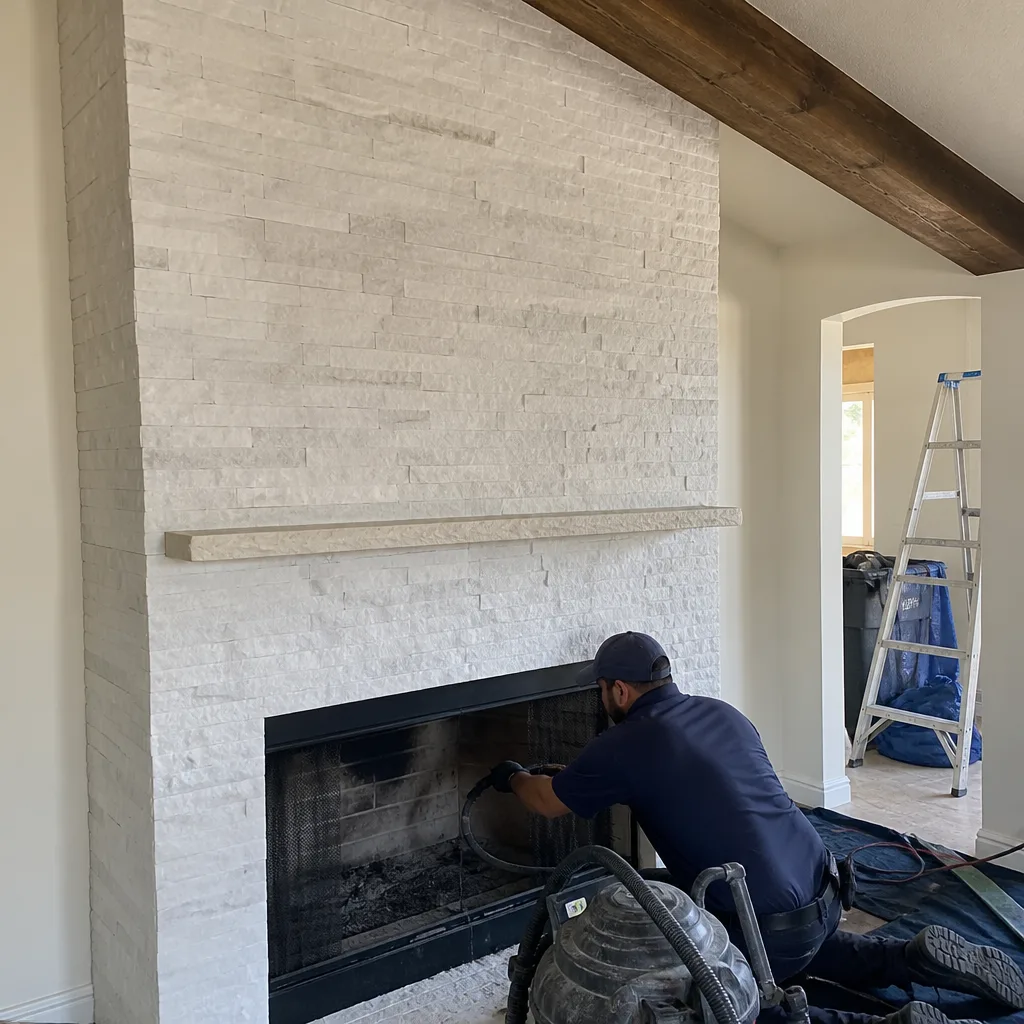 After
After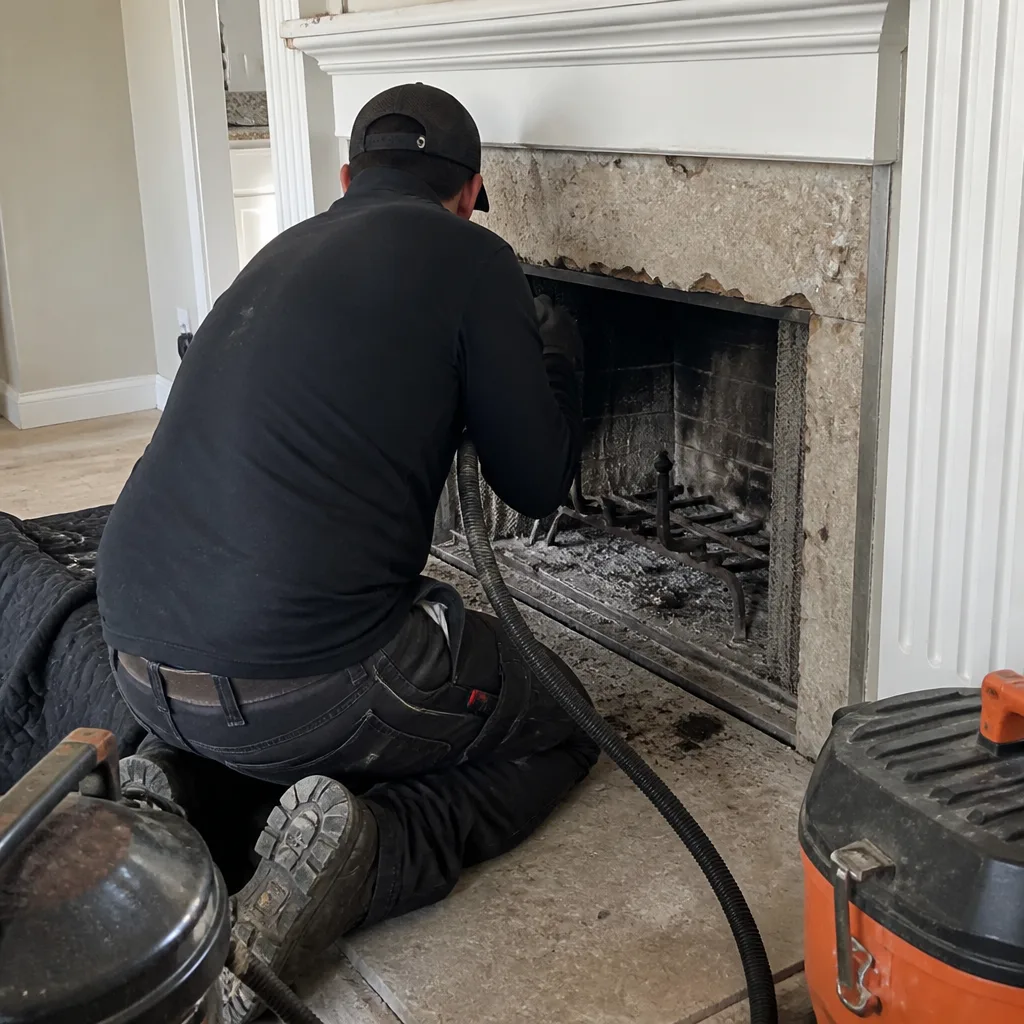 Before
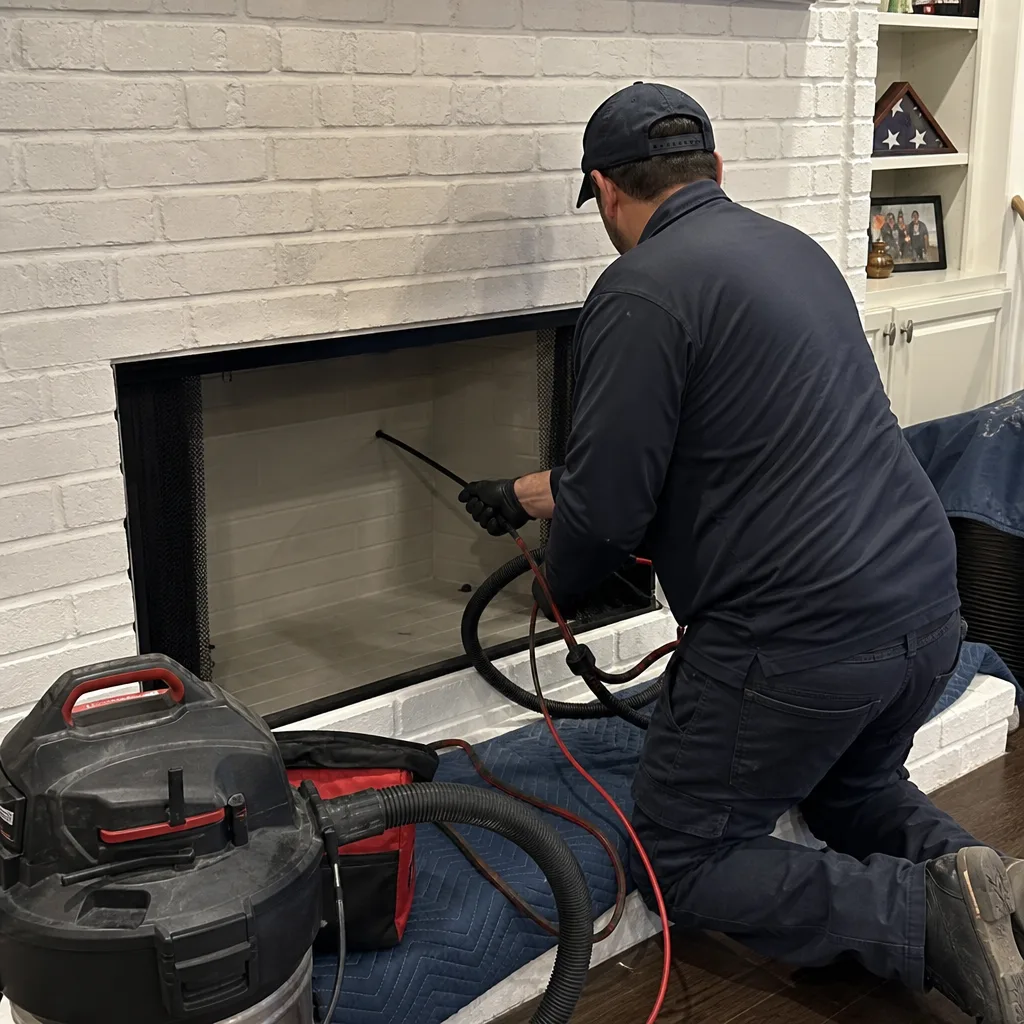 After
AfterSoot Removal in Dallas, TX
Soot removal in Dallas typically runs $149 to $349, depending on flue length, fireplace type, and how much soot has built up since the last cleaning-see our full 2026 price guide for details. Most jobs are completed in a single visit, with a written price delivered before any work begins and a documented photo record when it’s done.
If your firebox walls are coated in a fine black powder, your glass doors are going dark after a few fires, or you’re catching that flat, acrid smell even when the fireplace isn’t in use, soot is almost certainly the cause. Soot is the lighter, carbon-rich byproduct that forms before wood combustion fully completes. Left alone, it narrows the flue, blocks draft, and eventually blends into the heavier creosote deposits that create a real fire hazard. At Level Two Chimney Dallas, we’ve been clearing both from Dallas flues since 2009 – over 38,000 inspections and cleanings, every one quoted in writing before a brush touches the liner.
Soot removal is part of our broader Chimney Cleaning & Sweep in Dallas service. This page focuses specifically on what soot is, when you need it cleared, exactly what we do to clear it, and what it costs. If you want a written quote without the runaround, call (972) 284-1392 – a live person picks up, any time of day.
When You Need Soot Removal
Soot accumulates faster than most Dallas homeowners expect, especially in older Park Cities bungalows with shorter masonry flues or in newer Lakewood homes with insert fireplaces that run at lower temperatures. Here’s what to watch for:
- Black streaking or heavy powder on the firebox walls. A thin gray dusting after a fire is normal. A thick black coating that transfers to your hand means combustion isn’t completing cleanly and soot is building faster than the draft can carry it out.
- Fireplace glass that fogs within one or two fires. In gas and wood-burning inserts, soot will cloud the viewing glass quickly when the air wash system is partially blocked or when draft is poor – both common symptoms of a flue that needs clearing.
- A persistent smoky or flat smell in the room, even when no fire is burning. Soot absorbs and re-releases odor. In Dallas summers, attic heat drives that smell right down the flue and into the living space.
- Smoke rolling into the room when you open the damper. Soot buildup narrows the effective diameter of the flue and can disrupt the draft enough that smoke spills forward instead of drawing up – a sign the system needs cleaning before the next use.
- It’s been more than 12 months since the last cleaning. The NFPA 211 standard recommends annual inspection and cleaning for any chimney in regular use. Dallas’s mild winters mean most homeowners fire up the hearth from late October through February – that’s enough use to warrant a look every season.
- You’ve just moved into a resale home. Soot and early-stage creosote are invisible without a camera scan. A written inspection record from the previous owner is not a substitute for a Level 2 camera inspection – a lesson we document frequently in Preston Hollow and East Dallas properties that passed visual inspections at closing but showed significant buildup on camera.
Our Soot Removal Process
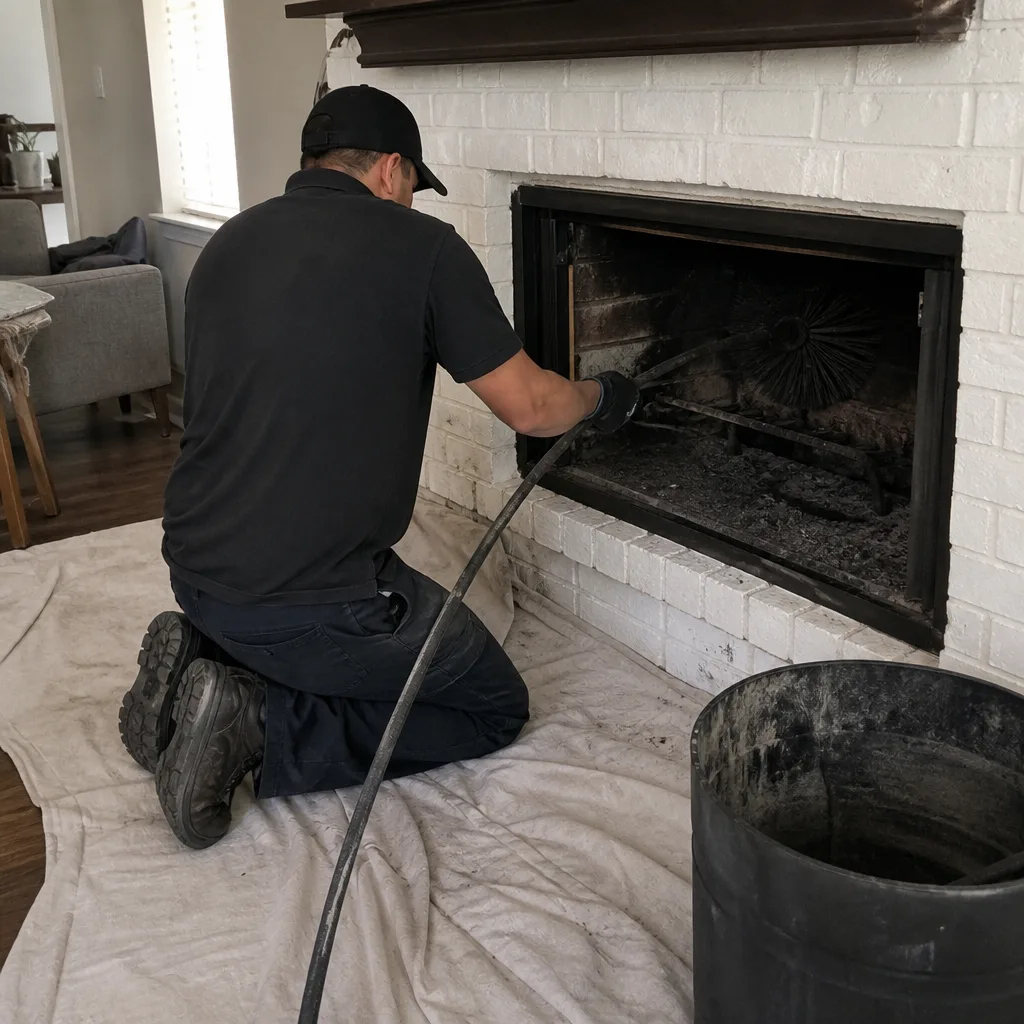
We don’t show up with a flashlight and call it an inspection. Every soot removal visit follows a structured process built around the NFPA 211 Level 2 standard – camera down the flue, written scope before work starts, photo record when it’s finished. Here’s how a typical Dallas appointment runs:
- Pre-work inspection and written quote. Before we unpack a single brush, a background-checked, uniformed technician walks the system – firebox, smoke shelf, damper, smoke chamber, and crown – and runs the inspection camera down the flue liner. We note what’s there: soot class, any creosote deposits, liner condition, draft obstruction. You get a written price and written scope before any work begins. That’s Haven Standard Clause 1 – not a policy we review periodically, but the way every job has worked since 2009.
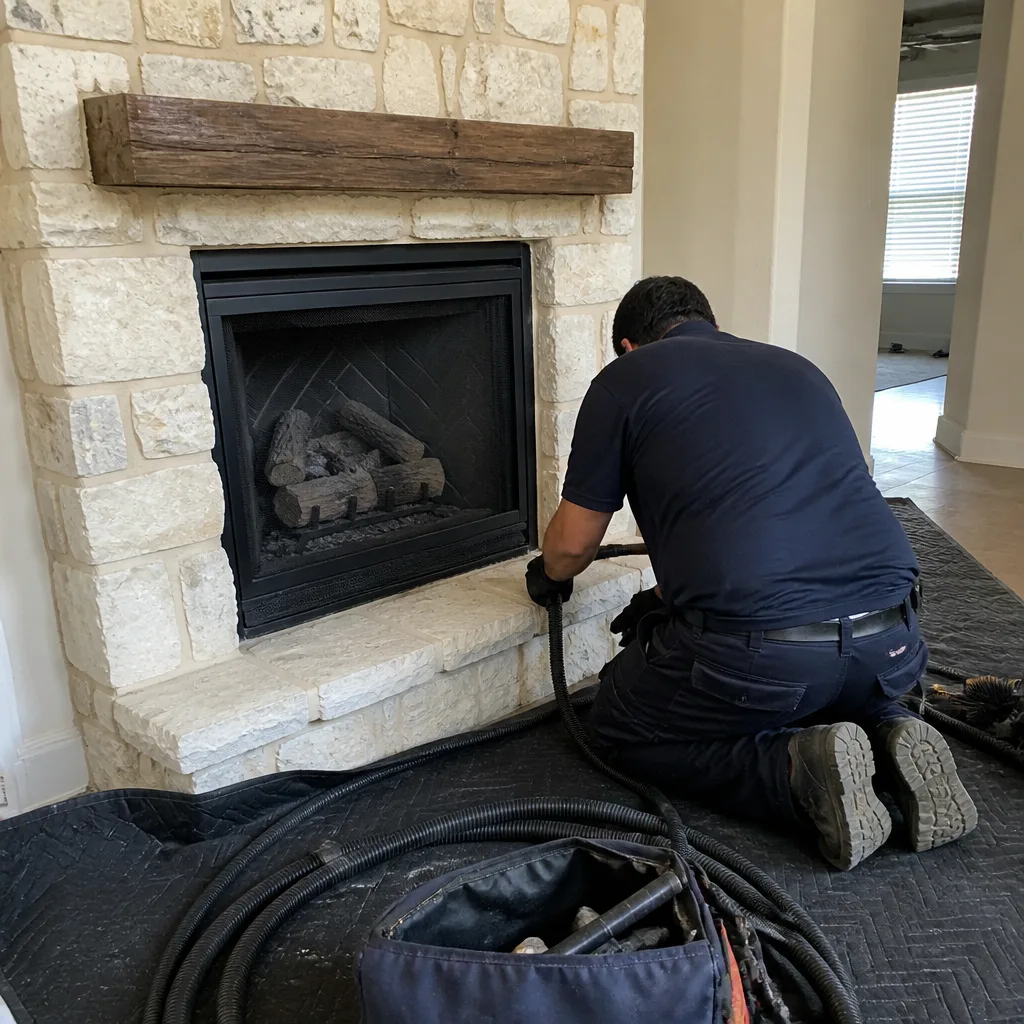
- Drop cloth and seal-off setup. We seal the fireplace opening with a tight-fitting drop cloth system and connect a commercial HEPA vacuum to contain fine carbon particulate. Soot is lightweight and travels. Without a proper seal, it will coat furniture and upholstery across the room. In older Dallas homes with open floor plans, that matters more than most people realize until it’s too late.
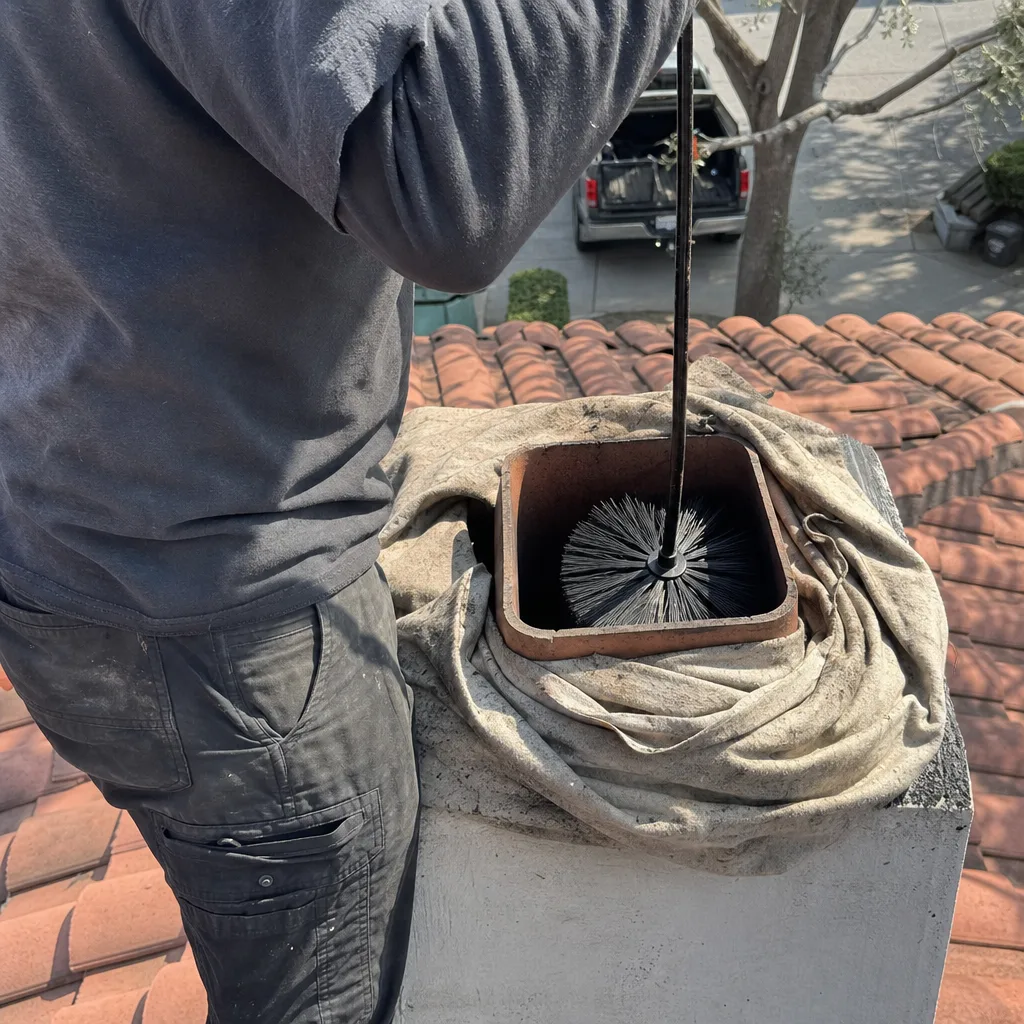
- Flue brushing from top to bottom. Using chimney brushes sized to the specific flue dimensions – round, square, or rectangular liner – we work from the top of the chimney down, loosening soot deposits from the flue walls, the smoke chamber, and the smoke shelf above the damper. For prefab fireplaces common in many Dallas townhomes and condos, we adjust brush size and pressure to avoid stressing the liner. Brushes and rods sourced through our supply network include Gelco and Olympia Chimney components, chosen specifically because consistent sizing matters in tight liners.
- Smoke chamber and firebox cleaning. The smoke chamber – the funnel-shaped section just above the damper – catches a disproportionate amount of soot because of how airflow behaves in that zone. We scrub it down, clear the smoke shelf (which sits behind the damper and collects both soot and debris), and vacuum the firebox floor and walls. This is where a lot of one-visit soot-removal jobs stop short; we don’t.
- Post-clean camera verification and photo record. After the cleaning, the camera goes back down. We compare pre- and post-cleaning liner condition, confirm the flue is clear, and document what we found and what we did. You walk away with a photo record – not a verbal summary, a documented file. That’s Clause 4 of the Haven Standard, and it’s been standard practice on every job since 2009.
- Written summary and 365-Day Done Right Promise. Before we leave, you get a written record of the job: what was found, what was cleaned, what was left in place and why, and what we recommend watching before the next season. The job is backed by the 365-Day Done Right Promise – if it’s not done right, we make it right.
 Before
 After
AfterSoot Removal Pricing in Dallas
Soot removal in Dallas runs $149 to $349 for most single-fireplace homes. Here’s what drives the range:
| Scenario | Typical Price Range |
|---|---|
| Standard masonry fireplace, single flue, light soot | $149 – $199 |
| Standard masonry fireplace, single flue, heavier buildup | $199 – $249 |
| Prefab or insert fireplace, standard flue length | $169 – $229 |
| Two-story or extended flue (common in Lake Highlands and Devonshire homes) | $229 – $299 |
| Heavy soot with early creosote present, requires additional treatment | $279 – $349+ |
A few things affect where your job lands in that range. Flue length is the biggest factor – a two-story chimney in a Winnetka Heights craftsman takes more time and more brushing than a single-story ranch flue in Buckner Terrace. Fireplace type matters too; inserts and zero-clearance prefabs have tighter tolerances than open masonry systems. And if soot has been left long enough to combine with moisture and begin hardening toward early-stage creosote, that takes additional time and sometimes a rotary cleaning system to address properly.
There are no hidden fees added after the tech is in your home. The price we write before we start is the price you pay. If the camera finds something beyond soot – a cracked tile liner section, a deteriorated smoke chamber, or Class II creosote – we’ll document it, explain what it means in plain terms, and give you a separate written quote for that work. You decide what to do next; nothing starts without your sign-off.
We also offer a Free Second Opinion on any written estimate – bring us a competitor’s written quote and we’ll review it with you at no charge.
FAQs – Soot Removal
Is soot removal the same thing as a chimney sweep?
Soot removal is one part of a full chimney sweep, but not every sweep addresses it with the same thoroughness. A standard Chimney Cleaning & Sweep services in Dallas should clear soot from the flue, smoke chamber, and smoke shelf and include a Level 2 camera inspection. What varies by company is what gets documented and what gets missed. At Level Two Chimney Dallas, every cleaning includes a camera scan before and after, a written scope, and a photo record – so you can see what was there and confirm it’s gone. Call (972) 284-1392 for a written quote with no obligation.
How often does soot need to be removed from a Dallas chimney?
For a fireplace used regularly through the Dallas burning season – roughly October through February – Annual Sweep is the NFPA 211 recommendation and the one we stand behind. Dallas’s relatively mild winters mean many homeowners run fewer fires than they would in colder climates, but the humidity here accelerates how quickly soot binds to liner surfaces, particularly in older masonry flues. If you’re burning two to three times a week through the season, don’t skip the annual visit. Call us at (972) 284-1392 and we’ll take a look before you light the first fire of fall.
Can soot cause a chimney fire?
Soot alone is unlikely to ignite, but it’s a precursor to creosote, and creosote absolutely can. When soot accumulates in a flue that sees inconsistent temperatures – which is common in Dallas where burning seasons are short – it can combine with moisture and partially combust gases to form Class I and Class II creosote deposits. Class III creosote, the hardened, glazed form, is what fuels chimney fires that reach temperatures above 2,000 degrees and can damage liner tiles, crack masonry, and spread to the structure. Catching soot early is how you avoid that progression. We document every stage of buildup with the camera so you know exactly what class of deposit is present and what it calls for. This is also a situation where we’d strongly advise against DIY cleaning attempts on anything beyond light surface soot – the chemistry of advanced creosote removal involves specific rotary tools and chemical treatments, and disturbing a heavy deposit incorrectly can accelerate the hazard rather than reduce it. Let a trained technician assess it first.
What’s the difference between soot and creosote?
Soot is the dry, powdery carbon residue left when combustion is incomplete – it’s lightweight, relatively easy to brush free, and not especially flammable on its own. Creosote is what soot becomes when it mixes with unburned wood tars, moisture, and heat over time. Class I creosote is still dusty and brushable. Class II is flakier and tarry, requiring more aggressive cleaning. Class III is hardened, shiny, and chemically resistant – it typically needs a rotary cleaning system or chemical treatment before mechanical removal. When our camera goes down your Dallas flue, we note the class present in the written report, so the scope of work reflects what’s actually there rather than a one-size-fits-all cleaning package.
What You Get From Level Two Chimney Dallas
Every soot removal job includes the same documented process: a pre-work camera inspection down the flue, a written price before any brush moves, a full cleaning of the flue, smoke chamber, and smoke shelf, and a post-clean camera pass with a photo record you keep. That last part – the photo archive – has been standard on every job since 2009, long before most Dallas sweep companies considered documentation anything other than optional. Clause 4 of the Haven Standard made it mandatory from day one.
Corrine Halstead leads the team at Level Two Chimney Dallas. The technicians who show up to your home are background-checked, uniformed, and assigned by name – you’ll get a text when they’re on the way. License information is on the page. Nothing about this is vague.
For context on the full scope of what we clean and inspect on a standard visit, the home page has the complete service overview.
If you’ve got a Dallas chimney that hasn’t been cleaned this season, or you bought a resale home and genuinely don’t know what’s in that flue, the next step is simple: search Chimney Cleaning & Sweep Near Me in Dallas, TX or call (972) 284-1392. A live person answers. They’ll schedule a visit, and you’ll have a written price before anyone starts work. That’s how it works on every job, no exceptions.
- Written price before work starts – always
- Camera inspection before and after cleaning
- Photo record on every visit, included as standard
- 365-Day Done Right Promise on every job
- Free Second Opinion on any written estimate
- Live phone support, 24 hours a day, 7 days a week
Written by Corrine Halstead, Owner at Level Two Chimney Dallas, serving Dallas.