
Last updated September 22, 2026
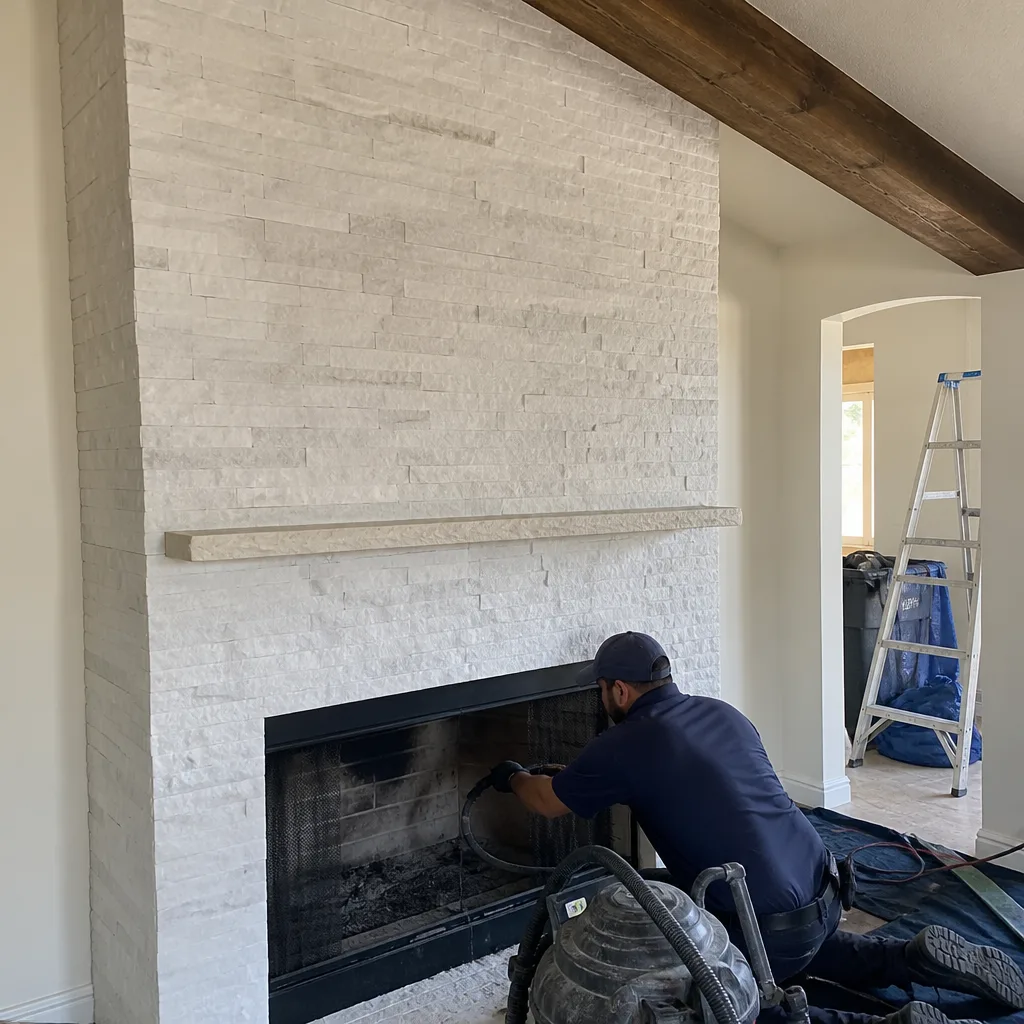
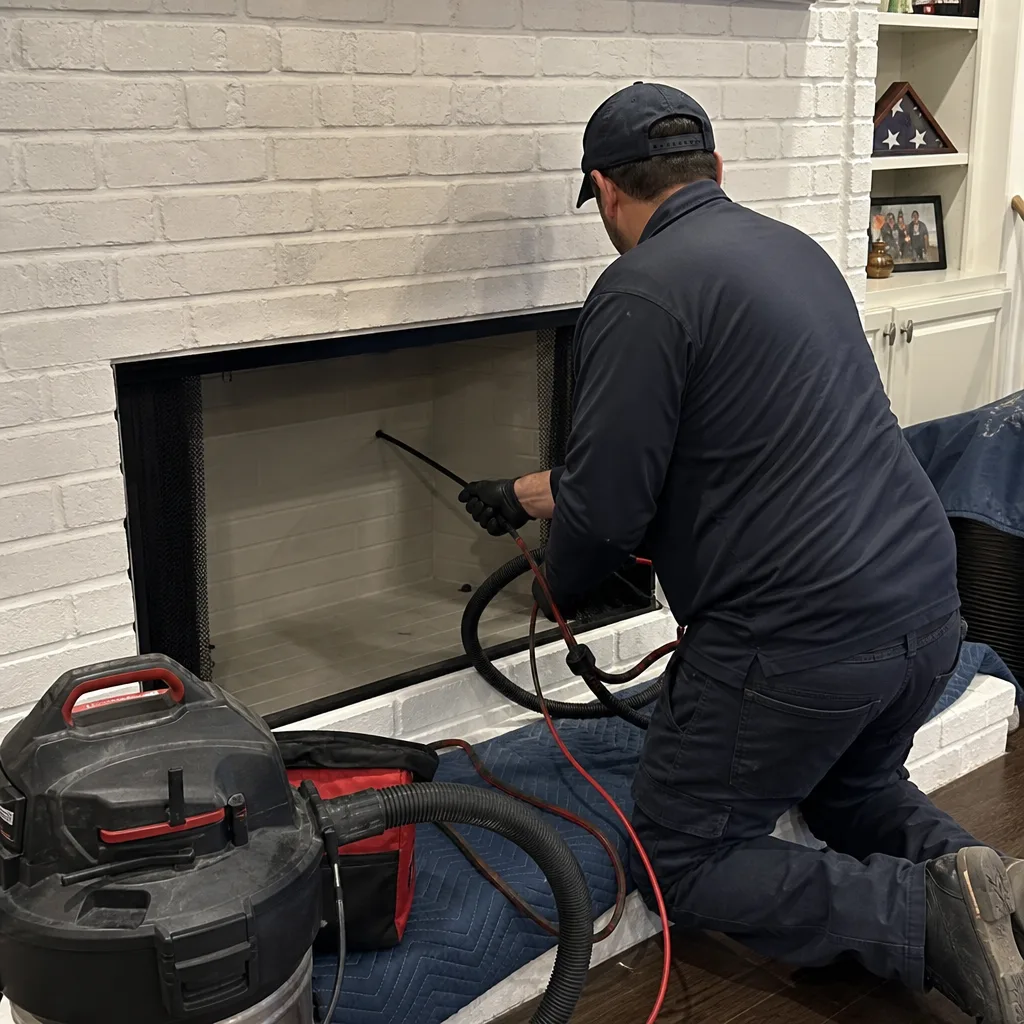
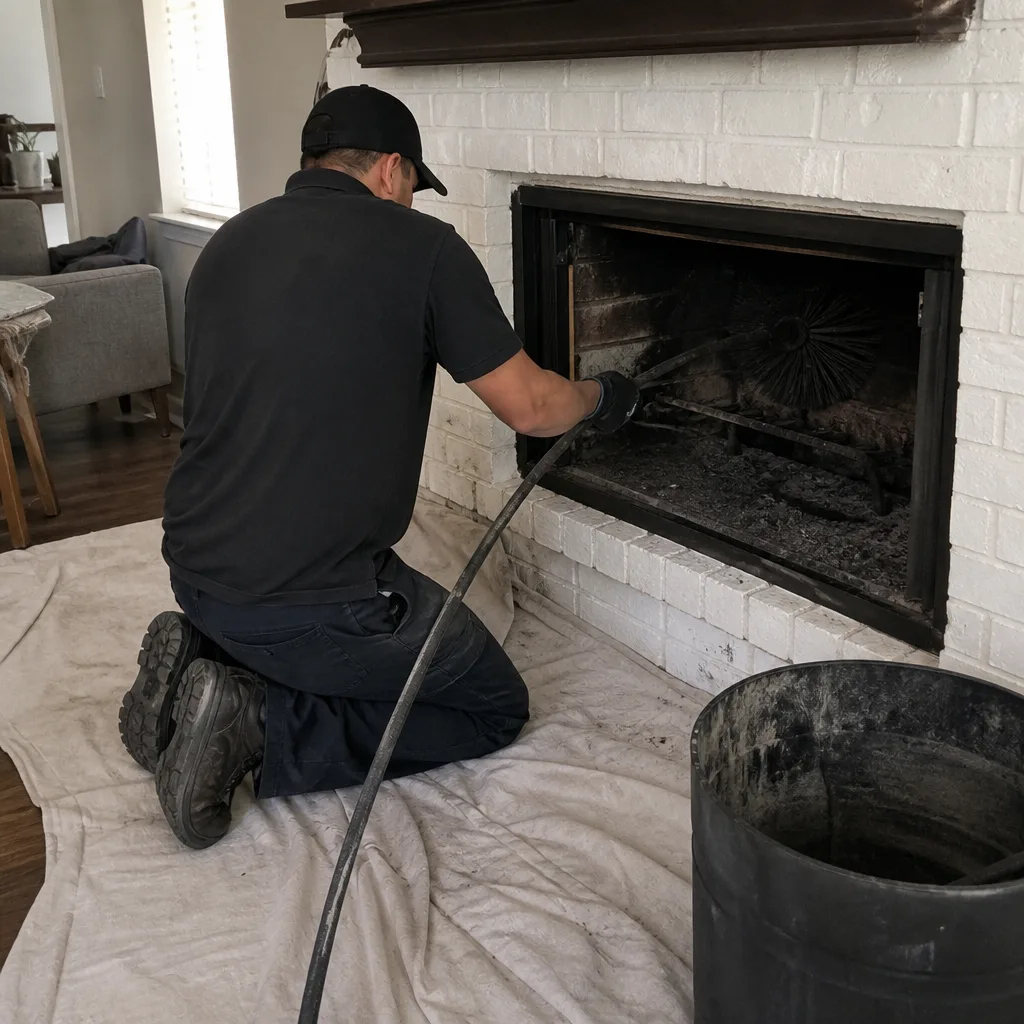
Level 1 sweep and inspection to the NFPA 211 annual standard - flue, crown, cap, and flashing checked and photographed
Chimney sweep logs do not sweep chimneys. They loosen some creosote - which then falls where a brush and vacuum still have to collect it.
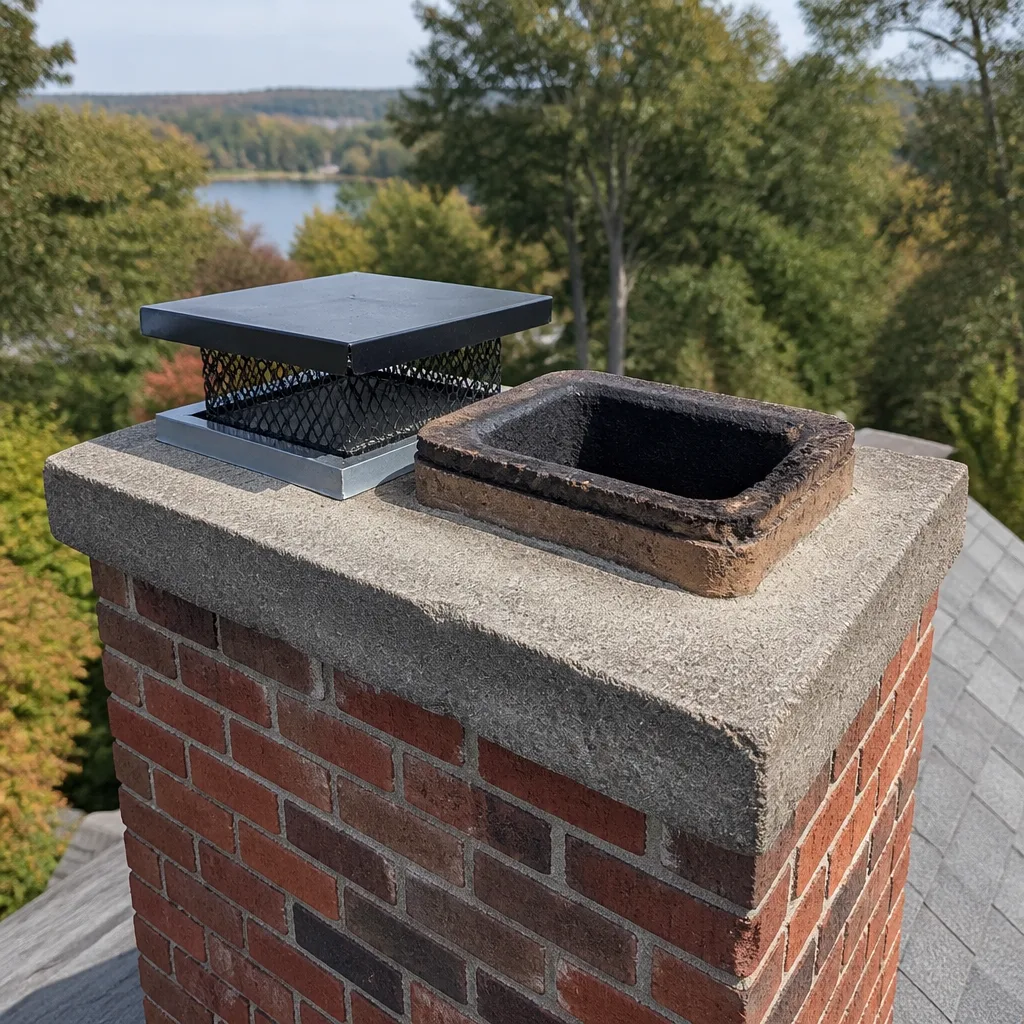
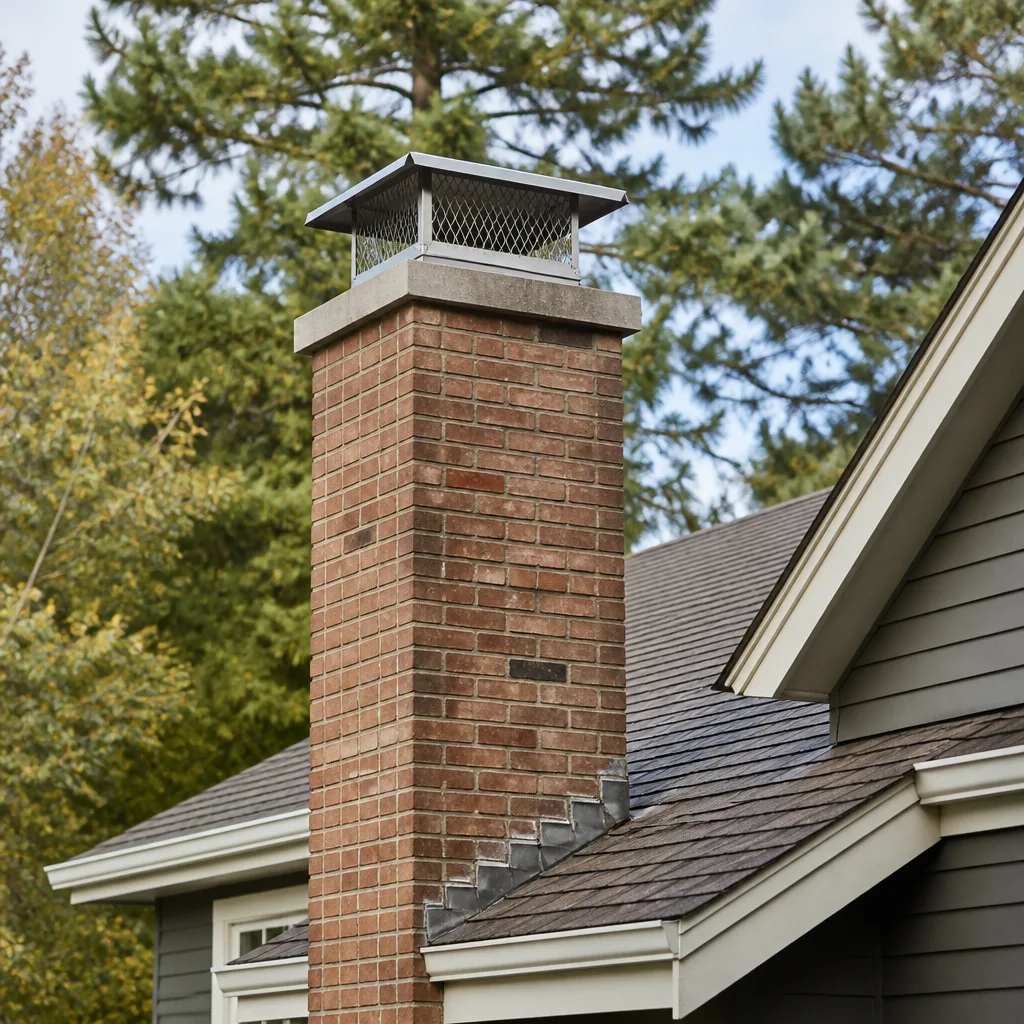
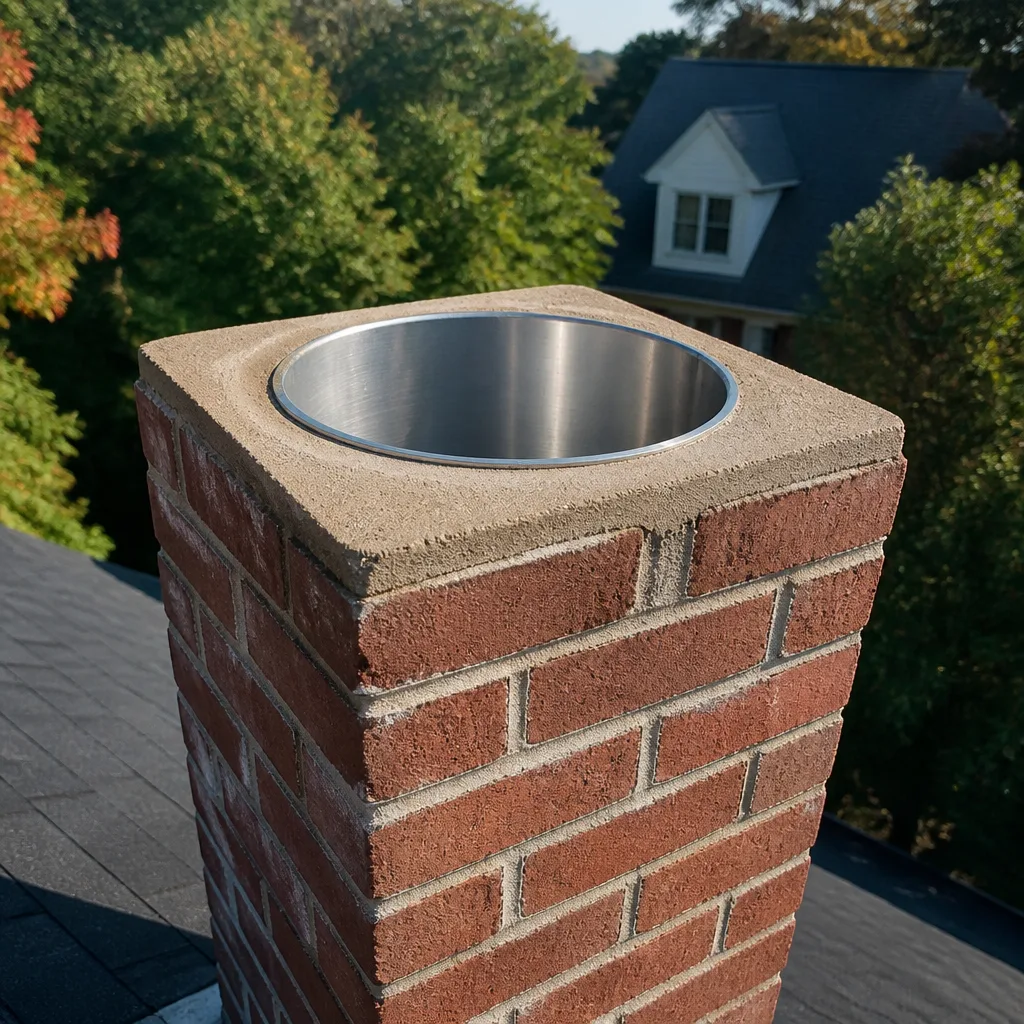
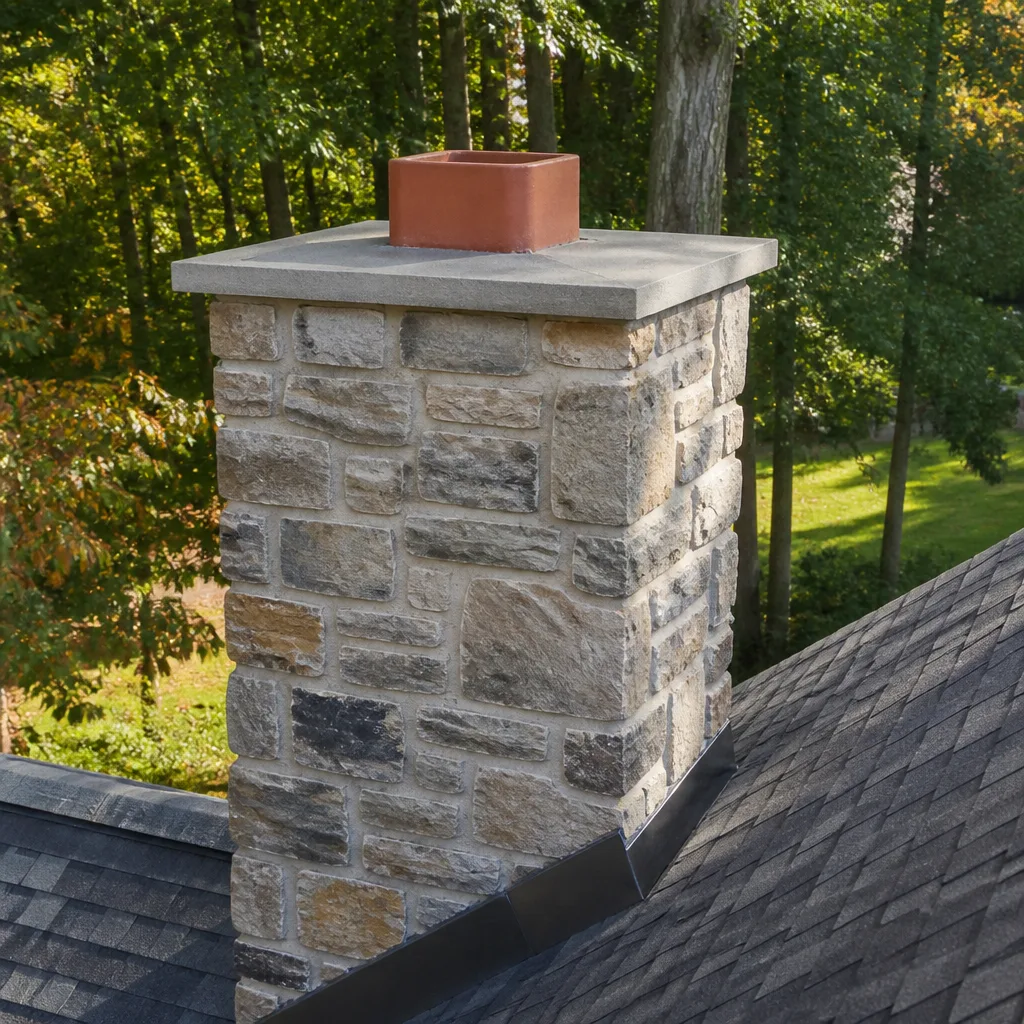
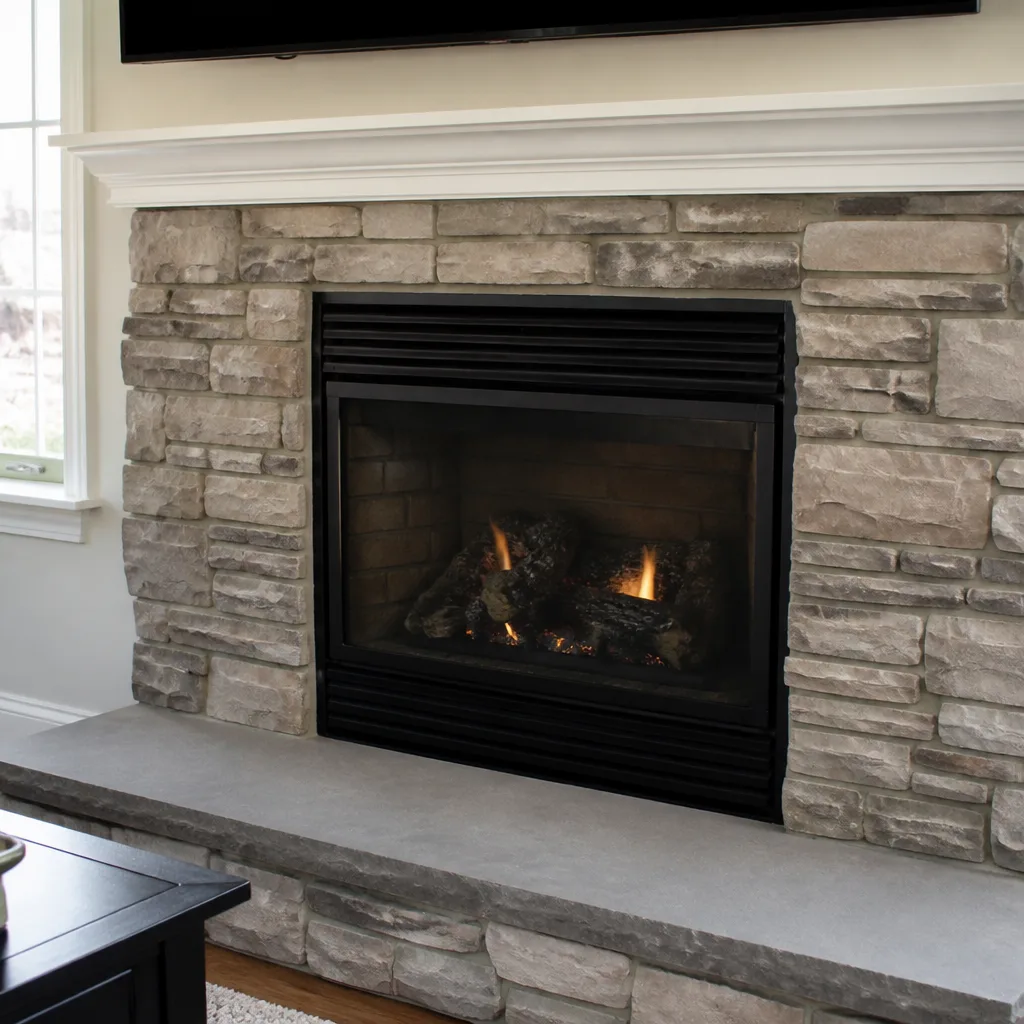
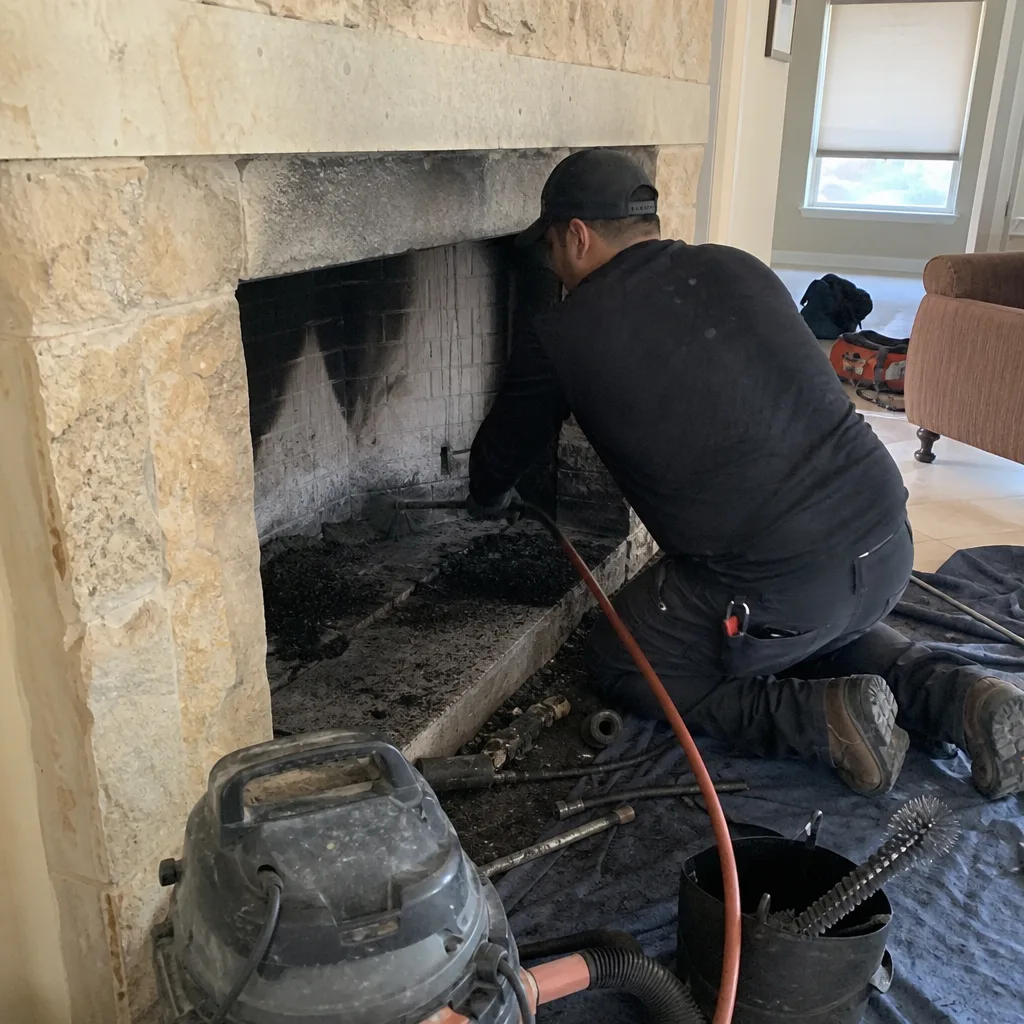 Before
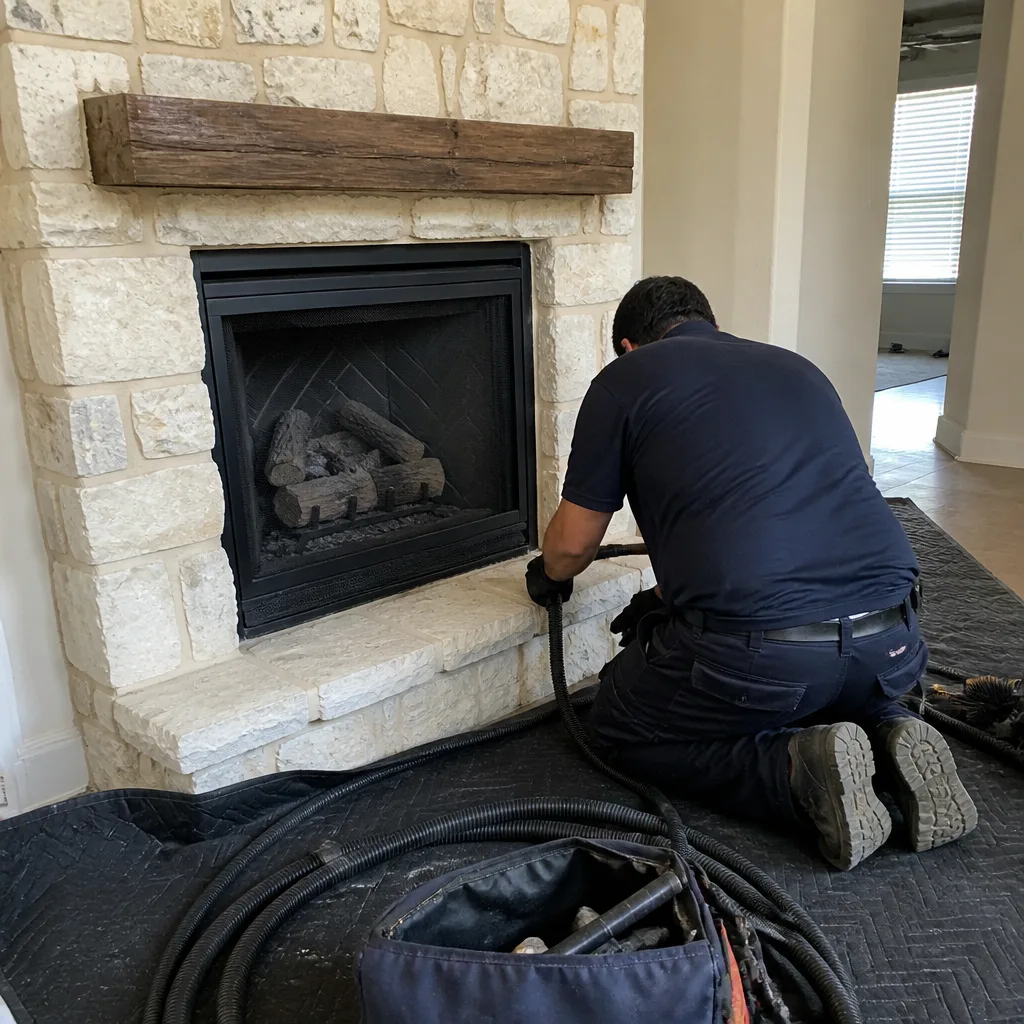 After
After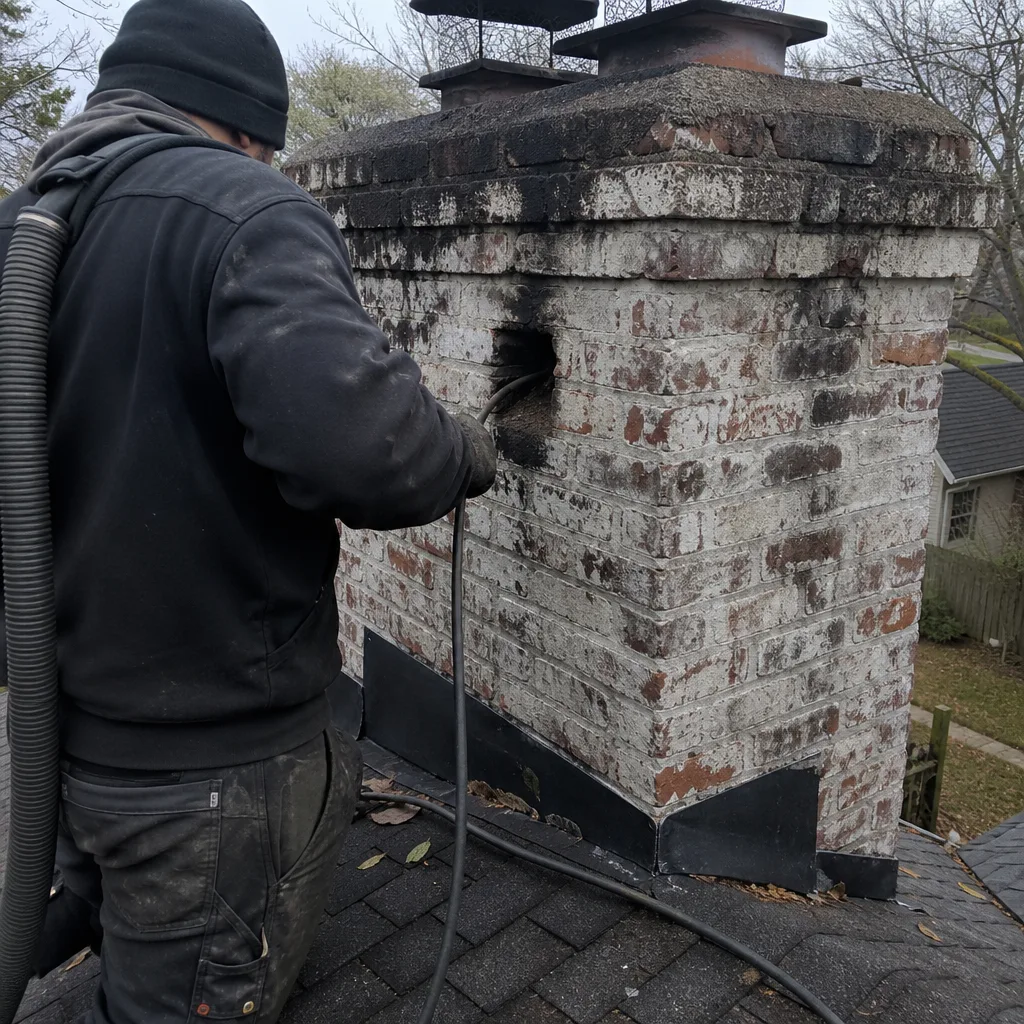 Before
 After
After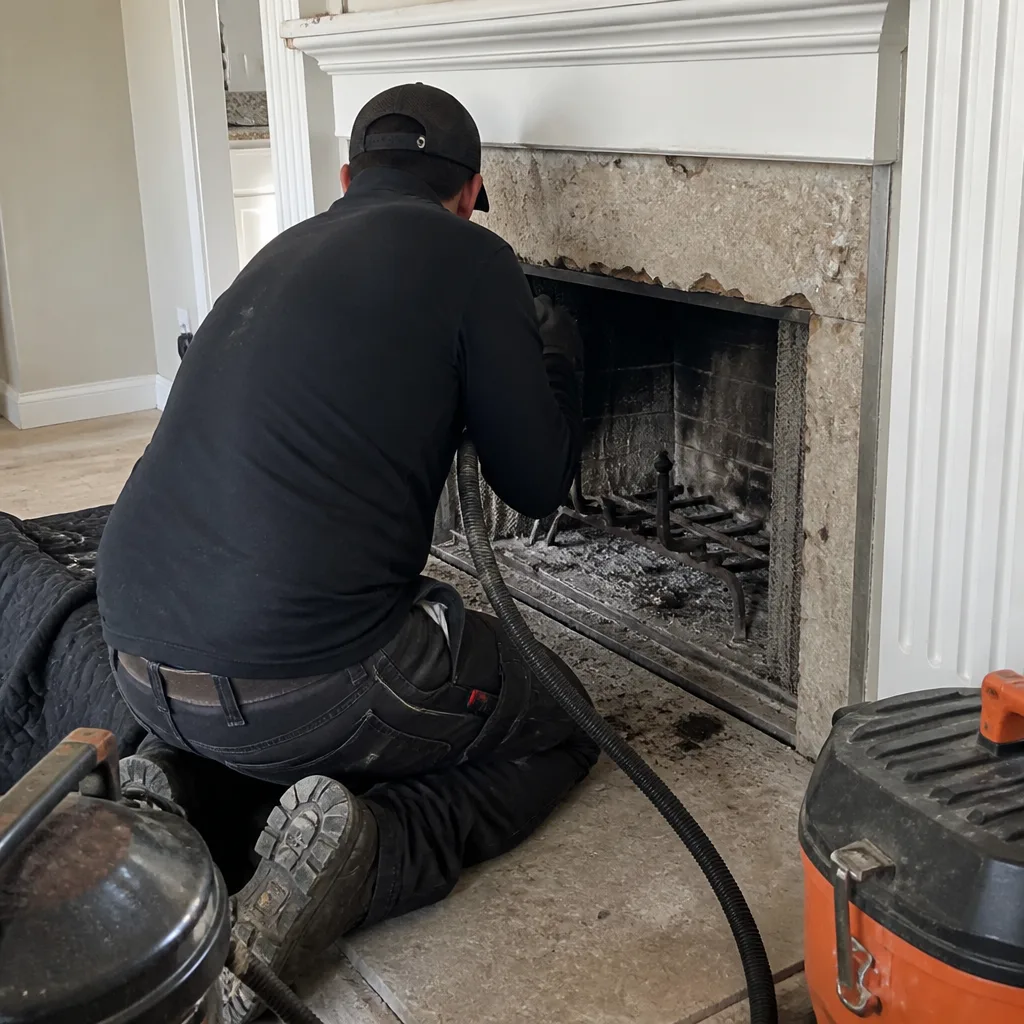 Before
 After
AfterChimney Cleaning Warning Signs: A Dallas Homeowner’s Reference Guide
A white stain on your chimney exterior looks like harmless weathering. It’s actually efflorescence - mineral salts pushed out by water moving through the masonry - and it tells a sweep there’s active moisture intrusion before the flue liner ever shows it. In Dallas, where clay soils shift and spring storms drive water into aging crowns, we’ve seen homeowners use fireplaces for years while hidden liner damage progressed from a $200 repair to a $4,000 rebuild. This guide draws the line between cosmetic issues and fire-clearance hazards, ranks every warning sign by urgency, and explains what your nose, your eyes, and a Level 2 camera each reveal that the others cannot.
Quick Answer
The seven chimney warning signs every Dallas homeowner should recognize are: smoke rolling back into the room, a persistent tar or campfire odor, white or green exterior staining, rust streaks on the firebox or damper, cracked or missing mortar joints, debris or animal sounds in the flue, and a damper that sticks or won’t fully close. Smoke backdraft and strong creosote odors mean stop using the fireplace tonight. Staining, rust, and mortar damage mean schedule within 30 days. Sticking dampers and minor debris can be monitored but should be checked before the next burning season.
Table of Contents
- The Seven Warning Signs, Ranked by Urgency
- What Smoke Rollout Actually Means: Three Mechanical Causes
- Reading Exterior Masonry Staining: Efflorescence, Soot Tracking, and Rust
- The Smell Profiles: Creosote, Animals, and Water Damage
- What Level 2 Camera Footage Reveals That Warning Signs Cannot
- How Dallas Climate and Soil Affect Chimney Deterioration
- Common Mistakes to Avoid
- When to Call a Professional
- Frequently Asked Questions
 Before
 After
AfterThe Seven Warning Signs, Ranked by Urgency
Not every warning sign demands the same response. We’ve organized these by what action they require, based on 38,000+ inspections and cleanings since 2009.
Stop Using the Fireplace Tonight
Smoke rolling back into the room during use. This indicates a blockage, negative pressure imbalance, or flue sizing problem that can force carbon monoxide into living spaces. In Lakewood and Old East Dallas, we’ve found this caused by bird nests in uncapped flues, collapsed clay liner sections in 1940s construction, and modern airtight homes with powerful range hoods that pull air down the chimney. Any active smoke rollout means the fireplace is unsafe to operate until diagnosed.
Strong tar or asphalt odor, especially in summer heat. This is Class III creosote, a hardened, highly combustible deposit that ignites at lower temperatures than ordinary soot. When attic temperatures in Dallas reach 140°F in July, creosote deposits off-gas. If you smell it, there’s enough buildup to sustain a chimney fire. Do not burn until swept.
Schedule Within 30 Days
White or green staining on exterior masonry. White is efflorescence - water moving through brick and depositing salts. Green indicates algae colonization from chronic moisture, common on north-facing chimney breasts in Preston Hollow and Highland Park where shade and sprinkler overspray combine. Both mean water is getting past the crown or through mortar joints, and water is the single largest cause of liner deterioration we document.
Rust streaks on the firebox walls or damper frame. Rust requires three things: iron, oxygen, and water. Your firebox and damper are iron. The oxygen is ambient. The water is coming down the flue. Rust streaks in a Dallas chimney almost always trace to a cracked crown or failed chimney cap flashing, and the water that causes them is already degrading the liner from the outside in.
Cracked, missing, or recessed mortar joints. Spalling brick faces and deteriorated mortar accelerate water intrusion and can compromise structural stability. In neighborhoods with 1980s construction like Lake Highlands and Richardson-adjacent Dallas, we’ve seen freeze-thaw cycling (rare but real in North Texas winters) pop brick faces off entirely. This is a 30-day item because the structural issue worsens with every rain, but it doesn’t create immediate combustion hazard.
Note and Monitor, But Check Before Next Burning Season
Sticking or incomplete damper closure. A damper that won’t fully open risks smoke rollout. One that won’t fully close bleeds conditioned air year-round and can allow down-drafts to carry odors. Often this is creosote buildup on the hinge or frame, sometimes it’s rust, occasionally it’s warped metal from prior overheating. Functional but imperfect dampers should be addressed before the next fire, not ignored for multiple seasons.
Debris sounds, scratching, or visible nesting material. Dallas’s urban wildlife - squirrels, raccoons, chimney swifts - treats an uncapped flue like a hollow tree. Active animal presence requires immediate eviction and cap installation. Old nesting material that has dried can be monitored if you’re certain the animal is gone, but nests reduce flue diameter and can ignite. We recommend camera confirmation.
What Smoke Rollout Actually Means: Three Mechanical Causes
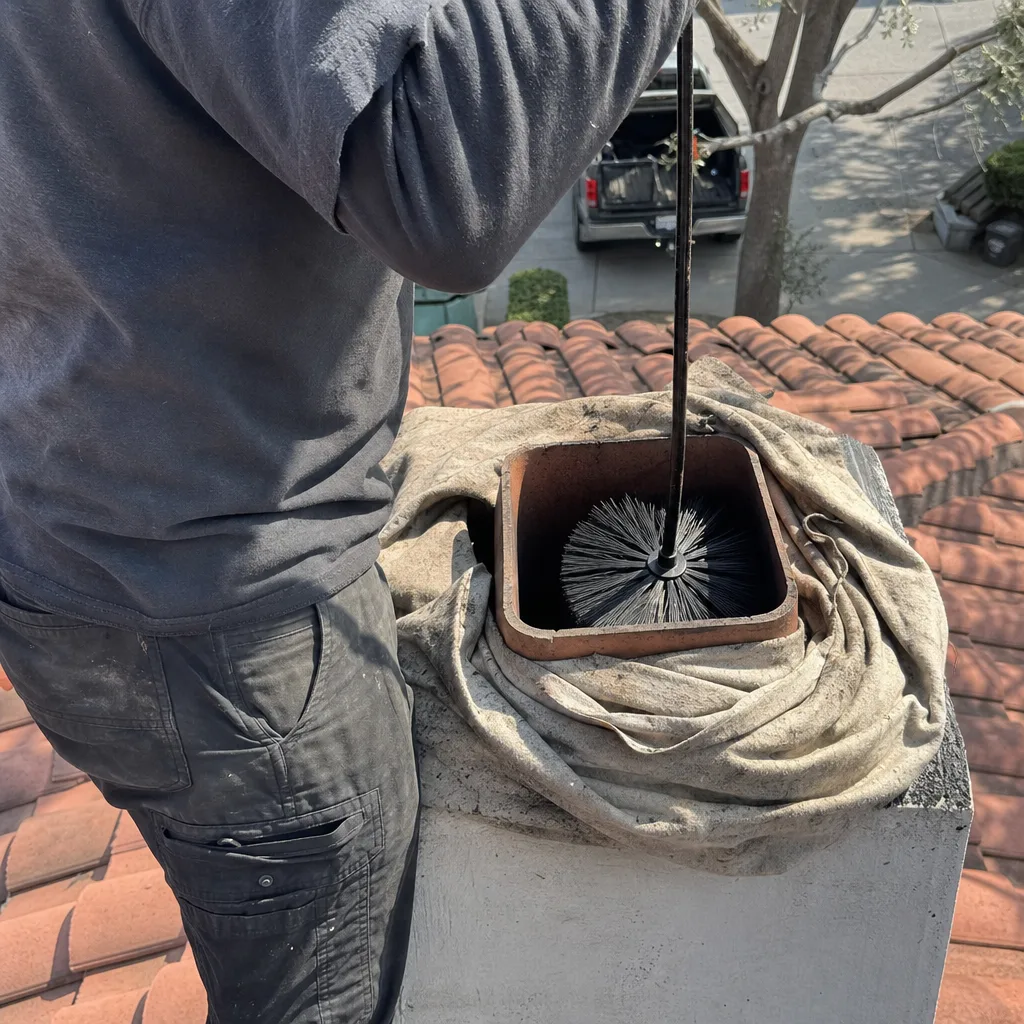
Smoke in the room is the warning sign homeowners recognize most readily, but “smoke rollout” describes three distinct failures with different solutions. A sweep who guesses wastes your money. A sweep who inspects - camera down the flue, pressure readings taken - names the cause and the exact fix.
Cause 1: Blockage or Flue Restriction
The flue must have sufficient cross-sectional area to carry combustion gases. A nest, collapsed liner, or heavy creosote buildup reduces that area. When the volume of smoke exceeds the flue’s capacity, it spills into the room.
How we distinguish it: A Level 2 camera scan shows the restriction directly. We measure the remaining open area against the fireplace opening using NFPA 211 sizing ratios. In Dallas’s older neighborhoods - Swiss Avenue, Munger Place, parts of Oak Cliff - original construction often paired large Rumford-style openings with 8×12 clay flue tiles that were marginal even when new. Add 80 years of creosote glazing, and the math no longer works.
Cause 2: Negative Pressure in the House
Modern homes are tighter than ever. In neighborhoods like Victory Park and the Design District, new construction with spray-foam insulation and continuous exhaust ventilation creates negative pressure that pulls air down the chimney. We’ve diagnosed this in homes where the fireplace worked fine until the homeowner installed a new range hood.
How we distinguish it: We perform a simple smoke pencil test at the firebox opening with the fireplace cold and the home’s typical exhaust appliances running. If air moves into the firebox, the house is depressurized. The fix is usually makeup air, not chimney repair.
Cause 3: Improper Flue Sizing or Configuration
A flue that is too large for the fireplace opening won’t establish proper draft. A flue that is too short, too offset, or too cold won’t develop sufficient buoyancy. This is common in Dallas’s 1950s-1970s ranch homes where original builders sometimes used the same flue tile for both a small fireplace and a connected furnace.
How we distinguish it: Camera footage reveals offset joints and liner transitions. We measure flue height against the roofline and surrounding structures. We check for exterior flue temperatures that indicate insufficient insulation. The solution may be a stainless steel liner sized specifically for the appliance, installed to NFPA 211 standards.
None of these three causes is diagnosed from the hearth with a flashlight. That’s why our chimney cleaning and sweep service in Dallas includes camera documentation as standard under Haven Standard Clause 4 - we’ve done this on every job since 2009, not as an upsell, but as the minimum standard for a competent inspection.
Reading Exterior Masonry Staining: Efflorescence, Soot Tracking, and Rust
Your chimney’s exterior is a diagnostic surface. Three distinct stain types tell three distinct stories about what’s happening inside the structure.
Efflorescence: The White Crystalline Deposit
Efflorescence is salt, not mold, not paint failure. Water dissolves naturally occurring salts in mortar and brick, carries them to the surface, and leaves them behind as it evaporates. The presence of efflorescence proves water is moving through the masonry mass - not just running down the outside, but penetrating and migrating.
In Dallas, we see this most on chimneys with cracked crowns, failed cap flashing, or deteriorated mortar joints. The clay soils here expand and contract with moisture, and that subtle foundation movement stresses chimney structures. A crown that was intact in 2015 often shows hairline cracking by 2025. Water enters those cracks, migrates through the brick, and efflorescence appears.
What it implies: The flue liner is being exposed to moisture from the exterior. Clay tile liners absorb water and spall. Stainless steel liners corrode at joints. The longer this continues, the more likely we are to find liner damage on camera that wasn’t visible from below.
Soot Tracking: The Black Vertical Streaks
Black streaks running down the exterior, especially below the crown line or at mortar joints, indicate combustion gases are escaping the flue and migrating through the masonry. This happens when liner joints are separated, the liner is cracked, or no liner exists at all (common in pre-1940s Dallas construction).
Soot tracking is more urgent than efflorescence. It means the chimney’s primary containment - the flue liner - has failed, and combustion byproducts are entering the structure. Carbon monoxide is odorless and colorless; the visible soot is a warning that the invisible gas may be present too.
Rust Streaks: The Orange-Brown Discoloration
Rust requires the iron content we discussed earlier. On exterior masonry, rust streaks usually trace to a galvanized metal chimney cap or chase cover that is failing. The metal corrodes, water carries iron oxide down the brick, and the stain marks the path.
But the cap is also the chimney’s primary water deflector. A cap rusting through is a cap leaking. In Dallas’s hail-prone spring storms, we’ve seen chase covers dented and displaced, creating direct water entry paths. The rust stain is the visible evidence of a cap that needs replacement - and of water that has already been entering, sometimes for multiple seasons.
We source replacement caps and chase covers through our Haven buying network, including Copperfield and Gelco materials, sized and installed to prevent recurrence.
The Smell Profiles: Creosote, Animals, and Water Damage
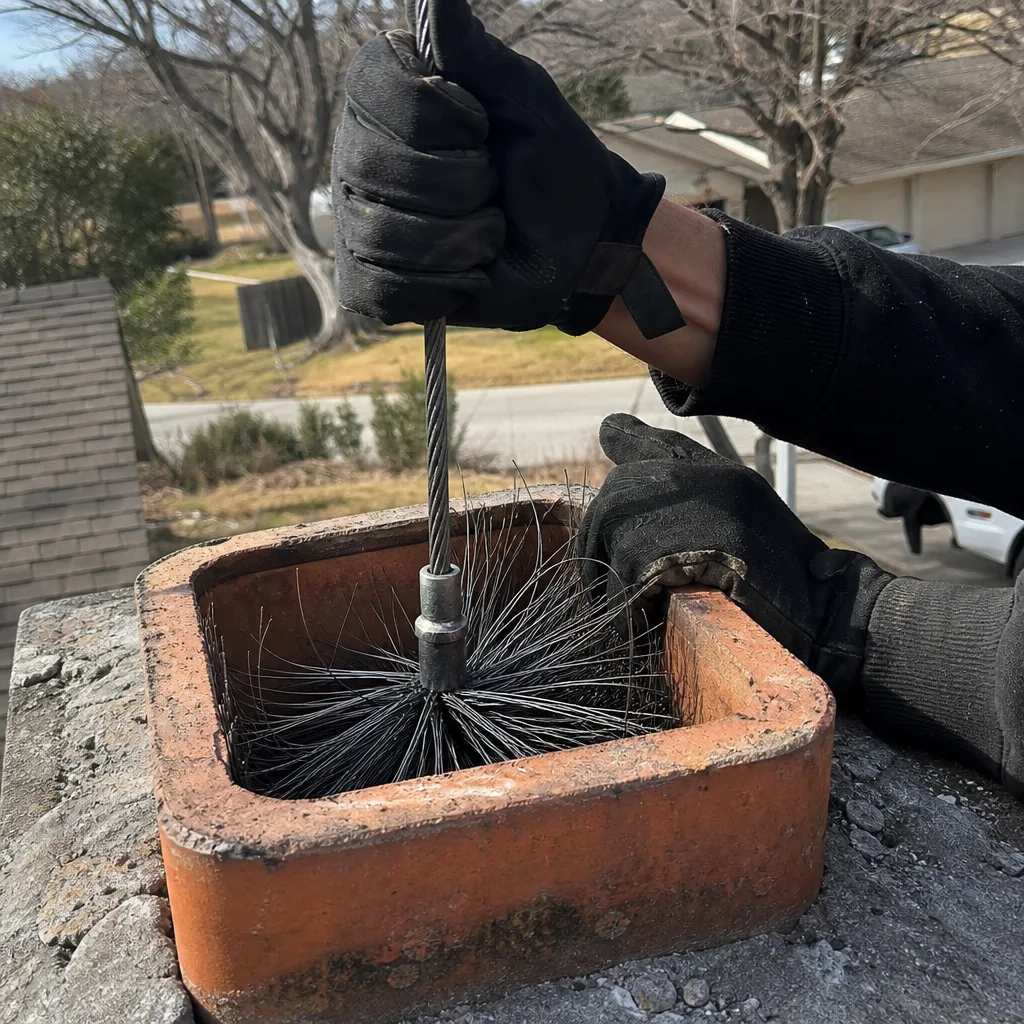
Your nose is a more precise instrument than most homeowners realize. Three distinct chimney odors point to three distinct problems, and confusing them leads to wrong solutions.
The Creosote Odor: Asphalt, Tar, or Campfire in Summer
Class I creosote is flaky and light - it smells like a faint campfire when the fireplace is in use. Class III creosote is shiny, hardened, and dense - it smells like roofing tar or asphalt, especially when attic temperatures rise. In Dallas, we get calls every July from homeowners in neighborhoods like Bluffview and Kessler Park who smell “something chemical” in their upstairs hallway. It’s Class III creosote, off-gassing from a flue that hasn’t been swept in years.
The distinction matters because Class III creosote cannot be removed with standard brushing. It requires rotary mechanical removal, chemical treatment, or in severe cases, liner replacement. A sweep who doesn’t distinguish creosote class will quote for a standard sweep and leave the hazard in place.
The Animal Odor: Ammonia, Musk, or Decay
Live animals smell musky. Dead animals smell of decay - unmistakable and persistent. Animal waste smells sharply of ammonia. Each requires different response: live trapping, carcass removal, or flue cleaning with biocide treatment.
In Dallas’s mature tree canopy neighborhoods - Lakewood, Forest Hills, parts of North Dallas - squirrels and raccoons are year-round chimney invaders. Chimney swifts are protected under federal law and can only be removed when nests are inactive. We’ve documented active swift nests in May and June that homeowners mistook for “a musty smell from the old house.”
The Water Damage Odor: Musty, Earthy, or Like Wet Cardboard
Water in a chimney doesn’t smell like water in a basement. The masonry and soot create a distinct musty-earthy profile, sometimes described as “wet cardboard” or “old campfire after rain.” This odor appears when water has saturated the smoke chamber or firebox masonry, often from a crown leak or flashing failure.
The critical distinction: water damage odor without visible water means the chimney is absorbing and wicking moisture internally. The liner may be wet. The damper may be rusting. The firebox walls may be spalling from freeze-thaw cycling in winter. This is the odor most commonly misattributed to “just old house smell.”
What Level 2 Camera Footage Reveals That Warning Signs Cannot
Every warning sign we’ve discussed is observable from the living space or the ground. But the most dangerous chimney conditions are invisible until a camera travels the full flue length. This is the core of NFPA 211 Level 2 inspection, and it’s been our standard practice since 2009 - documented in Clause 4 of the Haven Standard.
Liner Separation: The Hidden Gap
Clay flue tiles are installed in sections, typically 2 feet long, with refractory mortar joints. Over time, thermal cycling, foundation movement, and water intrusion cause these joints to separate. A separated joint creates a gap where combustion gases escape into the chimney structure.
From below, a separated joint may show no symptom at all. The fireplace drafts normally. There’s no smoke rollout. The exterior looks fine. A camera traveling upward reveals the gap directly - often a half-inch or more of exposed masonry, sometimes with soot deposition proving active gas escape. We’ve found separated joints in chimneys that passed “visual” inspections from other companies who never ran a camera.
Offset Joints: The Misalignment
When chimney structures settle or shift, flue tiles can become offset - the top of one tile no longer aligns with the bottom of the next. This creates a ledge where creosote accumulates and a restriction that reduces draft capacity.
Offset joints are common in Dallas’s expansive clay soil zones. In neighborhoods like Preston Hollow and parts of Farmers Branch-adjacent Dallas, we’ve documented offsets of an inch or more in chimneys that appeared plumb from the exterior. The camera reveals the ledge, measures the restriction, and determines whether relining is required.
Blockage Location: The Precise Coordinate
A chimney that “doesn’t draft well” could be blocked at the top, middle, or bottom. A nest at the flue terminus requires cap installation after removal. A collapse at the smoke chamber transition requires structural repair. Creosote buildup throughout requires mechanical sweeping. Without camera location, a sweep guesses at the scope and the price.
Our documented photo record - included on every visit under Haven Standard Clause 4 - shows the customer exactly what we found and exactly where. No guesswork, no “trust me,” no surprise additions after work begins. The written price, written scope, and written warranty are delivered before any work starts, as required by Haven Standard Clause 1.
For chimney repair in Dallas, this documentation becomes the basis for accurate quotes and permits. For the homeowner, it becomes a record for insurance, resale, or future comparison.
How Dallas Climate and Soil Affect Chimney Deterioration
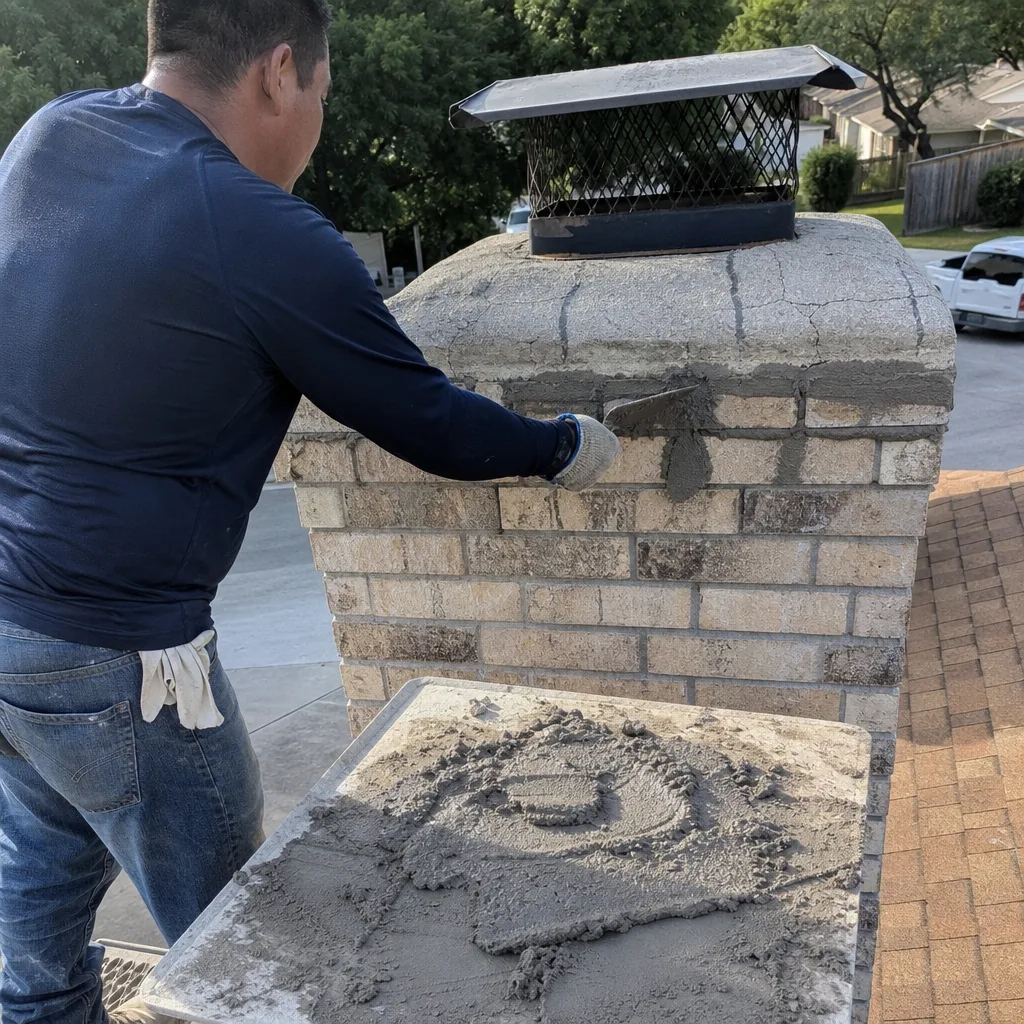
Chimney maintenance is local because chimney failure is local. Dallas’s specific conditions create specific patterns we’ve documented across 38,000+ inspections.
Expansive Clay Soils and Structural Movement
Dallas sits on the Blackland Prairie, with soils containing high percentages of smectite clay that expand when wet and contract when dry. This seasonal heaving stresses chimney foundations, especially where chimneys are built on separate footings from the main structure. We’ve measured vertical separation between chimney and house walls of an inch or more in homes near White Rock Lake and in older Lakewood construction.
This movement cracks crowns, separates liner joints, and opens flashing gaps. A chimney that was watertight in March may leak by September after a dry summer and wet fall. We recommend annual inspection not as a revenue schedule, but because the failure mode is progressive and the soil cycle is relentless.
Hail and Wind-Driven Rain
Dallas’s position on the southern edge of Tornado Alley means regular hail exposure and wind-driven rain that penetrates cap and flashing systems designed for ordinary precipitation. We’ve replaced chase covers dented by golf-ball hail in Plano-adjacent Dallas neighborhoods, and we’ve found water intrusion in chimneys whose caps appeared intact until viewed from above.
Our materials sourcing through the Haven network includes DuraFlex and HeatShield products selected for durability in severe weather exposure. The stainless steel in a DuraFlex liner resists the corrosion that galvanized or aluminum alternatives suffer in our climate.
Temperature Extremes and Thermal Shock
Dallas winter nights can drop below 20°F; summer attic temperatures exceed 140°F. This 120-degree range creates thermal shock in masonry and metal components. A cold chimney receiving a hot fire expands rapidly; a hot chimney cooling after shutdown contracts. Clay tile liners, especially those with existing cracks or water saturation, fail under this cycling.
We see the pattern most in homes where homeowners “only use the fireplace a few times a year” - the infrequent use means the chimney is often cold when fired, maximizing thermal stress. Paradoxically, regular use with proper sweeping produces more stable temperatures and less shock.
Common Mistakes to Avoid
- Assuming a “clean” fireplace means a safe chimney. The firebox is the visible 10%. The flue liner, smoke chamber, and exterior structure contain the hazards. We’ve found separated liner joints in fireplaces that were “swept” last year by companies who never ran a camera.
- Using the “chimney cleaning log” as a substitute for sweeping. These products loosen some creosote but do not remove it. They can also create deposits that obscure camera inspection. In Dallas’s competitive home market, we’ve seen sellers present a cleaning log receipt as proof of maintenance - it’s not.
- Ignoring summer odors because “we’re not using it anyway.” Summer heat drives off-gassing from creosote and accelerates water damage. The odor is a signal that conditions are worsening, not a temporary inconvenience.
- Hiring based on lowest price without confirming what’s included. A $99 sweep that doesn’t include camera inspection, photo documentation, or a written condition report is not comparable to a proper Level 2 inspection. The NFPA 211 standard exists precisely because visual-only inspections miss critical hazards.
- Waiting for “the burning season” to schedule. In Dallas, October through December creates appointment backlogs at every reputable sweep company. Scheduling in spring or summer means faster response, more thorough attention, and time to complete any needed repairs before temperatures drop.
- Assuming new construction means code-compliant construction. We’ve found unlined chimneys in 2018-built homes, improper flue sizing in 2020 townhomes, and missing spark arrestors in new construction throughout Dallas’s northern suburbs. Code inspection at build does not equal ongoing maintenance verification.
- Treating exterior staining as purely cosmetic. Efflorescence, soot tracking, and rust streaks are symptoms of active processes that degrade liner integrity. Painting over them or pressure-washing without repair wastes money and delays necessary intervention.
When to Call a Professional
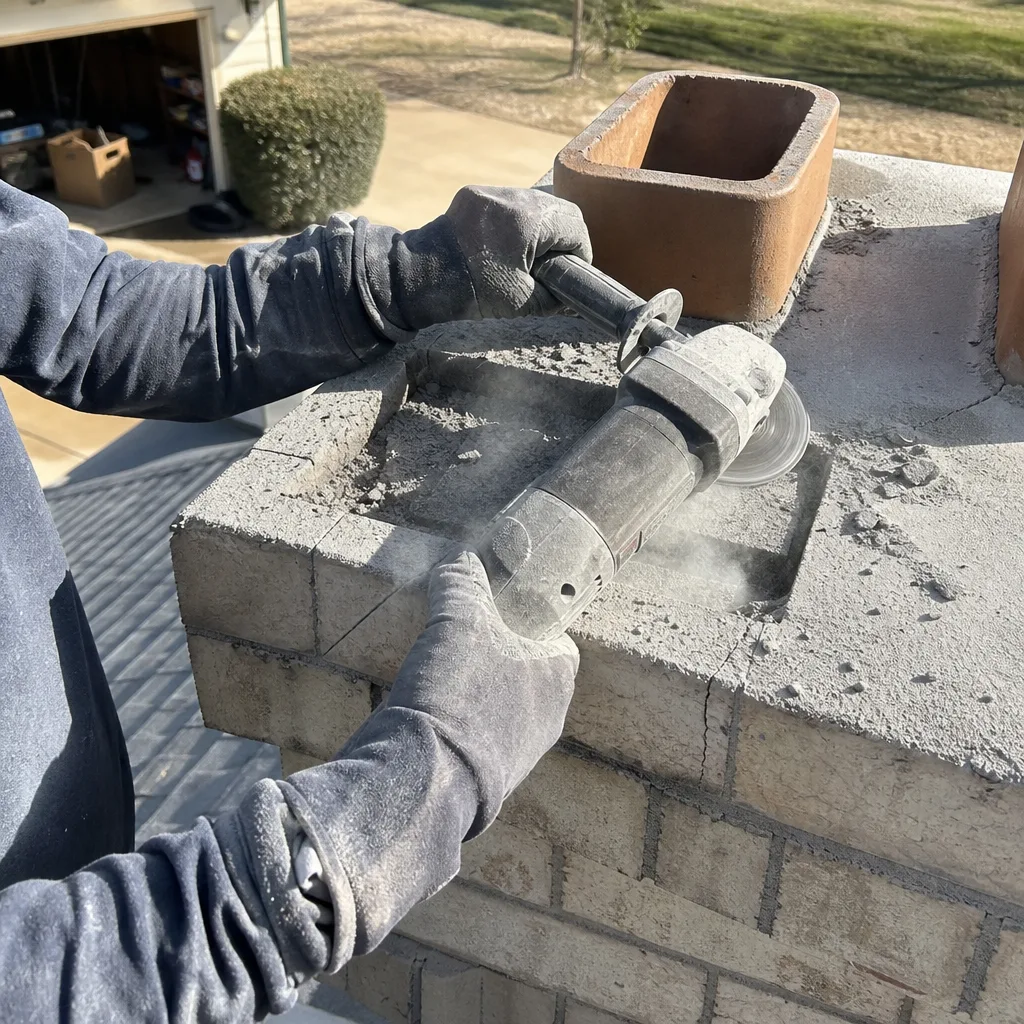
Call a certified chimney sweep immediately if you experience smoke rollout during use, strong tar or chemical odors, or visible soot deposits on interior walls near the fireplace. These indicate active hazards that require professional diagnosis before the next fire.
Schedule inspection within 30 days for exterior staining, rust streaks, cracked mortar, or damper malfunction. These conditions worsen with exposure and rain, but don’t create immediate combustion risk if the fireplace remains unused.
Even without warning signs, NFPA 211 recommends annual inspection for all wood-burning systems and cleaning when creosote reaches 1/8 inch thickness. In Dallas’s climate, with our soil movement, hail exposure, and temperature extremes, we’ve found that annual documentation - the photo record we provide under Haven Standard Clause 4 - creates the baseline that makes future changes detectable.
Level Two Chimney Dallas offers free estimates in Dallas. Every estimate includes a written price, written scope, and written warranty before any work begins. Call (972) 284-1392 to schedule, or bring us a competitor’s written estimate for our Free Second Opinion.
Frequently Asked Questions
A Level 2 chimney inspection and sweep in Dallas typically ranges from $250 to $450, depending on flue accessibility, creosote class, and whether mechanical removal is required. We deliver a written price before any work starts, with no exceptions. Call (972) 284-1392 for an exact quote - estimates are free.
Clay tile liners with isolated cracks can sometimes be repaired with HeatShield cerfractory foam application; separated or offset joints usually require stainless steel relining. We don’t recommend either without camera evidence you can see yourself. If a company proposes liner replacement without showing you the damage, get a second opinion. Our Free Second Opinion on any written estimate is always available.
NFPA 211 recommends annual inspection for all wood-burning systems and cleaning when creosote exceeds 1/8 inch. In practice, Dallas homeowners who burn 2-3 times weekly during winter typically need annual sweeping; occasional users may extend to every 2-3 years if annual inspection shows minimal buildup. The inspection determines the schedule, not the calendar.
Progressive creosote buildup increases chimney fire risk - a Class III deposit can ignite at temperatures ordinary fires produce. Water intrusion degrades liner integrity, eventually allowing combustion gases into the structure. In Dallas’s soil conditions, minor crown cracks become major structural separation over 3-5 years of neglect. The cost curve is not linear: a $250 sweep prevents a $4,000 rebuild.
Attic and exterior masonry temperatures in Dallas summer heat drive off-gassing from creosote deposits and accelerate biological activity in any moisture present. The odor is real and indicates active conditions, not “just heat.” A proper sweep removes the source, and camera inspection identifies any water intrusion that needs separate repair.
A flashlight and mirror can reveal firebox condition and damper operation, but cannot evaluate the full flue length, liner joints, or smoke chamber. These are where the critical hazards hide. NFPA 211 Level 2 inspection requires camera equipment and trained interpretation. We’ve found separated joints and active gas leaks in chimneys that looked “fine” from below.
The Bottom Line
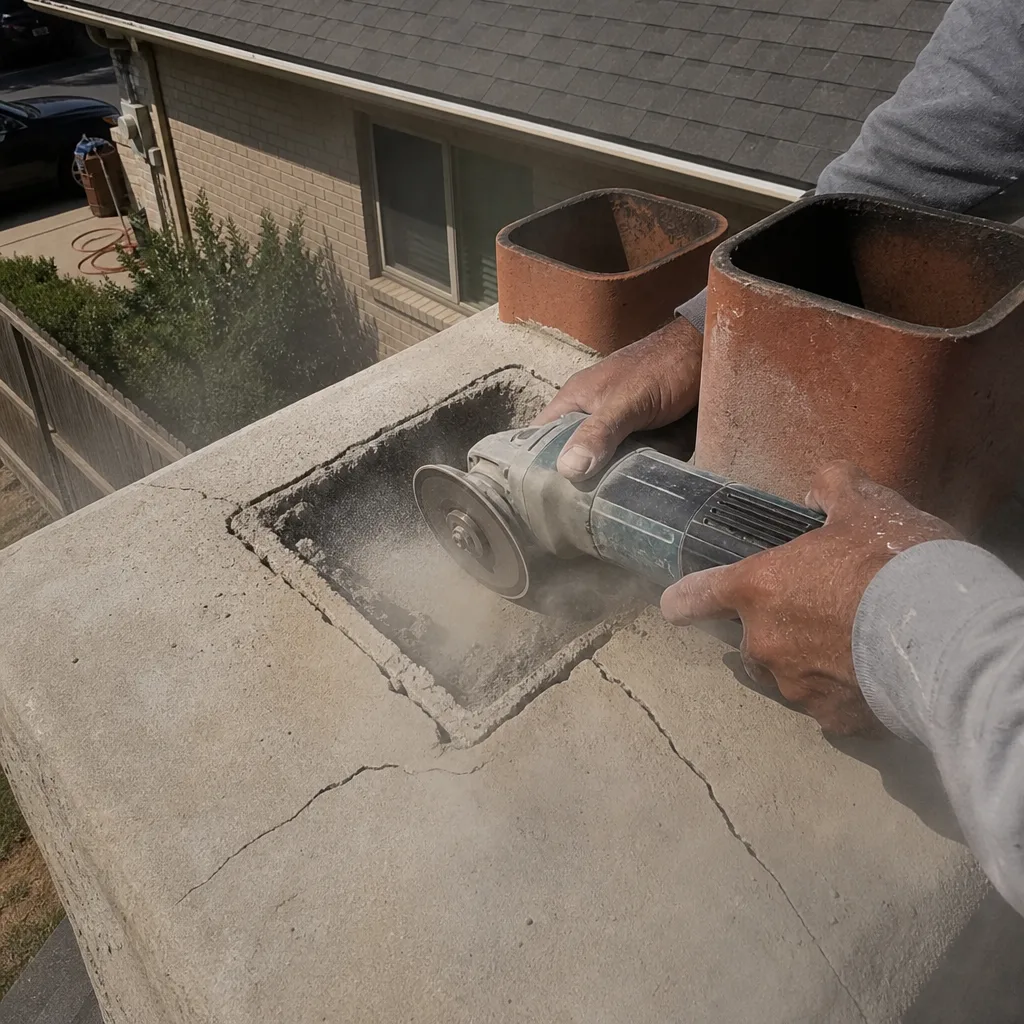
Chimney warning signs fall into three urgency tiers, and most are misread because homeowners don’t know what to look for or what they’re seeing means. White exterior stains signal water intrusion before the liner fails. Smoke rollout indicates one of three distinct mechanical problems, each with a specific fix. Summer odors are diagnostic, not inconvenient. The conditions that create real danger - liner separation, offset joints, hidden blockages - are only visible with camera documentation, which is why we’ve included it on every job since 2009 under Haven Standard Clause 4. In Dallas’s climate and soil conditions, annual inspection with photo documentation isn’t excessive maintenance; it’s the minimum standard for knowing what you have before you light the next fire.
Written by Corrine Halstead, Owner at Level Two Chimney Dallas, serving Dallas since 2009.