
Last updated September 22, 2026
Level 1 sweep and inspection to the NFPA 211 annual standard - flue, crown, cap, and flashing checked and photographed
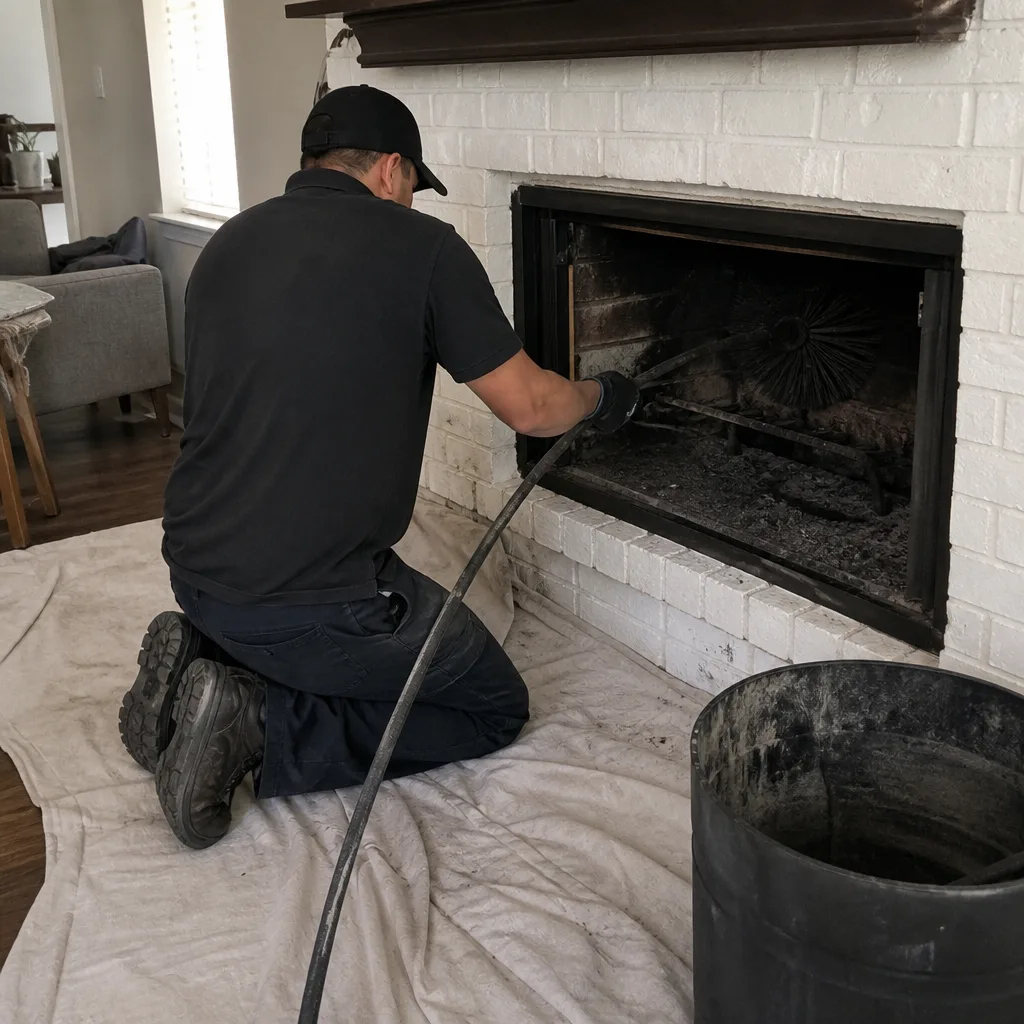
Chimney sweep logs do not sweep chimneys. They loosen some creosote - which then falls where a brush and vacuum still have to collect it.
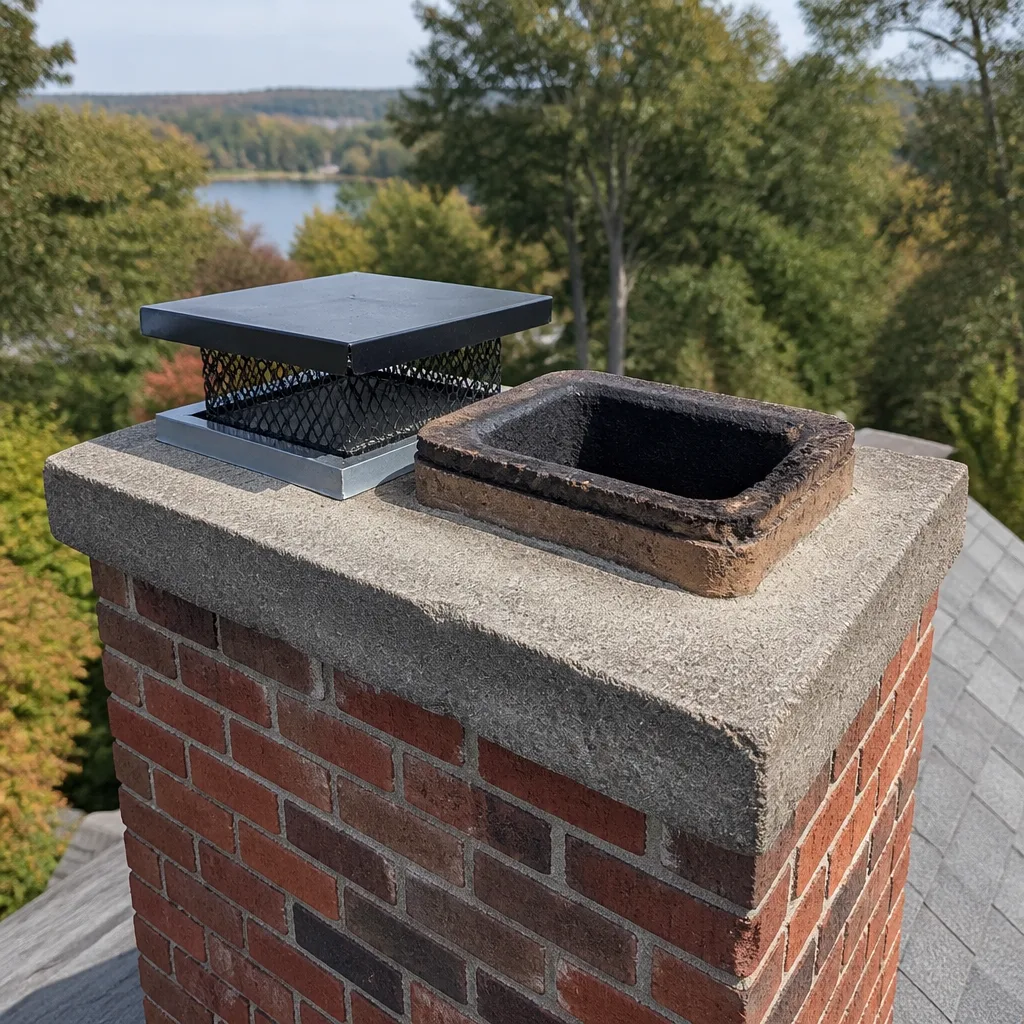
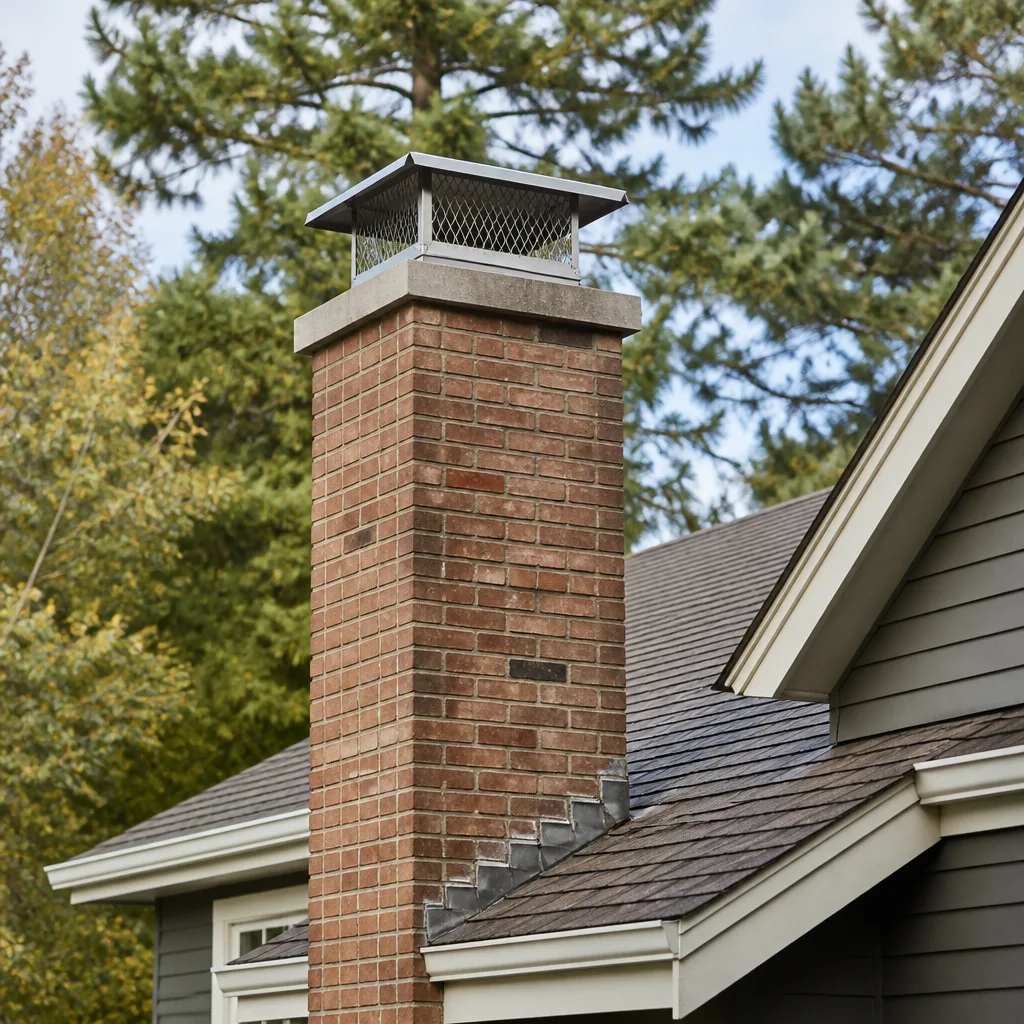
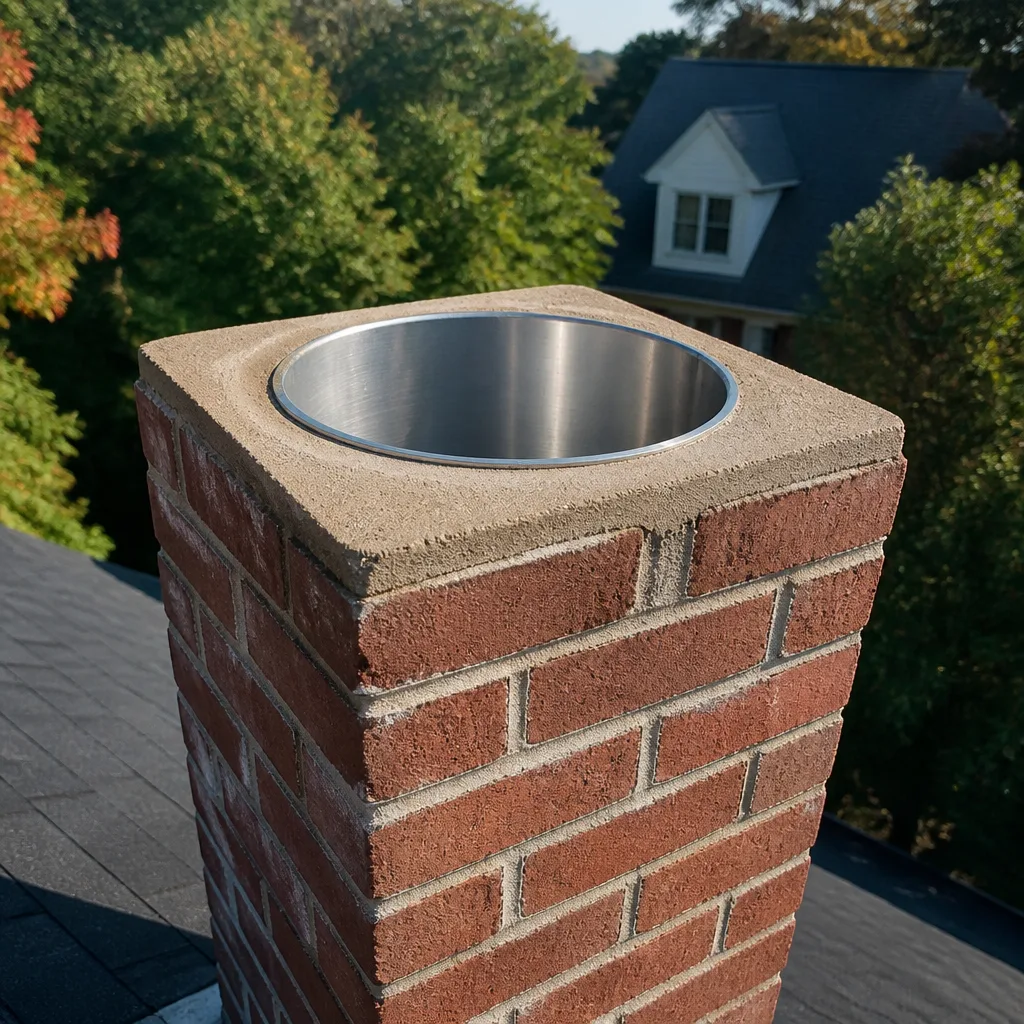
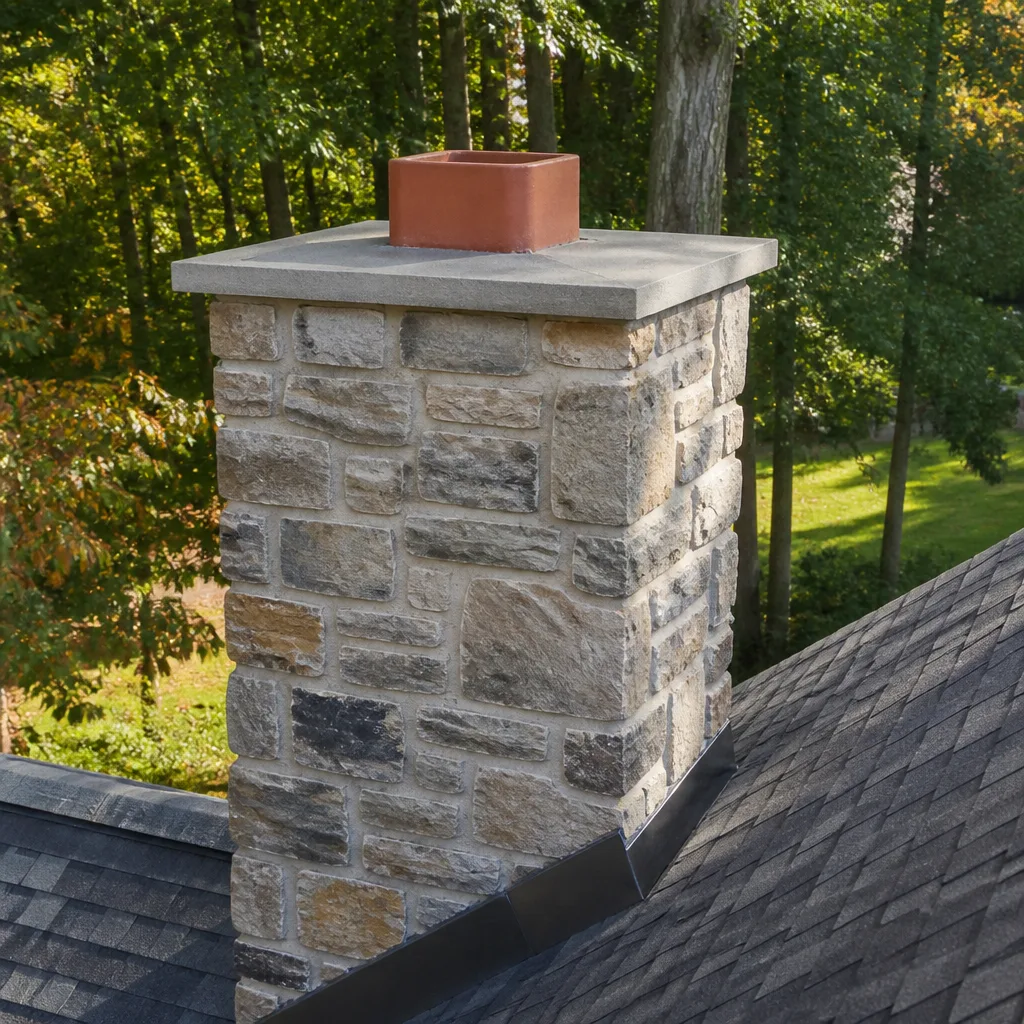
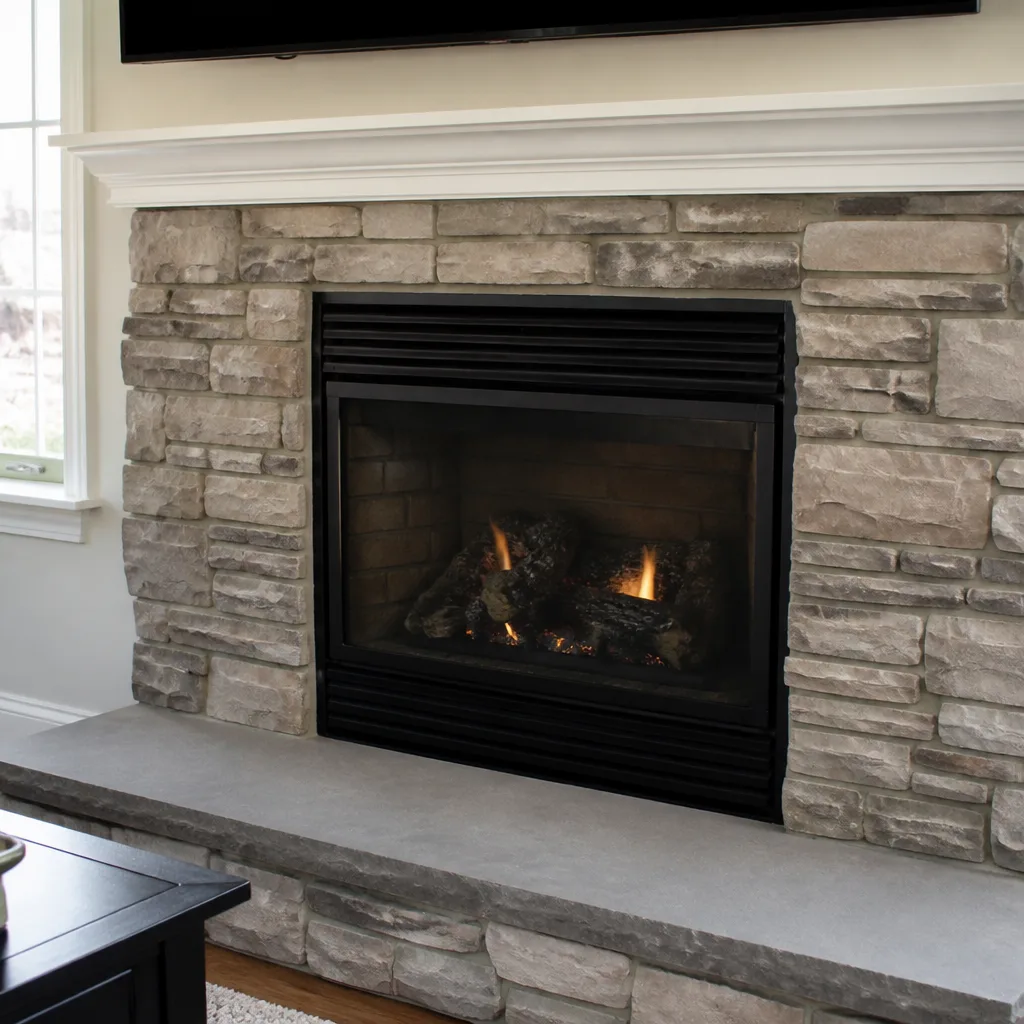
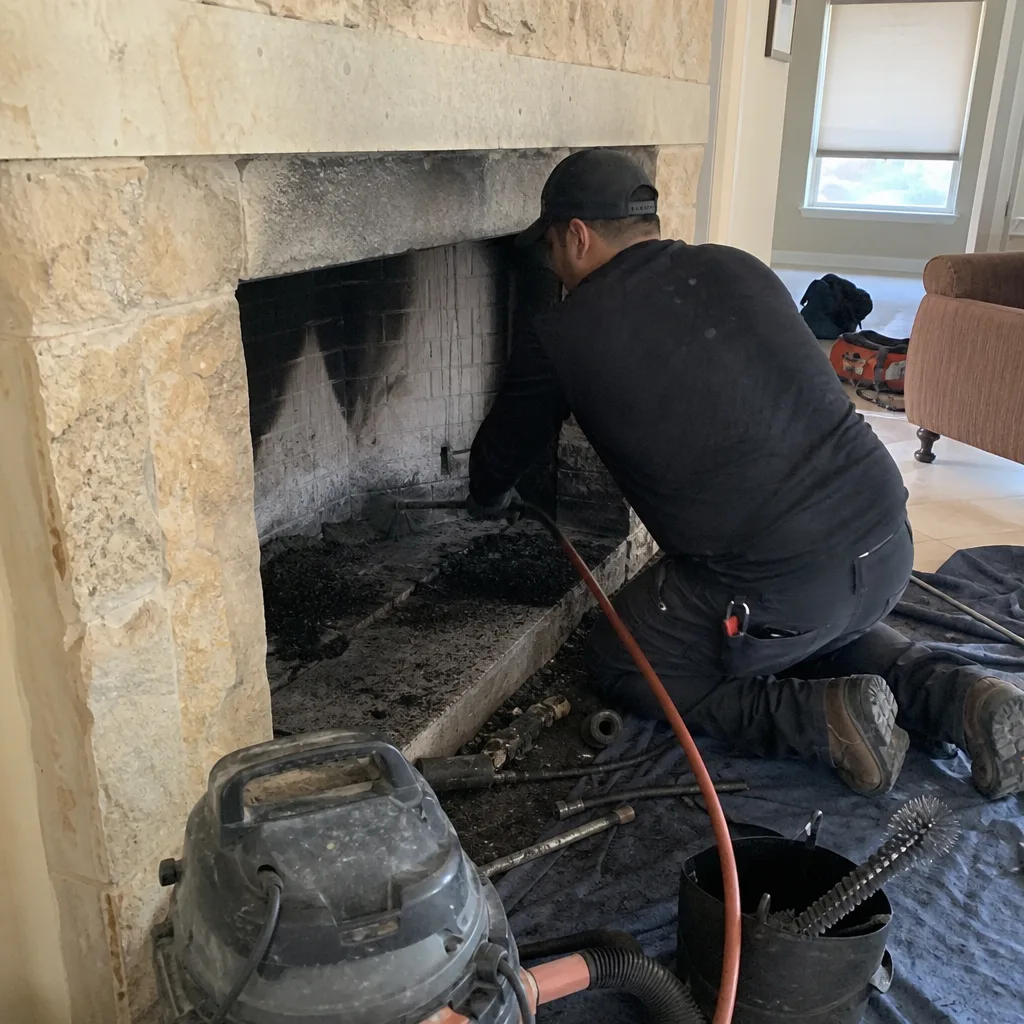 Before
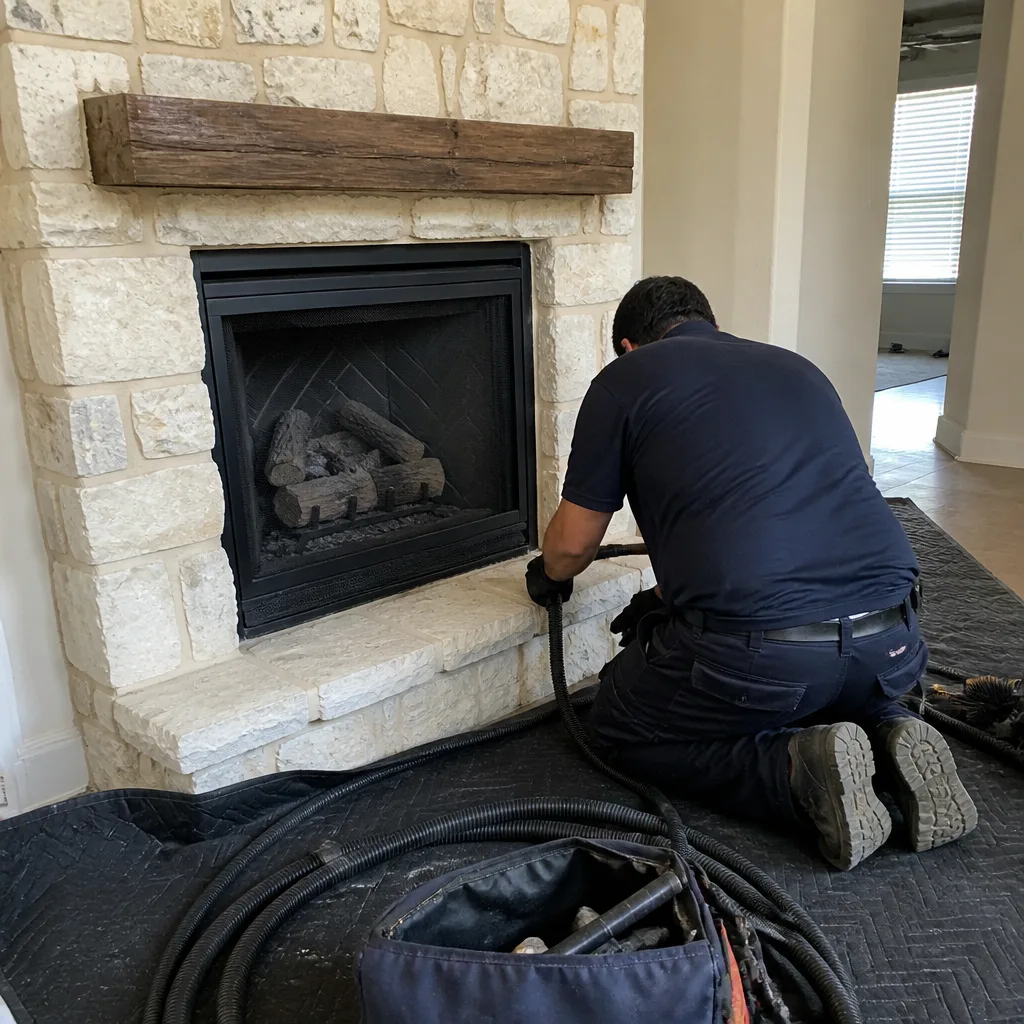 After
After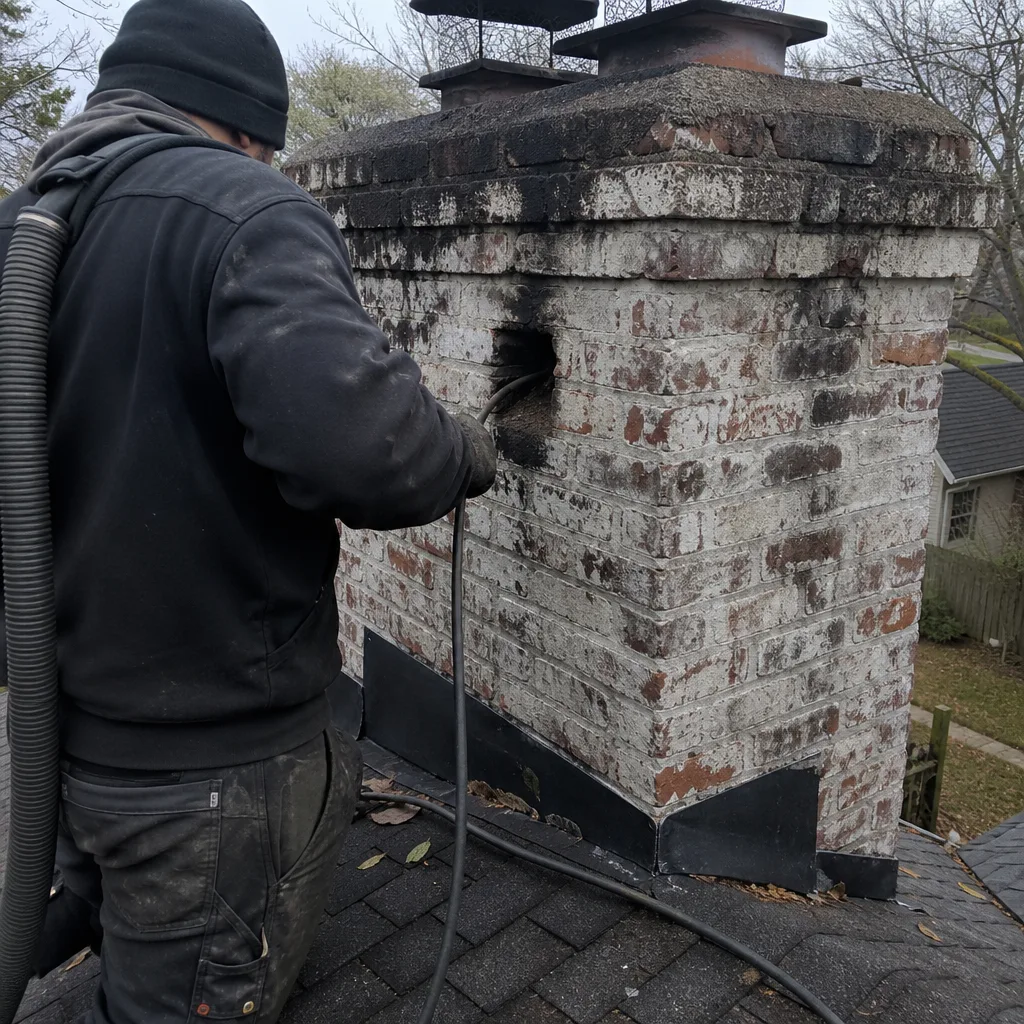 Before
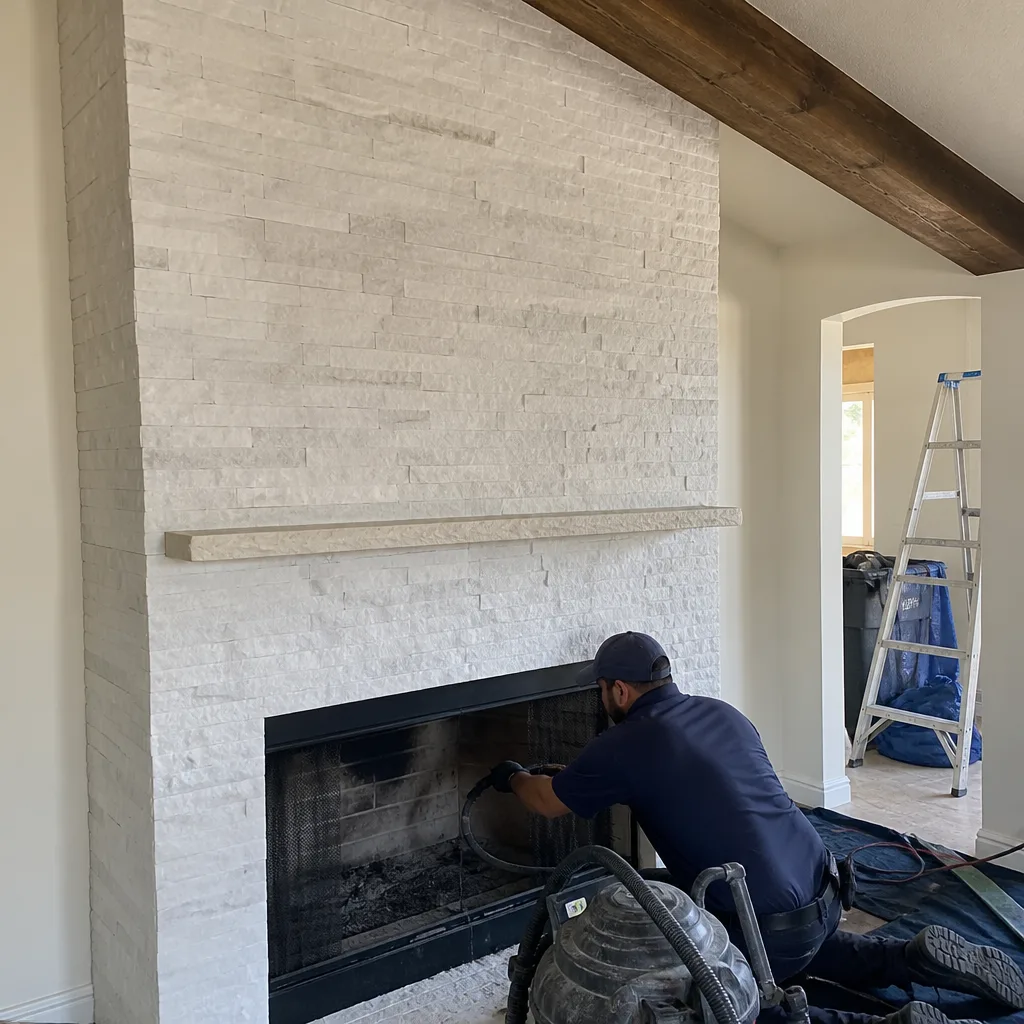 After
After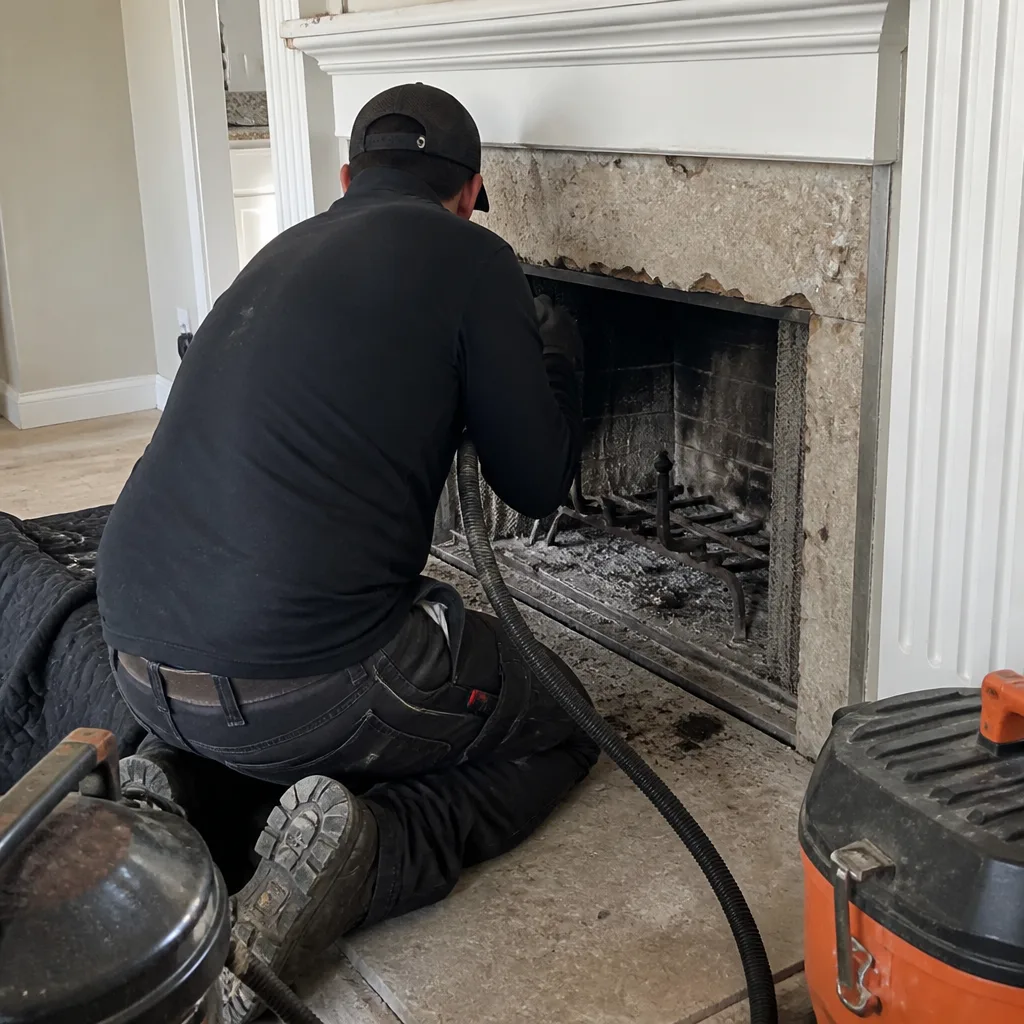 Before
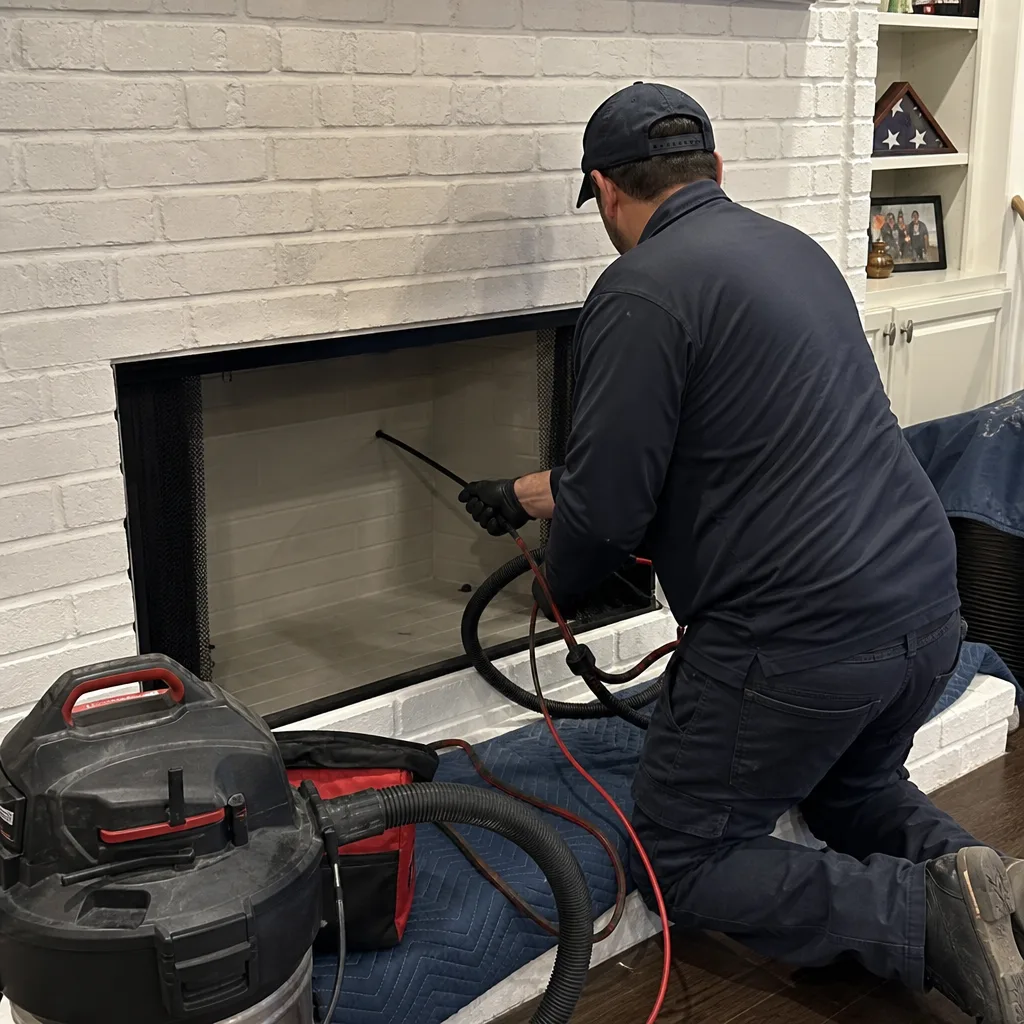 After
AfterThe Complete Guide to Chimney Cleaning in Dallas
The average Dallas homeowner burns a fireplace fewer than 18 times a year. That’s enough to deposit a season’s worth of creosote in a single wet-wood weekend, and not enough fires to notice the smell until company arrives. In this guide, we’ll explain how Dallas’s short, inconsistent burning season creates unique chimney risks, what a proper cleaning actually involves versus what most companies sell you, and how to read the documentation that protects your home and your wallet. For seasonal chimney cleaning care for Dallas homeowners, timing matters as much as technique. Whether you burn oak from East Texas or run gas logs in a Preston Hollow condo, this is what North Texas chimney maintenance looks like done right.
Quick Answer
Professional chimney cleaning in Dallas typically costs $175-$325 for a standard sweep with Level 1 inspection, or $275-$450 when a Chimney Cleaning & Sweep in Dallas includes NFPA 211 Level 2 camera inspection. Most Dallas homes need cleaning annually if wood-burning, or every 1-2 years for gas fireplaces with proper venting. The short North Texas burning season concentrates creosote buildup into fewer fires, and clay-rich Blackland Prairie soil creates settling cracks that show up in fireboxes before they’re visible outside.
Table of Contents
- How Dallas’s Burning Season Changes Creosote Buildup
- Level 1 Sweep vs. Level 2 Camera Inspection: What’s Actually Required
- Blackland Prairie Soil and Chimney Settlement in Dallas
- What Happens During a Professional Chimney Cleaning
- How to Read a Chimney Cleaning Certificate
- Why Gas-Log Fireplace Owners Still Need Annual Service
- Chimney Cleaning Cost in Dallas: A Detailed Breakdown
- Common Mistakes to Avoid
- When to Call a Professional
- Frequently Asked Questions
 Before
 After
AfterHow Dallas’s Burning Season Changes Creosote Buildup
Most national chimney advice assumes a cold climate with a long, steady burning season. Dallas doesn’t work that way. Our winters are mild and interrupted, which creates a specific creosote problem that colder cities don’t face.
Here’s what happens: A Dallas homeowner lights a fire on a 38-degree January evening, then doesn’t burn again for three weeks because temperatures swing back to 60. That first fire likely didn’t reach full flue temperature. Incomplete combustion leaves behind sticky, tar-like condensate. When the flue cools completely between fires, that condensate hardens. The next fire runs cooler still, because the homeowner is “just taking the chill off,” and adds another layer. By late February, you’ve got Stage 2 glazed creosote, a hard, shiny, nearly impossible-to-remove deposit that a basic brush won’t touch.
In Minnesota or Maine, a fire burns all evening, every evening, for months. The flue stays hot. Creosote deposits as dry, flaky Stage 1 soot that sweeps out easily. Dallas’s intermittent pattern is actually worse for chimneys than consistent cold-weather use.
We’ve seen this in Lakewood and Lochwood especially, where post-war brick chimneys have narrow clay flue tiles that glaze faster than modern systems. In Uptown condos with metal factory-built chimneys, the problem is different but related: short, hot fires from pressed logs cool rapidly in exterior chase walls, creating condensation points we find with the camera 8 feet above the firebox.
The wood itself matters too. “Seasoned” oak from East Texas vendors often arrives at 25-30% moisture, not the 20% ideal. Dallas’s humidity slows outdoor drying. Wet wood smolders, and smoldering produces the acidic, corrosive creosote that degrades stainless steel liners from DuraFlex and other manufacturers we install.
Key takeaway for Dallas: Fewer fires per year does not mean less maintenance. It often means more concentrated, harder-to-remove deposits that require mechanical removal or chemical treatment, not a standard brush sweep.
Level 1 Sweep vs. Level 2 Camera Inspection: What’s Actually Required
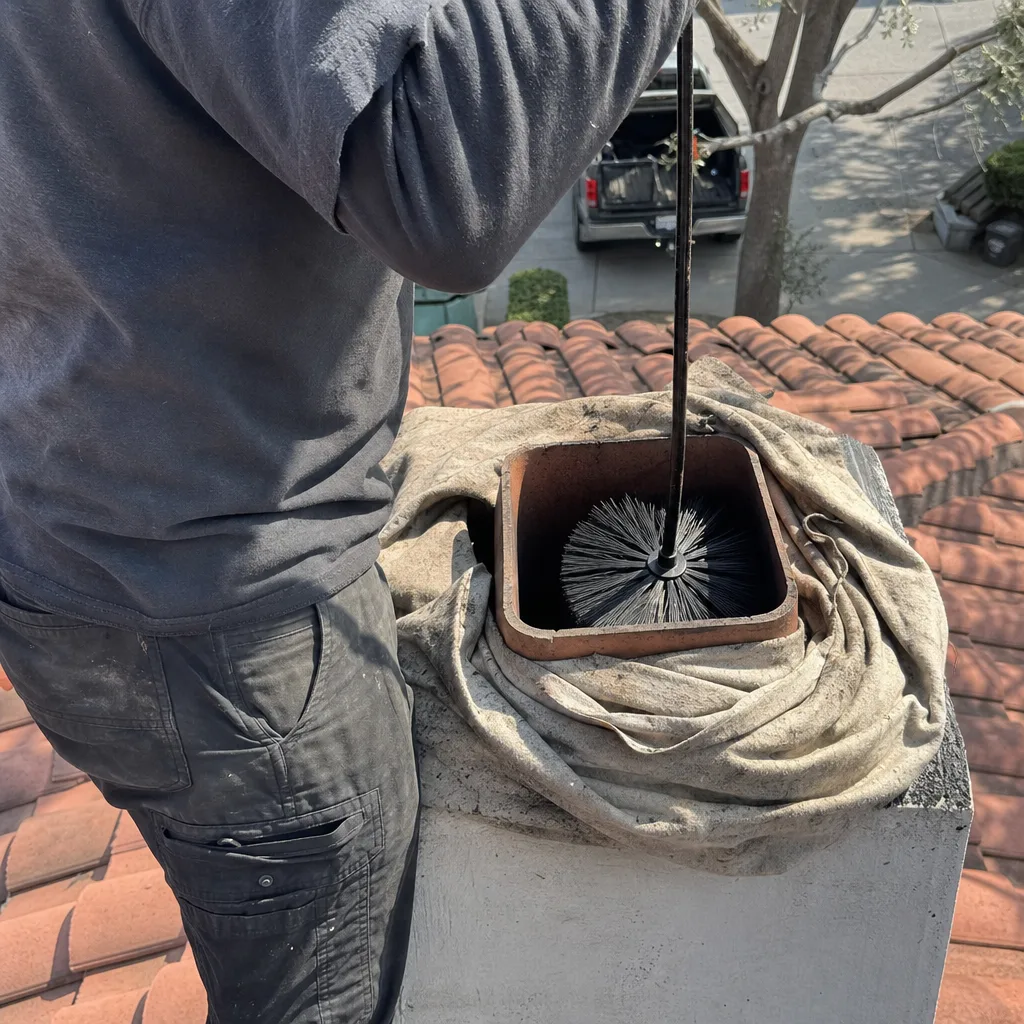
The National Fire Protection Association defines three inspection levels in NFPA 211. Most Dallas homeowners don’t know which one they’ve actually paid for, and most companies don’t explain the difference until they’re standing in your living room.
A Level 1 inspection is a visual examination of readily accessible portions of the chimney exterior, interior, and appliance connection. The technician uses a flashlight, maybe a mirror on a pole, and looks for obstructions, combustible deposits, and basic structural soundness. No tools are used to open panels or access concealed areas. A Level 1 is appropriate for annual maintenance of a chimney that’s been performing normally, with no changes to the appliance or fuel type.
A Level 2 inspection adds a camera scan of the internal flue liner, from firebox to crown, plus inspection of attics, crawl spaces, and other accessible areas where the chimney passes through the structure. This is required by NFPA 211 when:
- The property is sold or transferred
- The fuel type changes (wood to gas, or vice versa)
- The flue liner or appliance is replaced
- There’s been a chimney fire, earthquake, or significant weather event
- The chimney has been unused for more than a year
In Dallas, that last bullet matters more than people realize. A chimney unused since the 2021 freeze, or since a hailstorm shifted the chase cap, needs Level 2 before the next burn. We’ve found bird nests in flues that sat two seasons in Highland Park, and cracked liners in M Streets homes where the seller’s “cleaning certificate” was just a Level 1 sweep with no camera.
The camera reveals what eyes cannot. We document every scan under Level Two Chimney Dallas home practice, which became Clause 4 of the Haven Standard in 2009. The photo record shows the liner condition by joint, the smoke chamber profile, and any spalling (flaking) of clay tiles or corrosion of metal components. You see what we see. There’s no “trust us” in a Level 2.
After Dallas’s March 2022 hailstorm, we performed dozens of Level 2 inspections in North Dallas and Richardson where chase covers had been dented or displaced. Water entry from damaged caps rusts metal flues and erodes mortar joints in masonry chimneys. A Level 1 sweep would miss this entirely. The camera found water streaking, rust bloom, and in two cases, complete liner separation above the roofline.
When to choose Level 2 in Dallas: Buying a home built 1950-1990 with original clay flue tiles. After any hailstorm with 1-inch or larger stones. If your “annual sweep” company has never shown you a photo of your actual flue interior. If you smell smoke or creosote odor on non-burning days, indicating a possible liner breach.
Blackland Prairie Soil and Chimney Settlement in Dallas
Dallas sits on the Blackland Prairie, a geological formation of expansive clay soil that swells when wet and shrinks when dry. This isn’t abstract geology. It’s the reason your chimney separates from your house.
Clay soil can expand 10% or more in volume after heavy rain, then contract during August drought. A chimney footing poured independent of the house foundation, or poured at insufficient depth, moves on its own schedule. The result is a gap between chimney and siding, stair-step cracks in brick, or, most dangerously, cracks in the firebox that you won’t see without a flashlight and a kneepad.
We’ve inspected chimneys in Casa View where the firebox back wall had a vertical crack from floor to damper, invisible from the hearth opening without a mirror. The homeowner smelled smoke in the attic during Christmas Eve fires. The crack was thermal expansion damage accelerated by footing settlement, not by the fire itself. The repair required smoke chamber parging and a stainless steel liner from Olympia Chimney, not just a sweep.
Settlement shows up first in the firebox because it’s the thinnest masonry, most exposed to heat cycling, and least reinforced. By the time you see exterior cracks, the interior damage is usually advanced. In our experience across 38,000 inspections, Dallas homes built 1965-1985 on slab foundations with exterior chimneys are highest-risk for this pattern. The chimney footing was often poured after the slab, with no tie-in, at frost depth inadequate for clay soil movement.
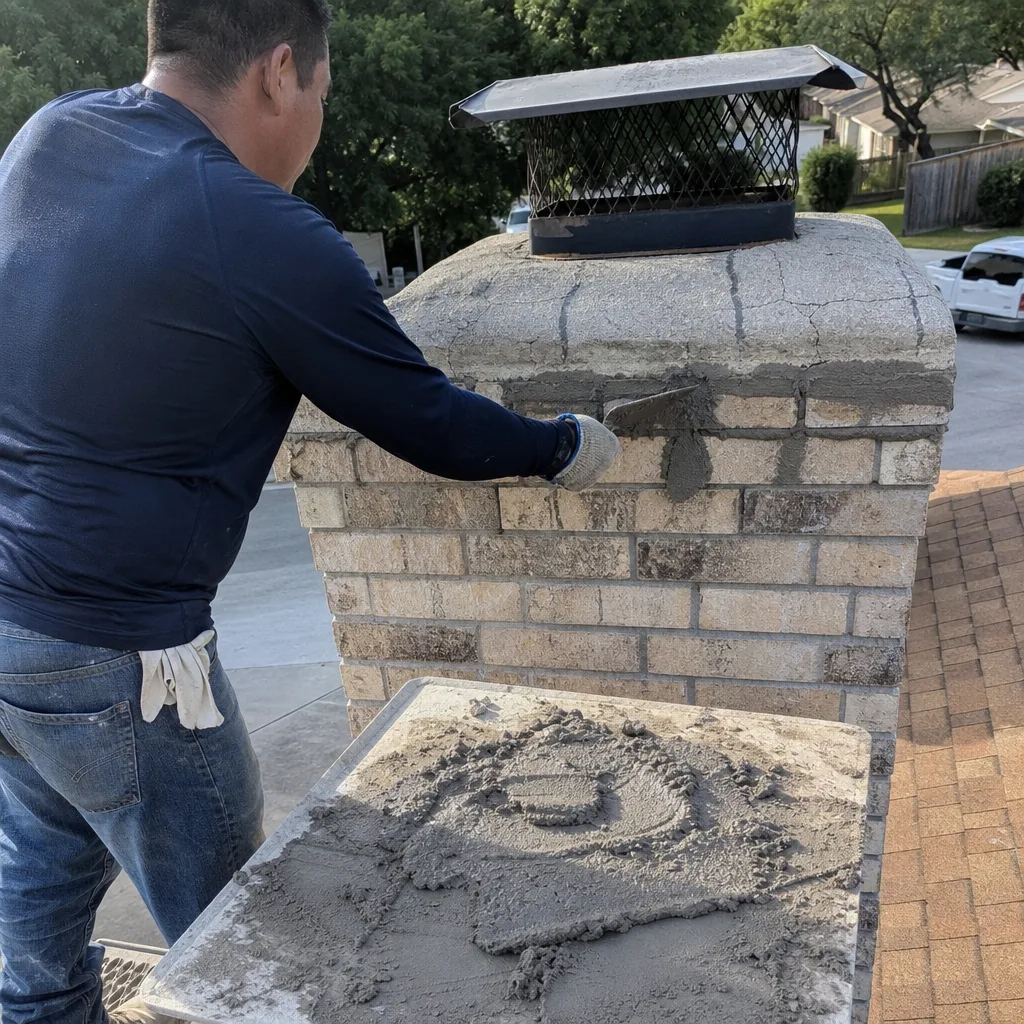
What to look for from the outside: gaps between chimney and house wall that open and close seasonally, efflorescence (white mineral staining) on brick below the roofline indicating water entry through cracked crown, or a chimney that leans visibly away from the structure. Any of these warrants a Chimney Repair in Dallas evaluation with Level 2 inspection, not just cleaning.
The repair approach depends on severity. Minor settlement cracks in the firebox can be sealed and lined. Moderate separation may require a chimney cricket (a peaked diversion structure where chimney meets roof) to redirect water from the joint. Severe leaning or structural compromise means rebuild, sometimes with a helical pier to stabilize the footing below the clay active zone. We source materials through Haven’s buying network, including HeatShield for ceramic resurfacing and Gelco for custom chase covers, specifically to keep customer prices honest on these larger repairs.
What Happens During a Professional Chimney Cleaning
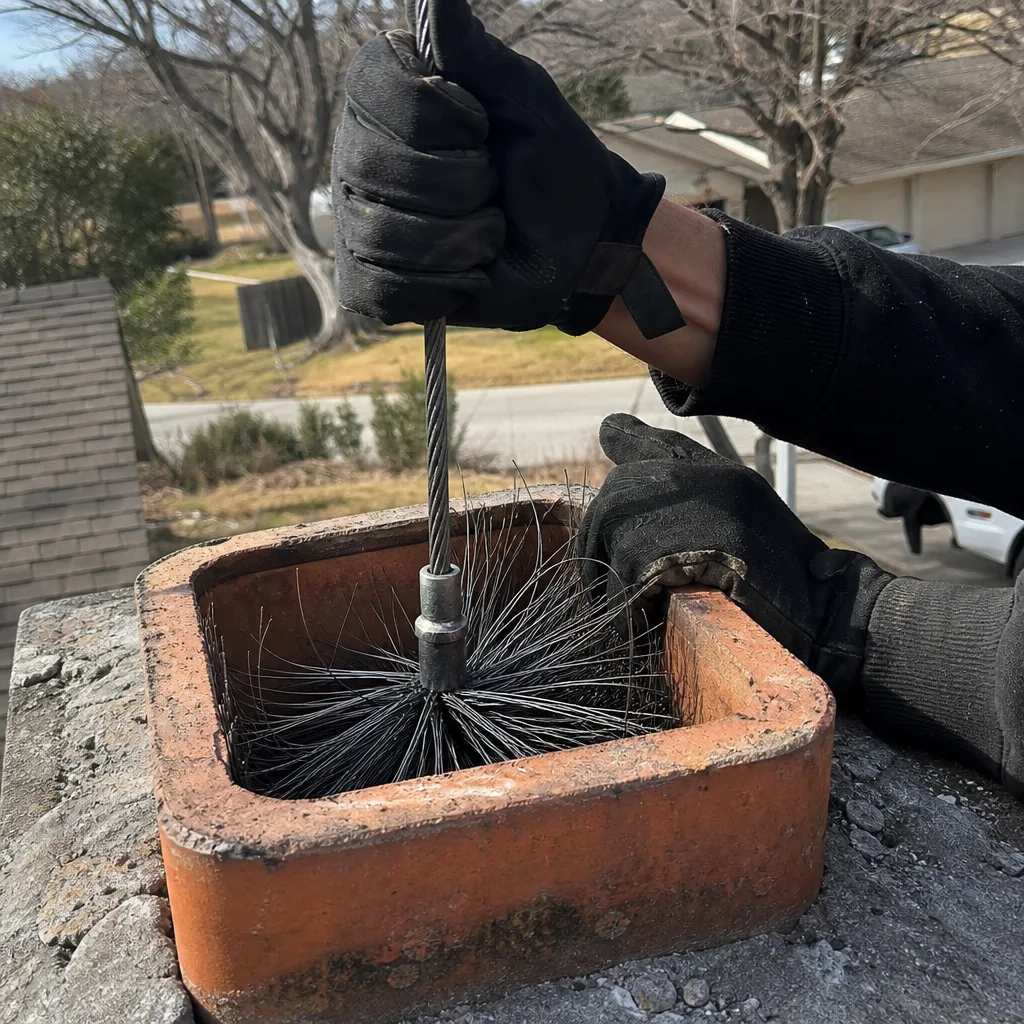
A proper chimney cleaning is not “a guy with a brush on a pole.” If you’re weighing DIY vs professional chimney cleaning in Dallas, here’s what actually happens when we arrive at a home, step by step, with no steps skipped.
- Exterior arrival and setup. The technician texts when en route, arrives in a marked vehicle, lays drop cloths from door to hearth, and sets up a HEPA vacuum for dust control. We inspect the exterior first: cap condition, crown integrity, flashing, and any visible settlement or spalling.
- Interior pre-cleaning inspection. Before touching anything, we examine the firebox, damper operation, smoke chamber, and accessible flue base. We note creosote class (Stage 1 flaky, Stage 2 glazed, or Stage 3 tar-like and hardened), any obstructions, and structural anomalies. This becomes the “before” record.
- Protection of the work area. The fireplace opening is sealed with a plastic barrier and suction connection. This prevents any soot or debris from entering your home. We’ve seen competitors skip this in Lakewood rentals and leave black dust on white carpet.
- Mechanical cleaning of the flue. For Stage 1 deposits, we use rotary brushes sized to the flue diameter, powered drill or manual extension rods. For Stage 2 or 3 glazed creosote, we apply a chemical modifier first, let it dwell, then use chains or whips on rotary action. The method matches the deposit, not the other way around.
- Smoke chamber and firebox cleaning. The smoke chamber (the area above the damper that funnels smoke into the flue) is hand-scraped and brushed. Soot here is often thickest because temperatures drop and creosote condenses. The firebox is vacuumed and brushed clean.
- Level 2 camera inspection. We run a high-resolution camera the full flue length, recording every joint, every tile face, every transition. The video is saved to your job record. You see what we see. Clause 4 of the Haven Standard requires this documentation; we don’t consider a job complete without it.
- Post-cleaning condition report. We show you the camera footage, explain what we found, and deliver a written scope with price for any recommended repairs. No work proceeds without your written approval of that price. This is Haven Standard Clause 1: Have it in writing.
- Certificate and documentation. You receive a cleaning certificate with the date, technician name, scope performed, camera footage reference, and any recommendations with priority ranking. This is what your insurance company or home inspector will ask for at sale.
The entire process takes 60-90 minutes for a standard sweep, 90-120 minutes with Level 2 inspection and documentation. We don’t rush. The 365-Day Done Right Promise means if anything in that documentation proves inaccurate, we make it right.
How to Read a Chimney Cleaning Certificate
Most Dallas homeowners file their chimney certificate in a drawer and never look at it again. That’s a mistake. The certificate is a legal document that can affect insurance claims, home sales, and your family’s safety. Here’s what a proper certificate must contain, and what most companies actually hand you.
Required elements (what we deliver under Haven Standard Clause 4):
- Company name, license number, and technician name
- Date of service and address serviced
- Type of inspection performed (Level 1, 2, or 3)
- Appliance type and fuel source
- Flue dimensions and liner material
- Creosote classification found and removal method used
- Camera inspection footage reference or embedded images
- Structural findings with photo documentation
- Recommendations prioritized as immediate, near-term, or monitor
- Written price for any recommended work
- Technician signature and company stamp
What many competitors provide instead: A handwritten receipt saying “chimney swept – $149” with no inspection level noted, no photos, no technician name, and no findings. This document protects no one. If a chimney fire occurs three months later, your insurer may deny the claim for lack of documented maintenance. If you sell the home, the buyer’s inspector will request a proper certificate, and you’ll pay for another inspection.
In Dallas’s competitive real estate market, we’ve been called to re-inspect homes in Bishop Arts and Kessler Park where the seller’s certificate was insufficient for the buyer’s lender. The original sweep company had closed or couldn’t produce footage. We performed a new Level 2, found issues the first sweep missed, and the sale proceeded with documented repair scope. The seller’s attempt to save $75 on a cheap sweep cost them $275 for a re-inspection plus repair negotiation.
The certificate is also your maintenance timeline. We note “monitor” items like minor crown cracking or early spalling, with recommended re-evaluation dates. Annual comparison of certificates tracks deterioration rates. In clay soil areas of Dallas, we often see settlement progression that looks urgent in year one but stable in years two and three, or vice versa. Without documented records, you’re guessing.
Why Gas-Log Fireplace Owners Still Need Annual Service
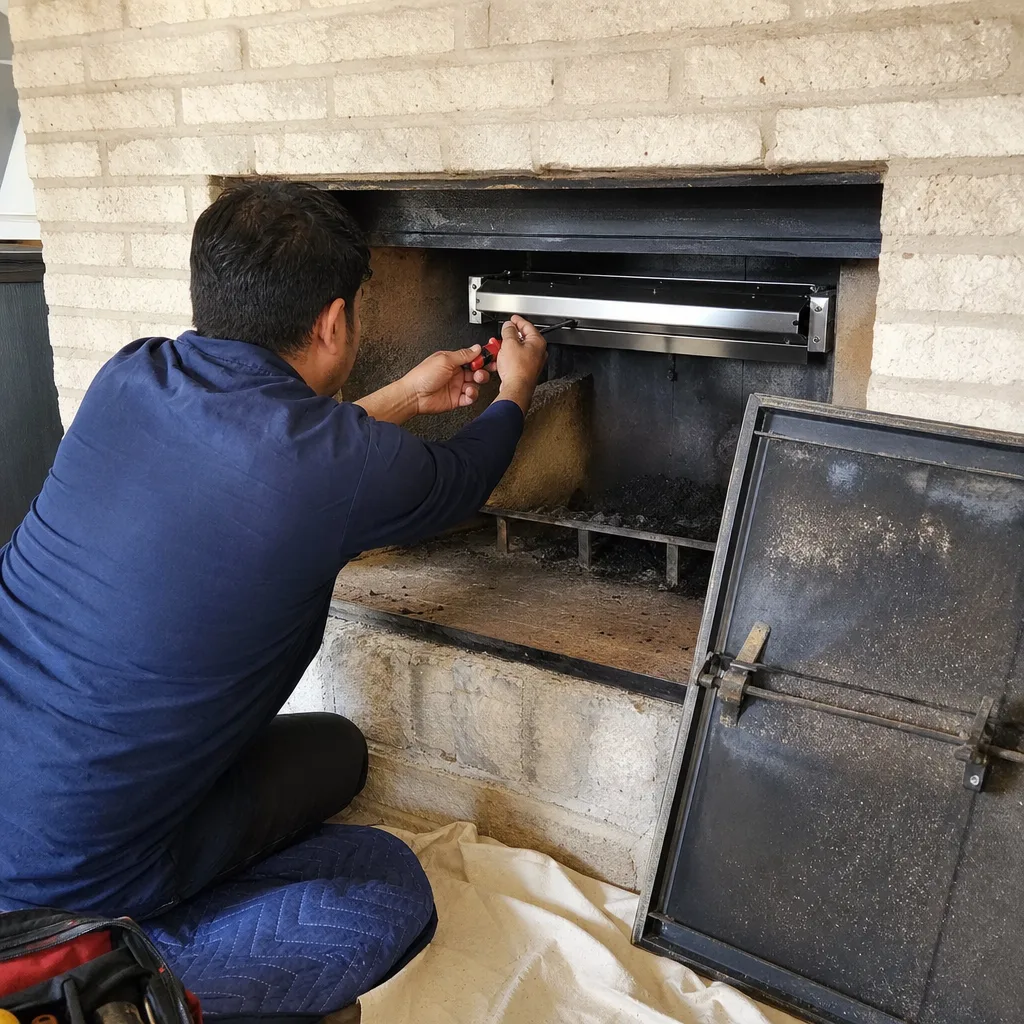
We hear this constantly in Dallas: “It’s gas. Nothing burns in there. Why would it need cleaning?”
Gas combustion produces water vapor, carbon dioxide, and trace sulfur compounds. In a properly venting system, these exit through the flue. But “properly venting” depends on multiple components that degrade, and gas logs create unique problems that wood fires don’t.
Degraded ceramic logs shed particles. The porous ceramic breaks down over 5-10 years of thermal cycling. Fine dust accumulates in the burner ports, causing incomplete combustion and sooting. That soot is carbon, not creosote, but it still obstructs venting and can recirculate into living space.
Condensation in cool flues. Gas burns cooler than wood. In Dallas’s mild winters, a short gas fire may not heat the flue enough to establish strong draft. Moisture condenses on flue walls, mixing with sulfur traces to form dilute sulfuric acid. This corrodes metal liners and erodes mortar in masonry chimneys. We’ve replaced DuraFlex liners in Addison townhomes where the original installer specified the correct alloy, but the flue was oversized for the gas input and never reached adequate temperature.
Spider webs and insect nests in burner orifices. This sounds minor until it causes delayed ignition or flame rollout. Dallas’s mild winters mean insects remain active longer. We’ve found mud dauber nests blocking pilot assemblies in October, when the homeowner first lights the fireplace for “fall.”
Failed or misadjusted gas valves. A partially open valve or failing thermocouple causes yellow flame tips, indicating incomplete combustion and elevated carbon monoxide production. You can’t see this from the sofa. We check flame color, thermocouple response, and CO readings with calibrated meters.
Venting system integrity. Gas fireplaces use B-vent, direct vent, or power vent systems. Each has specific clearance requirements and termination locations. We’ve found direct vent terminations buried in insulation after Dallas attic work, and B-vent connectors corroded by roof leaks. These are fire and CO hazards, not maintenance luxuries.
Annual gas fireplace service includes burner cleaning, log inspection and repositioning, valve and safety control testing, draft measurement, and visual flue inspection. For vented gas logs in masonry chimneys, we recommend Level 2 camera inspection every 3-5 years, or immediately if you notice soot on logs, glass, or surrounding walls.
Fireplace Services in Dallas from Level Two include both the maintenance sweep and the documentation that protects your warranty and insurance position.
Chimney Cleaning Cost in Dallas: A Detailed Breakdown
Price transparency is Haven Standard Clause 1. Here’s what chimney cleaning costs in the Dallas market, with the specific factors that move the number, plus guidance on how to hire a chimney cleaning contractor in Dallas without overpaying.
| Service | Typical Range | What Affects Price |
|---|---|---|
| Level 1 sweep with basic inspection | $175-$250 | Single flue, standard access, Stage 1 creosote |
| Level 2 sweep with camera inspection | $275-$400 | Multi-flue, steep roof access, documentation required |
| Stage 2-3 creosote removal | $350-$550 | Chemical treatment, mechanical chains, extended labor |
| Gas fireplace service | $150-$225 | Log set condition, valve type, vent configuration |
| Chimney cap installation | $225-$450 | Material (stainless, copper, galvanized), size, existing damage |
| Crown repair or resurfacing | $400-$900 | Extent of cracking, accessibility, material (cement vs. specialized) |
Geographic factors in Dallas pricing: Homes in older neighborhoods like Swiss Avenue or Junius Heights often have two or three flues (fireplace, former furnace, former water heater) that all need inspection even if only one is active. Steep Tudor roofs in Highland Park require additional safety equipment and time. Post-hailstorm inspections spike demand and can extend scheduling, though we don’t surge-price.
What our price includes that others charge extra for: the camera scan, the photo record, the written certificate, and the 365-Day Done Right Promise. Many Dallas competitors advertise “$99 sweeps” that become $289 with “required” camera add-ons and “recommended” but unexplained repairs. Our written price before work starts means the number you approve is the number you pay. No exceptions.
We also offer a Free Second Opinion on any written estimate from another company. Bring us their scope and price. We’ll review it against what our camera shows, and if their recommendation is accurate, we’ll tell you so. If it’s not, we’ll show you the difference.
Common Mistakes to Avoid
- Hiring based on lowest price without asking the inspection level. A $99 sweep with no camera is not comparable to a $275 Level 2. You’re paying for documentation or you’re paying for a brush stroke you can’t verify.
- Assuming no smell means no problem. Dallas’s mild winters and intermittent use mean creosote can build to hazardous levels without the strong odor that frequent burners notice. By the time you smell it, the deposit may require chemical treatment, not standard sweeping.
- Ignoring the firebox crack because “it’s been there.” In clay soil areas of East Dallas and Oak Cliff, firebox cracks are often the first visible sign of footing settlement. They widen, they deepen, and eventually they allow smoke and flame contact with combustible framing. The repair cost triples if you wait.
- Burning “seasoned” wood that isn’t. Vendors at Dallas farmers markets and roadside stands often sell oak cut 6 months prior, not the 12+ months true seasoning requires. Buy a moisture meter ($30) or ask the vendor for a fresh split to test. Above 25% moisture, you’re glazing your flue.
- Skipping gas fireplace service because “it’s clean.” Gas systems fail from component degradation, not visible dirt. The CO detector won’t warn you of sub-lethal exposure that causes chronic symptoms. Annual service includes combustion analysis that finds problems before they become emergencies.
- Accepting a handwritten receipt as documentation. For insurance, real estate transfer, or warranty claims, you need a certificate with inspection level, findings, photos, and technician identification. Anything less is worthless if something goes wrong.
- Waiting for the first cold snap to schedule. Dallas’s burning season concentrates demand into six weeks. Companies that answer live year-round, like ours, still book solid. Schedule in September or October, or prepare for November delays.
When to Call a Professional
Call for immediate evaluation if you notice smoke entering the room during use, a strong creosote odor on non-burning days, visible cracks in the firebox or exterior brick, or white staining on the chimney exterior. These indicate venting failure, liner breach, or water intrusion that worsens with each fire.
Schedule preventive service if your last inspection was over a year ago for wood-burning, or over two years for gas, if you’re buying or selling a home, or if your chimney survived the 2021 freeze or any subsequent hailstorm without inspection. Real estate transactions in Dallas increasingly require Level 2 documentation; sellers who wait for the buyer’s inspection often face repair credits that exceed preventive maintenance costs.
Level Two Chimney Dallas offers free estimates in Dallas. We’ll inspect, document, and deliver a written price before any work begins. Call (972) 284-1392 or request service through our live phone support, available 24 hours a day. You can also explore more guides & resources on chimney safety and home maintenance.
Frequently Asked Questions
A professional chimney sweep in Dallas ranges from $175 for a basic Level 1 cleaning to $400 for a Level 2 inspection with camera documentation. Stage 2 or 3 glazed creosote removal runs $350-$550 due to chemical treatment and extended labor. Call (972) 284-1392 for an exact quote - estimates are free.
Wood-burning fireplaces in Dallas need annual inspection and cleaning due to the short, concentrated burning season that creates glazed creosote faster than cold climates. Gas fireplaces need annual service for component safety, with Level 2 camera inspection every 3-5 years. If you burn more than three times weekly in winter, inspect mid-season.
You should never accept a liner recommendation without camera evidence you can see for yourself. At Level Two, we show you the footage, explain the NFPA 211 requirement for intact venting, and specify whether the issue is immediate (cracked tiles, gaps between joints) or monitorable (minor spalling, no breach). Work that can safely wait is noted as such. Bring us any competitor’s written estimate for a Free Second Opinion.
Skipped maintenance allows creosote accumulation that restricts flue diameter, reduces draft, and increases chimney fire risk. In Dallas’s intermittent-burn pattern, Stage 2 glazed creosote becomes Stage 3, a hardened fuel source that ignites at 451°F. Gas systems develop burner degradation and venting failures that elevate carbon monoxide production. Neither risk announces itself until damage occurs.
A sweep removes combustible deposits. A Level 2 inspection adds internal camera documentation of flue condition, accessible structural areas, and appliance connections. In Dallas, Level 2 is required for home sales, fuel changes, after hailstorms or chimney fires, and after any period of disuse exceeding one year. The sweep and inspection are often performed together but are distinct services.
Chimney odor in Dallas’s humid summers usually indicates creosote deposits absorbing moisture, animal intrusion (squirrels, raccoons, chimney swifts are common), or negative air pressure drawing downdrafts through a dirty flue. A proper cleaning removes odor sources, and a camera inspection identifies entry points for cap or crown repair. The smell won’t resolve on its own.
The Bottom Line
Dallas chimneys fail for specific, local reasons: clay soil settlement, concentrated creosote from intermittent burning, and hail damage that opens water entry points. Generic national advice doesn’t account for this geography. Proper maintenance means camera-documented inspection, not a flashlight and a prayer; written pricing before work starts, not surprise add-ons; and a certificate that actually protects you in a claim or sale. Whether you burn oak in a 1950s Lakewood ranch or run gas logs in a Knox-Henderson loft, the documentation standard is the same. Get the inspection that shows you what’s there, not the one that hopes you won’t ask.
Written by Corrine Halstead, Owner at Level Two Chimney Dallas, serving Dallas since 2009.